







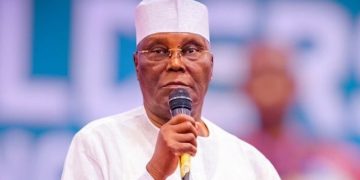


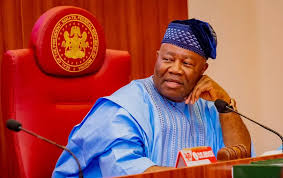
Senate President Godswill Akpabio has escalated his legal dispute over the suspension of Senator Natasha Akpoti-Uduaghan by filing an appeal at the Supreme Court.
The appeal comes after the Abuja Division of the Court of Appeal dismissed the Federal Government’s legal submission in a case linked to defamation issues surrounding Senator Akpoti-Uduaghan’s suspension.
The appellate court ruled on November 28 that the brief filed on behalf of the Senate President was defective and failed to meet mandatory procedural requirements under the Court of Appeal Rules.
The court identified multiple violations, including improper font size and line spacing, exceeding the statutory 35-page limit, and failure to obtain court permission to correct these defects.
The justices determined that these were not minor technical oversights but substantial breaches that rendered the appeal incompetent. Consequently, the entire brief was struck out.
Senator Akpabio has described the ruling as unjust. However, court records and legal assessments confirm that the decision followed established appellate procedures.
In his Supreme Court appeal, the Senate President contends that the Court of Appeal violated his constitutional right to a fair hearing by refusing to grant him leave to amend the defective brief or exceed the page limit.
He is requesting the Supreme Court to set aside the appellate court’s decision and allow him to resubmit his arguments in accordance with the rules.
Legal practitioners have noted that the right to fair hearing does not override the obligation to comply with procedural rules, particularly when these rules are applied consistently across all parties.
They also observed that Senator Akpoti-Uduaghan’s legal team adhered fully to the same procedural requirements, undermining claims of selective or unfair application of the rules.

The Senate President’s personal involvement in the case has sparked considerable interest among political and legal observers, who note that such direct engagement is uncommon for a presiding officer of the National Assembly and suggests political dimensions to the controversy.
Legislative sources indicate the case reflects underlying friction between Akpabio and Akpoti-Uduaghan, whose relationship has been marked by tension in recent months.
The first-term senator from Kogi Central has gained national prominence for her outspoken approach and willingness to confront Senate leadership—a posture that some insiders say has created unease within the chamber.
“This has evolved beyond a mere legal dispute,” a senior parliamentary source noted. “It has become a contest over power and control.”
Political analysts view the Court of Appeal ruling as a significant blow to the Senate President, particularly because it stemmed from procedural errors rather than substantive legal arguments.
The setback, attributed to technical issues such as formatting and page limits, has fueled speculation that the Supreme Court appeal may be driven by efforts to contain political damage.
Within the ruling party, there are reports of mounting concerns over Senator Akpoti-Uduaghan’s growing independence and public visibility, factors observers believe may be fueling the protracted legal battle.
Senator Akpoti-Uduaghan has maintained a measured response, expressing trust in the judiciary and emphasizing the importance of following due process.
Her legal representatives have characterized the Supreme Court appeal as a final effort to reverse a decision that was reached in accordance with the law.
Civil society organizations have cautioned that any attempts by political actors to influence judicial outcomes could undermine judicial independence and democratic governance.
As the Supreme Court prepares to consider the appeal, the controversy has evolved beyond procedural technicalities into a broader examination of the rule of law, separation of powers, and the boundaries of authority in Nigeria’s democratic framework.
READ ALSO:
- Morayo Afolabi-Brown Speaks Out After Receiving Threatening Call Over Interview Questions
- Governor Dauda Lawal Joins President Tinubu at Historic Press Corps Dinner
- Toyin Abraham Reveals Husband’s Warning That Made Her Quit Cigarettes
- Gunmen Kill Former Benue SSG
- Explosion Triggers Fire at Apapa Tank Farm as NPA, NIMASA Battle Blaze