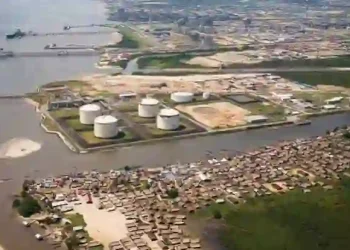

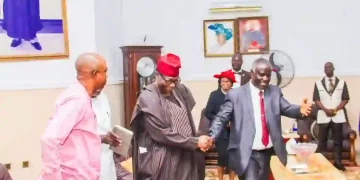







“An outstanding Itsekiri son, who is not unintelligent, lives by the river. You can throw a stone from where he lives and hit an oil installation. We’re talking about 500 to 600 billion dollars that have come from that same ground in sixty years—it might even be more than that—and you cannot spend three million dollars on electricity so everyone can have light?”
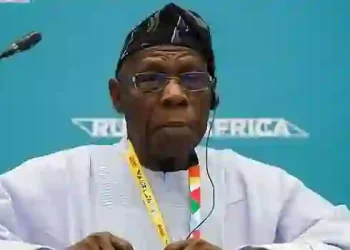
This is one of the questions the Olu of Warri, Ogiame Atuwatse III, is asking the Nigerian government, oil-producing companies, and other intervention agencies as he addresses the lack of basic amenities, social infrastructure, and neglect that the Niger Delta region in Nigeria faces.
Since crude oil was discovered in Oloibiri in 1956 in what was then Rivers State (now Bayelsa State), the people of the Niger Delta region have been known for experiencing poverty amid the wealth their land produces.
Most of them lack access to good healthcare, education, electricity, and portable drinking water, and they suffer severe environmental pollution due to oil spills and gas flaring.
The Olu of Warri, who is king of the Itsekiri people in an oil-producing area, is frustrated by the hardship and poverty in the land.
This poverty isn’t just about lacking money for daily meals—it goes beyond that.
Issues include the lack of basic necessities that enable people to live normal lives.
The Niger Delta region lacks basic amenities like clean water, healthcare, and education.
The residents are mostly farmers, and some have stopped their fishing and farming activities due to environmental pollution.
“It has been over 60 years now for all of us in the Niger Delta, whether you are Itsekiri in Delta, Ijaw in Delta, Ijaw in Bayelsa, or Kalabari in Rivers—the problem is the same. When you look closely, you’ll see that the problem is similar everywhere.”
The monarch, speaking on behalf of the Itsekiri people, said his people do not like trouble and are peacemakers. “Sometimes when you are too gentle in this kind of environment, they won’t respond to you! If you don’t get angry, if you don’t speak up, they’ll just ignore you. And our people sometimes get upset, they’ll protest a little and speak out, then the oil company will say ‘okay, we’ve heard you, we’re coming,’ and the government will say ‘we’ve heard you, we’re coming…’
According to what he told BBC News Pidgin, previously when the government, oil companies, and intervention organizations would come, what they brought has reduced, and sometimes they don’t even come at all.
The Ogiame said “Chinese whispers” is one of the problems because the intervention the government wants to implement or anything the oil companies want to do for the Niger Delta gets reduced gradually due to the many hands it passes through.
“They whispered something to do this job, the next person hears it, from there it starts to change—they keep changing it bit by bit. So the first person has answered the prayer, but as it passes through people’s hands, small things keep getting reduced. By the time it reaches the people who are crying out, they don’t want to hear stories—their concern is that they’re suffering…”
The King of Warri explained to BBC Pidgin that even though aggression isn’t generally good, “sometimes you need to get angry, you need to shout so they can hear you, otherwise they won’t respond,” he added.
According to the Ogiame, law is the legitimate use of force; if anyone applies violence outside the legal framework, it becomes a crime. He said the Itsekiri people are civilized and follow the law.



“Sixty years have passed. Have you heard that the Itsekiri have been bombing and destroying things in 60 years? We don’t do that, which is what provokes the people. We’ve been law-abiding for 60 years—should another 60 years pass without us doing something?” This is the question the young monarch said Itsekiri people are asking him.
He said the government is quick to respond to reports of violence but slow to respond to the suffering of people in the Niger Delta region. As a leader, he tries to mediate between the government, oil companies, and other intervention agencies to balance things.
Indigenous people in host communities in the region suffer all kinds of environmental pollution that has killed people.
‘Out of billions of dollars, we’re only asking for a small amount’
Photo caption: Photo of expired medicine that BBC Pidgin saw on the shelf. The staff on duty said they just supplied these medications to the Health Centre in December 2025.
“It’s very painful,” this is how Ogiame Atuwatse responded to the neglect the Itsekiri people face.
In the area that BBC Pidgin’s reporter visited, the communities have never had government electricity—they’ve been using generators all these years.
They don’t have standard schools, and the only Primary Health Care Centre in the community is not functioning.
In fact, the delivery room where pregnant women are supposed to give birth has no electricity.
BBC Pidgin’s reporter saw expired medicine at the hospital, which the only staff member present said “they just supplied this medicine to us in December.”
The toilets looked like they hadn’t been cleaned in months.
All these things pain the Olu of Warri, which is why he’s making some noise in a legal way.
“They [oil companies and the Nigerian government] cannot spend another three million dollars so the people can have clean water to drink? People are suffering.”
He challenged them to present a better plan they have for the region and urged them to remove all the middlemen from the delivery process to avoid “Chinese whispers.”
He said if they deal directly with these communities, life would be much better than it is now.
Even though he claims he hasn’t heard from the authorities after raising this issue, he’s urging the government to replicate what they’re doing in Ogoniland in Rivers State throughout all Niger Delta communities suffering from neglect and environmental pollution that has claimed many lives in the region over the years.
People have been forced to leave their homes due to environmental pollution.
However, the Nigerian government, oil companies, and intervention agencies always say they’re doing their best to help people in the region live better lives.
READ ALSO:
- Dapo Abiodun Stood Surety For Igboho’s Return to Bury his Mother – Lawyer, Pelumi Olajengbesi
- Zamfara and XEJET signs agreement to commence Abuja-Gusau Flight
- Nigerian Baptist Convention President Lauds Daniel’s Support For Christians During Sagamu Visit
- Exclusive! What is Senator Adeola Yayi Hiding About His Company, Sootem?
- NANYD Cautions Political Parties Against Exploiting Niger State Miners’ Death for Political Gains