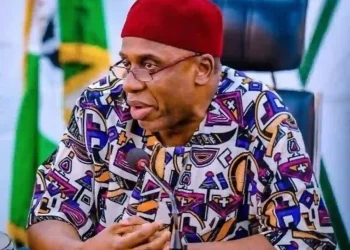








Nigeria’s Minister of Finance and Coordinating Minister of the Economy, Taiwo Oyedele, has explained that the 30-day petrol discount introduced by the Nigerian National Petroleum Company Limited (NNPC) Retail is a commercial decision and does not amount to a return to fuel subsidy.
Oyedele said the initiative was funded entirely through NNPC Retail’s profit margin and did not involve the use of public funds.
The minister made this clarification in a statement posted on his X account on Friday, following the reduction in petrol prices at NNPC Retail filling stations from October 1, 2026.
He welcomed the temporary price reduction, noting that it would provide some relief to households, commuters, transport operators and businesses affected by high fuel costs.
However, he stressed that the initiative should not be confused with the fuel subsidy programme abolished by the Federal Government in 2023.
According to Oyedele, the major difference between the current discount and the former subsidy system is who bears the cost of reducing the price of petrol.
He explained that a retail margin discount occurs when a company reduces or temporarily gives up part or all of its profit margin to sell products at lower prices. In contrast, a government subsidy involves the use of public funds to cover part of the cost of a product.
The minister stated that NNPC Retail purchases petrol from the Dangote Refinery and other suppliers at prevailing market prices before adding its retail margin to determine the final pump price.
Under the current arrangement, he said, NNPC Retail is responsible for the cost of the discount, while the price remains based on market conditions.
Oyedele further explained that selling crude oil owned by the Federation below market prices would be different because the resulting financial shortfall would ultimately be borne by public revenue.
Why NNPC Retail introduced the discount
The minister defended the decision to reduce the company’s retail margin, describing it as consistent with NNPC Retail’s responsibility to support the availability, distribution and affordability of refined petroleum products across the country.
He noted that NNPC Retail, a wholly owned subsidiary of NNPC Limited, had operated as a petroleum marketing and retail business for more than two decades.
According to him, the company had historically sold petrol at prices below those charged by some other marketers.
Oyedele maintained that reducing its profit margin was a legitimate commercial decision that any retailer could adopt to attract customers and strengthen its business.


He added that the initiative was designed to offer consumers temporary relief while supporting the company’s long-term commercial interests.
Lower margins may not reduce government earnings
Addressing concerns that the discount could reduce NNPC Limited’s profits and the dividends paid to the Federation, Oyedele argued that increased sales volumes and improved customer loyalty could compensate for the lower earnings per litre.
He said the strategy could potentially increase the company’s overall profitability if the lower prices attracted more customers and boosted sales.
According to the minister, this could also benefit the government through increased dividends, while consumers would enjoy lower petrol prices during the discount period.
Government dismisses concerns over smuggling
Oyedele also rejected concerns that the price reduction could distort Nigeria’s domestic fuel market or encourage the smuggling of petrol into neighbouring countries.
He explained that the retail margin accounts for less than five per cent of the pump price of petrol. Consequently, he argued that a discount within that margin was unlikely to significantly increase the price difference between Nigeria and neighbouring countries.
The minister noted that petrol prices in neighbouring countries were already between 20 and 40 per cent higher than those in Nigeria.
He maintained that the temporary discount would not create the market distortions associated with previous fuel subsidy arrangements.
Other measures to reduce transportation costs
Oyedele acknowledged that high fuel prices continued to place considerable pressure on households, transport operators and businesses.
He said the Federal Government was pursuing several measures to ease the burden on Nigerians without returning to a subsidy system that it considers financially unsustainable.
These measures include expanding the use of compressed natural gas (CNG) for transportation, waiving certain taxes and duties on petrol, and eliminating illegal levies that contribute to higher transportation costs.
The minister said the measures were intended to reduce the cost of living and support economic activity while maintaining a market-based petroleum pricing system.
He reiterated that NNPC Retail’s 30-day discount should be understood as a temporary commercial initiative rather than a government-funded intervention in the petrol market.
READ ALSO:
- “Tinubu’s House of Commotion”: Adebayo Slams FG’s 30-Day Petrol Discount as Confused, Baseless
- Trump Rules Out Attack on Iran Before US Midterm Elections
- Zlatan Announces October 24 Wedding Date With Partner Davita
- Oyedele: NNPC’s 30-Day Petrol Discount Is Not a Return to Subsidy
- Amaechi Accuses Tinubu, Sanwo-Olu Of Taking Credit For Lekki Deep Seaport