









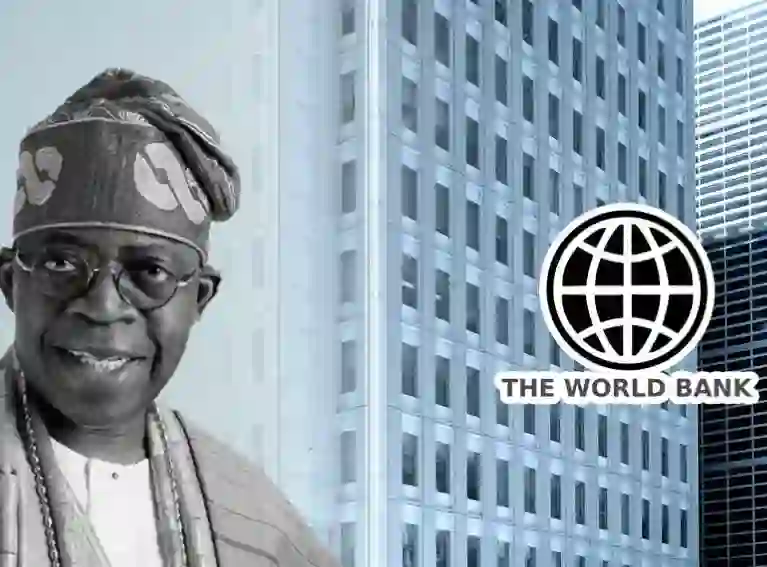
The Federal Government has faulted the World Bank’s assessment that Nigeria’s debt servicing costs stood at 124 per cent of its revenue in the first half of 2026, arguing that the figures did not accurately reflect the country’s financial position.
The disagreement followed the World Bank’s latest Nigeria Development Update (NDU), which reported that the Federal Government’s debt servicing obligations exceeded its revenue during the first six months of the year.
However, the Federal Ministry of Finance, in a statement issued on Sunday, October 18, described the analysis as misleading, explaining that the figures included debt payments made on behalf of state governments and other tiers of government.
According to the ministry, comparing these obligations with federal revenue alone produces an inaccurate picture of the government’s debt burden.
The ministry explained that some of the interest payments included in the World Bank’s calculations relate to external loans obtained by state governments but serviced by the Federal Government.
It maintained that debt servicing costs and revenue must cover the same level of government before a meaningful comparison can be made.
The ministry also argued that the World Bank’s revenue figures were incomplete because they excluded independent revenue generated by government agencies and enterprises but not yet transferred to the Treasury.


It further noted that government revenue typically increases in the second half of the year because of the statutory timing of certain tax payments.
To support its position, the ministry recalled that Nigeria’s debt servicing-to-revenue ratio stood at 156 per cent in the first half of 2025 but fell below 60 per cent for the full year.
According to the ministry, the improvement represented a significant decline from the 97 per cent recorded before the current administration’s economic reforms.
The government said the figures demonstrated the impact of its fiscal policies and the progress being made in improving revenue generation.
Providing a breakdown of its financial performance, the ministry disclosed that federal revenue increased by 72 per cent between the first half of 2025 and the corresponding period in 2026.
Revenue reportedly rose from ₦3.6 trillion in the first half of 2025 to ₦6.2 trillion in the first half of 2026.
Over the same period, interest payments increased by 38 per cent, rising from ₦5.6 trillion to ₦7.7 trillion.
The ministry argued that revenue was growing almost twice as fast as interest costs, describing the development as evidence that the government’s economic reforms were producing results.
It added that the interest-to-revenue ratio declined by 32 percentage points, from 156 per cent in the first half of 2025 to 124 per cent in the first half of 2026.
The gap between interest payments and revenue also narrowed from ₦2 trillion to ₦1.5 trillion during the period under review.
According to the ministry, these figures should be interpreted as signs of improving government revenue rather than evidence of fiscal distress.
The ministry also maintained that Nigeria’s debt sustainability should be assessed using full-year figures rather than data covering only six months.
It cited the World Bank’s own projection that Nigeria’s total debt service, including both principal repayments and interest payments, would account for 46 per cent of revenue in 2026.
The government described the projected full-year ratio as a more appropriate benchmark for assessing the country’s debt position.
On borrowing, the ministry stated that every naira borrowed by the Federal Government falls within the limits approved by the National Assembly under the 2026 Appropriation Act and the government’s authorised borrowing plan.
It added that all borrowing activities comply with the Fiscal Responsibility Act of 2007 and the Debt Management Office (Establishment) Act of 2003.
The ministry further stated that the Debt Management Office regularly publishes information on the government’s borrowing activities.
While acknowledging the importance of scrutiny of public finances, the ministry urged analysts and commentators to examine government revenue and debt figures in their proper context.
It called for comparisons involving similar categories of revenue and debt obligations, adding that clarification should be sought whenever published figures are unclear.
The disagreement comes amid continued discussions about Nigeria’s debt burden, revenue generation and the impact of the Federal Government’s economic reforms on the country’s finances.
READ ALSO:
- The Gift of Sight Came to Ogun East, and Otunba Senator Gbenga Daniel Paid for It
- Anambra Confirms Lassa Fever Case, Activates Emergency Response
- Tinubu’s Reforms Saved Nigeria From Deeper Economic Crisis – Shettima
- Sanwo-Olu Appoints Sanuth as New LAWMA MD Amid Lagos Waste Crisis
- Obi Denies Asking UK-Based Nigerians to Stop Supporting Families