






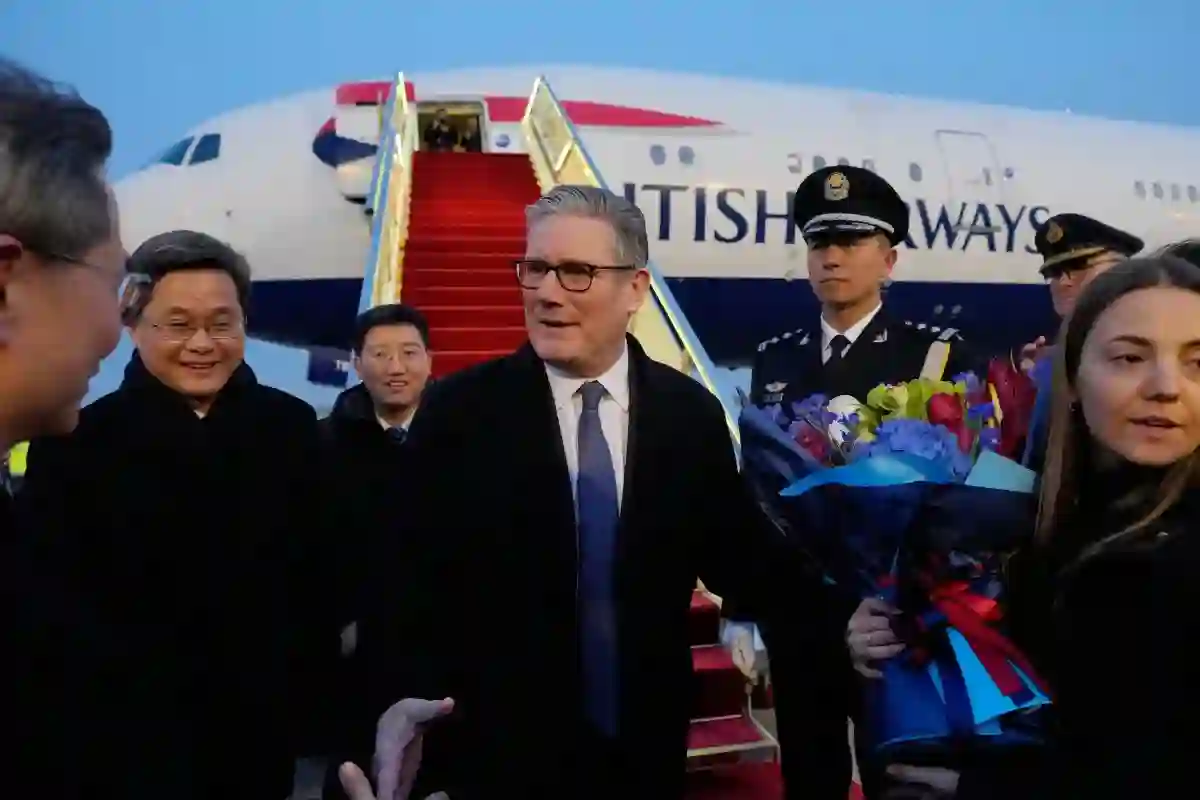
British Prime Minister Keir Starmer touched down in Beijing on Wednesday for talks with Chinese President Xi Jinping, marking the first visit to China by a UK leader in six years as he seeks to rebuild strained diplomatic ties.
The trip comes amid a wave of Western leaders engaging with Beijing in recent weeks, as uncertainty grows over US foreign policy under President Donald Trump. Starmer’s itinerary includes meetings in Shanghai on Friday before a brief stop in Japan to confer with Prime Minister Sanae Takaichi.
For Xi, hosting Starmer presents an opportunity to position China as a stable partner while Trump’s unpredictable policies have unsettled traditional Western alliances. Meanwhile, Starmer—facing historically low approval ratings at home—views the visit as crucial for revitalizing Britain’s struggling economy.
Downing Street has framed the trip as a chance to strengthen trade and investment while addressing sensitive topics including national security and human rights. Starmer is scheduled to meet Xi for lunch Thursday, followed by discussions with Premier Li Qiang.
Speaking to reporters aboard his flight to China, Starmer called the visit “really important for us,” expressing confidence about making “real progress.” He emphasized that engagement with China serves British interests while maintaining firm positions on security matters.
“It doesn’t make sense to stick our head in the ground and bury in the sand when it comes to China,” Starmer said, adding that engagement need not compromise national security.
China’s foreign ministry spokesman Guo Jiakun said Wednesday that Beijing “is willing to take this visit as an opportunity to enhance political mutual trust.”
Western Outreach to Beijing
Starmer joins a growing list of Western leaders recently hosted by Beijing, including Canadian Prime Minister Mark Carney and French President Emmanuel Macron. As Trump threatens tariffs against Canada over its China trade deal and proposes alternative international bodies, Beijing has been reinforcing its commitment to the United Nations with visiting dignitaries.
Navigating Troubled Waters
Relations between London and Beijing deteriorated sharply in 2020 following China’s imposition of a national security law on Hong Kong that drastically limited freedoms in the former British territory. Tensions escalated further with mutual espionage allegations.
Despite a Monday Telegraph report claiming Chinese hackers accessed senior Downing Street officials’ phones for years, Starmer dismissed the allegations, stating “there’s no evidence of that” and citing robust security measures.
Since assuming office in 2024, Starmer has worked to recalibrate relations with the world’s second-largest economy and Britain’s third-largest trading partner. He’s bringing approximately 60 business leaders from finance, pharmaceuticals, automotive, and other sectors, alongside cultural representatives, as he attempts to attract investment while maintaining a tough stance on security issues.
Starmer previously met with Xi at the G20 summit in Brazil last November.
The Jimmy Lai Question
Starmer is expected to address the case of Jimmy Lai, the 78-year-old Hong Kong media tycoon and democracy advocate who holds British citizenship. Lai faces years of imprisonment following his December conviction on collusion charges.
When questioned about raising Lai’s case, Starmer avoided specifics but noted that engagement with Beijing allows for discussion of disagreements. “You know my practice, which is to raise issues that need to be raised,” he said, though the Conservative opposition has criticized him for being insufficiently firm with China.
Reporters Without Borders has called on Starmer to secure Lai’s release during the visit.


The British government recently approved controversial plans for a large new Chinese embassy in London, drawing criticism from those who fear it could facilitate espionage and intimidation of dissidents.
Late last year, Starmer acknowledged China poses a “national security threat” to the UK, prompting pushback from Chinese officials. Key areas of disagreement include China’s relationship with Russian President Vladimir Putin during the Ukraine conflict and alleged human rights violations in China.
READ ALSO:
- Ex-Nigeria Oil Minister Diezani Alison-Madueke on Bribery Trial Spent £2m at Harrods, Court Hears
- Turkish Officials Call Nigerian Media’s Focus on Tinubu’s Stumble ‘Silly and Mischievous’ – Dabiri-Erewa
- Lawmakers Condemn Gombe Bandit Attacks, Press for Swift Military Response
- NSCDC Clarifies Position on Delayed Promotion Arrears Payment
- Adron Homes Unveils Valentine’s Property Investment Campaign with Premium Incentives