






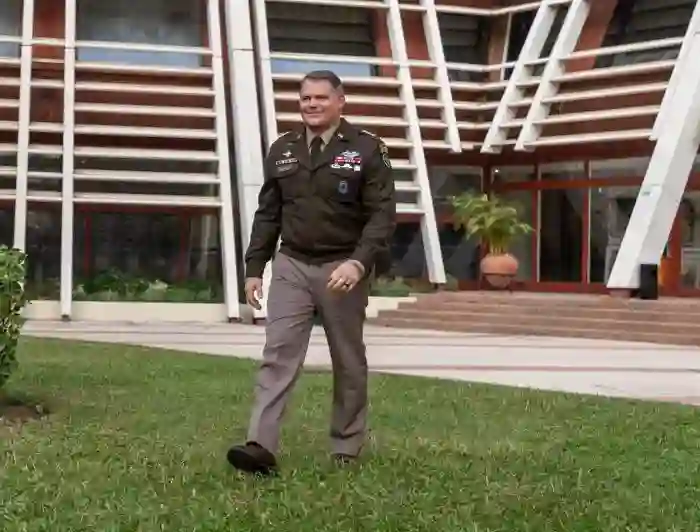
The United States is expanding its military cooperation with Nigeria through increased equipment supplies and intelligence-sharing arrangements, according to Africom’s deputy commander, as Washington intensifies its campaign against Islamic State-linked militants across Africa.
Lieutenant General John Brennan revealed the shift during a US-Nigeria security conference in Abuja last week, describing a more assertive American approach to combating IS-affiliated groups on the continent. The enhanced partnership includes lifting previous restrictions on military aid to enable Nigerian forces to operate more effectively.
“From Somalia to Nigeria, the problem set is connected. So we’re trying to take it apart and then provide partners with the information they need,” Brennan explained in an interview with AFP. He emphasized that the Trump administration has adopted a more aggressive posture toward targeting ISIS-linked threats through partnerships with African militaries.
The collaboration follows controversial US airstrikes on Christmas Day that targeted IS-linked positions in northwestern Nigeria—the first such American military action in the country. The strikes have sparked both security cooperation and diplomatic tensions between Washington and Abuja.
Diplomatic Tensions Over Religious Framing
The strengthened military ties unfold against a backdrop of diplomatic friction over how violence in Nigeria is characterized. The Trump administration has focused heavily on what it describes as attacks on Christians, a narrative that Nigerian officials and independent analysts dispute as oversimplifying the country’s complex security landscape.

At last week’s Joint Working Group meeting, senior State Department official Allison Hooker urged Nigeria “to protect Christians” without acknowledging Muslim victims of armed groups—a selective emphasis that highlighted the politically charged nature of the relationship.
Nigeria’s population is roughly divided between a predominantly Muslim north and Christian south, though millions coexist peacefully. Religious and ethnic identity remains politically sensitive in a nation that has experienced sectarian violence throughout its history.
Brennan clarified that American intelligence support would not be limited to protecting any single religious group.
Targeting ISWAP in the Northeast
Going forward, US assistance will concentrate on intelligence-sharing to support Nigerian airstrikes in Sokoto state in the northwest and in northeastern regions where Boko Haram and its rival faction ISWAP have waged an insurgency since 2009.
Brennan identified Islamic State West Africa Province as “our most concerning group” among militant organizations operating in the country.
The partnership will encompass comprehensive intelligence-sharing, tactical training, and facilitating Nigerian procurement of additional military equipment, according to Brennan.
However, some analysts question whether air support alone can effectively counter armed groups that exploit widespread poverty and governance failures in rural areas. The results of the initial Christmas strikes remain unclear, with journalists unable to independently verify militant casualties. Nigerian Information Minister Mohammed Idris acknowledged last week that assessing their impact is “still a work in progress.”
Maintaining Sahel Connections Despite Coups
Beyond Nigeria, Brennan disclosed that the United States maintains communication channels with military forces in Burkina Faso, Niger, and Mali—three Sahel nations now under military rule that have distanced themselves from Western partners.
“We have actually shared information with some of them to attack key terrorist targets,” he said, noting that informal military-to-military contact continues despite the absence of official cooperation following coups between 2020 and 2023.
The initial US strikes in Nigeria targeted militants associated with Islamic State Sahel Province, which typically operates in neighboring Niger. Security experts have expressed concern about ISSP expanding from the Sahel into coastal West African nations.
Brennan also clarified that Washington does not plan to establish replacement bases following its forced departure from Niger last year. “We’re not in the market to create a drone base anywhere,” he stated, referencing the closed US drone facility in Agadez. “We are much more focused on getting capability to the right place at the right time and then leaving.”
READ ALSO:
- Ex-Nigeria Oil Minister Diezani Alison-Madueke on Bribery Trial Spent £2m at Harrods, Court Hears
- Turkish Officials Call Nigerian Media’s Focus on Tinubu’s Stumble ‘Silly and Mischievous’ – Dabiri-Erewa
- Lawmakers Condemn Gombe Bandit Attacks, Press for Swift Military Response
- NSCDC Clarifies Position on Delayed Promotion Arrears Payment
- Adron Homes Unveils Valentine’s Property Investment Campaign with Premium Incentives