









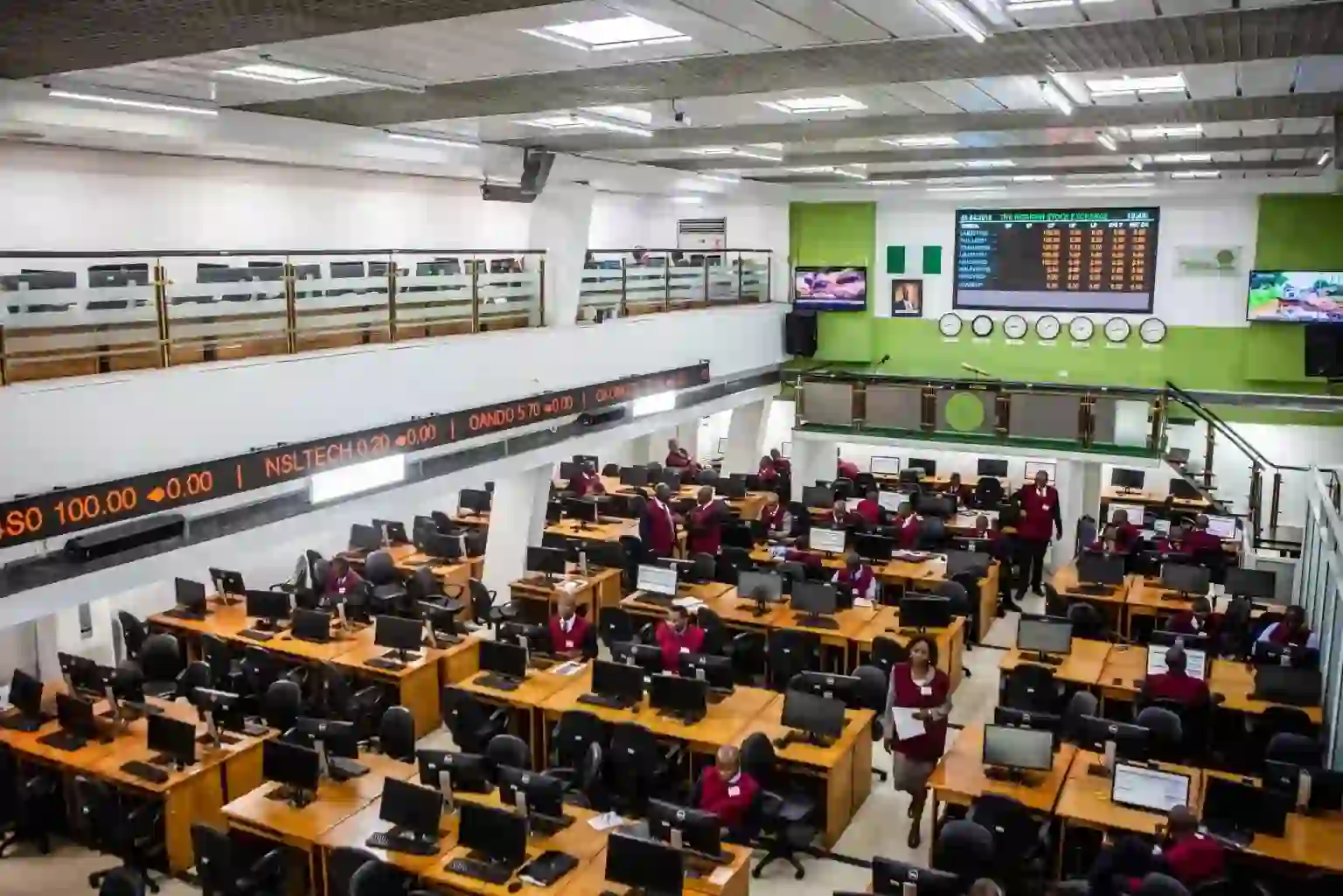
Twenty-two companies listed on the Nigerian Exchange Limited (NGX) had combined debt of about N21.3 trillion in the second quarter of 2026, as they relied on borrowings to fund operations, expansion and other business activities.
An analysis of available financial data showed that 11 of the companies had debt-to-equity ratios above 2.0, indicating a relatively high dependence on borrowed funds compared with shareholders’ equity.
The companies include VFD Group, United Capital, UACN, TotalEnergies Marketing Nigeria, Tantalizers, SCOA Nigeria, Nestlé Nigeria, Neimeth International Pharmaceuticals, MTN Nigeria and Mecure Industries.
Others are Infinity Trust Mortgage Bank, FTN Cocoa Processors, Ecobank Transnational Incorporated, Dangote Sugar, Conoil, C&I Leasing, BUA Cement, Aradel Holdings, AIICO Insurance, Access Holdings, Abbey Mortgage Bank and Fortis Global Insurance.
Companies with high debt-to-equity ratios
FTN Cocoa Processors recorded the highest debt-to-equity ratio at 28.61, followed by SCOA Nigeria at 14.37 and United Capital at 6.52.
Other companies with ratios above 2.0 were Nestlé Nigeria at 5.74, Fortis Global Insurance at 4.66, UACN at 4.10, Neimeth International Pharmaceuticals at 3.29, Mecure Industries at 3.0, MTN Nigeria at 2.98, VFD Group at 2.40 and Infinity Trust Mortgage Bank at 2.18.
The debt-to-equity ratio measures the amount of debt a company uses relative to shareholders’ equity. A ratio of 1.0 means debt is equal to equity, while a ratio of 2.0 means a company has N2 of debt for every N1 provided by shareholders.
Analysts, however, note that there is no universal debt-to-equity ratio suitable for every industry. Capital-intensive businesses such as manufacturing and telecommunications may naturally operate with higher levels of leverage.
Nevertheless, excessive borrowing can increase financial pressure, particularly when interest rates are high or a company experiences weaker cash flows.
Access Holdings records highest debt
The companies recorded significant differences in their debt levels, with total borrowings ranging from N9.31 billion for Tantalizers to N7.27 trillion for Access Holdings.
Access Holdings had the highest debt at N7.27 trillion, followed by Ecobank Transnational Incorporated with N5.36 trillion and MTN Nigeria with N2.78 trillion.
Aradel Holdings recorded N1.87 trillion in debt, while United Capital had N1.22 trillion.
Other companies included BUA Cement, N663.34 billion; Dangote Sugar, N584.61 billion; Nestlé Nigeria, N445.11 billion; UACN, N308.78 billion; VFD Group, N252.17 billion; AIICO Insurance, N129.66 billion; Conoil, N72.05 billion; and C&I Leasing, N71.67 billion.
Mecure Industries had N66.17 billion in debt, Fortis Global Insurance N30 billion, Infinity Trust Mortgage Bank N27.16 billion, FTN Cocoa Processors N22.42 billion, Abbey Mortgage Bank N20.37 billion, SCOA Nigeria N12.41 billion, Neimeth N9.33 billion and Tantalizers N9.31 billion.
FTN Cocoa, SCOA record notable leverage
FTN Cocoa Processors’ debt-to-equity ratio of 28.61 means that the company had about N28.61 in debt for every N1 of shareholders’ equity.
Its total debt stood at N22.42 billion, while shareholders’ equity was approximately N783.65 million.



SCOA Nigeria had a debt-to-equity ratio of 14.37. However, its shareholders’ equity was negative at N563.76 million, meaning its reported liabilities exceeded its equity base.
United Capital recorded a debt-to-equity ratio of 6.52, with total debt of N1.22 trillion and shareholders’ equity of N187.09 billion.
Access Holdings has highest equity
Access Holdings also recorded the highest shareholders’ equity among the companies, at N4.19 trillion.
It was followed by Ecobank Transnational Incorporated with N3.68 trillion, Aradel Holdings with N2.17 trillion, MTN Nigeria with N930.61 billion and BUA Cement with N659.13 billion.
United Capital had equity of N187.09 billion, Dangote Sugar N170.36 billion, AIICO Insurance N109.15 billion, VFD Group N104.73 billion and Nestlé Nigeria N77.56 billion.
UACN recorded N75.71 billion, TotalEnergies Marketing Nigeria N52.49 billion, C&I Leasing N49.5 billion, Conoil N44.39 billion and Mecure Industries N22.02 billion.
Infinity Trust Mortgage Bank had equity of N12.47 billion, Abbey Mortgage Bank N10.88 billion, Fortis Global Insurance N6.44 billion, Tantalizers N4.76 billion, Neimeth N2.84 billion and FTN Cocoa Processors N783.65 million.
SCOA Nigeria recorded negative shareholders’ equity of N563.76 million.
Analysts caution investors
Ambrose Omordion, an analyst and Chief Operating Officer at Investdata Consulting, said a high debt-to-equity ratio did not automatically mean that a company was in financial distress.
He said investors should also examine earnings, cash flow, interest coverage, the maturity profile of borrowings and the purpose for which the debt was obtained.
According to him, high leverage can increase both potential gains and losses. Where borrowed funds are invested in profitable ventures, debt can support shareholder returns. However, weaker earnings and cash flows could make it more difficult for highly indebted companies to meet interest and principal obligations.
Omordion said investors should pay particular attention to companies where high leverage is accompanied by weak profitability, negative shareholders’ funds or declining cash flows.
He also noted that some companies had considerably lower leverage. BUA Cement had a debt-to-equity ratio of 1.01, Aradel Holdings 1.22, AIICO Insurance 1.20, Conoil 1.62, C&I Leasing 1.50 and Ecobank Transnational Incorporated 1.50.
On the impact on shareholders, he said increasing leverage could make profits and dividends more sensitive to interest rates and changing business conditions.
Higher finance costs, he added, could reduce earnings available for distribution, while refinancing obligations could create additional pressure when debts mature.
However, companies with manageable debt levels can use borrowing to expand production, acquire assets and finance working capital without significantly diluting existing shareholders’ ownership.
Economic analyst and communications expert Clifford Egbomeade said debt levels should not be considered in isolation.
He said investors needed to examine the quality of earnings, cash-generation capacity, asset base, interest obligations and the sector in which each company operates before assessing financial risk.
Corporate debt and the wider economy
Egbomeade said corporate borrowing could have both positive and negative implications for the Nigerian economy.
According to him, productive borrowing can help companies expand operations, create jobs, finance infrastructure and increase output.
However, excessive corporate leverage could increase financial vulnerability, particularly for businesses exposed to foreign-currency borrowing, weak consumer demand and high financing costs.
He noted that the debt-to-equity ratio remained an important indicator of financial leverage because it shows the extent to which a company relies on borrowed funds compared with shareholders’ capital.
But he stressed that the ratio should be considered alongside profitability, cash flow, interest expenses, debt maturity, asset quality and a company’s ability to generate enough income to service its obligations.
Analysts also pointed to the wider implications for the financial system. Companies facing difficulties in repaying their loans could affect the asset quality of banks and other lenders.
At the same time, businesses under severe debt pressure may reduce capital expenditure, cut jobs, sell assets or delay expansion plans.
The data therefore highlights the importance of prudent borrowing, sound corporate governance, adequate capitalisation and effective debt management among listed companies.
READ ALSO:
- Tinubu Warns Political Allies Against Using His Name for Personal Ambitions
- Wale Fapohunda, 67 Others Elevated to Senior Advocate of Nigeria
- INEC Disowns Fake Governorship Candidates’ List Circulating Online
- CDS Urges More Investment in Nigeria’s Indigenous Space Technology
- World Bank, IMF Warn AI Could Worsen Jobs Crisis in Nigeria