







The National Human Rights Commission (NHRC) has earned praise from the House of Representatives Committee on Human Rights for its effective delivery in 2025, despite operating under tight fiscal conditions and navigating a challenging human rights environment.
During the Commission’s budget defence session, Committee Chairman Hon. Peter Abiola Makinde commended the NHRC’s performance, highlighting its continued progress in executing its mandate even as human rights issues—including concerns around freedom of religion and other constitutional rights—remain pressing nationwide.
Hon. Makinde singled out the Commission’s commitment to transparency, particularly through its Human Rights Dashboard, which keeps the public informed about complaints and interventions. He reaffirmed the National Assembly’s support for the NHRC, stressing Parliament’s duty to bolster institutions that protect citizens’ fundamental rights.



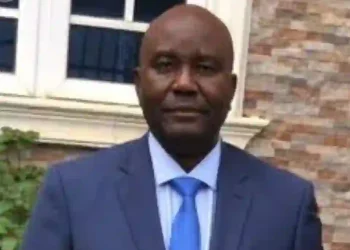
In his presentation, Executive Secretary Dr. Tony Ojukwu, OFR, SAN, thanked the Committee for its backing, which he credited with enabling the Commission to deliver on most of its 2025 programmes.
Dr. Ojukwu revealed that the NHRC handled over 3.7 million complaints in 2025—a figure that underscores rising public confidence and an escalating need for rights protection services. He noted that addressing this growing caseload requires enhanced investment in complaint management, investigation capacity, and dispute resolution systems.
Emphasizing the importance of autonomy in line with the Paris Principles governing national human rights institutions, Dr. Ojukwu reported that eight new state offices have been established under his leadership to improve access to justice across the country. The Commission plans to construct twenty more offices in 2026. He also flagged the critical need to expand and upgrade the Commission’s headquarters, given that staffing levels have tripled since 2007.
The NHRC’s proposed 2026 budget stands at ₦20 billion, with personnel and overhead costs accounting for 33.67 percent, while capital projects—focused on infrastructure development, operational expansion, and service improvement—take up 66.33 percent.
The Committee indicated its willingness to back the budget proposal and encouraged the Commission to build on its achievements while advancing human rights protection and promotion throughout Nigeria.
READALSO:
- Morayo Afolabi-Brown Speaks Out After Receiving Threatening Call Over Interview Questions
- Governor Dauda Lawal Joins President Tinubu at Historic Press Corps Dinner
- Toyin Abraham Reveals Husband’s Warning That Made Her Quit Cigarettes
- Gunmen Kill Former Benue SSG
- Explosion Triggers Fire at Apapa Tank Farm as NPA, NIMASA Battle Blaze