
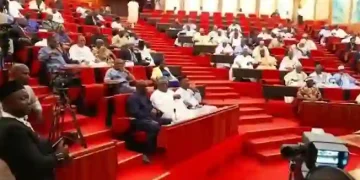









Nigeria’s Senate has called for the immediate release of ₦10 billion approved for Ebola prevention and control, while directing that all international travellers entering the country undergo compulsory health screening.
The lawmakers also urged the Federal Government to strengthen border surveillance, equip health facilities and review the country’s existing quarantine law to improve its response to the reported Ebola threat.
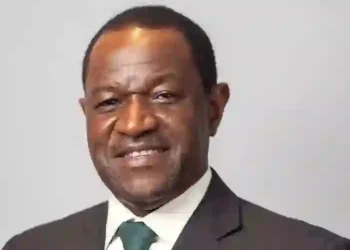
The resolutions were adopted on Wednesday following an urgent motion sponsored by Senator Francis Faduyile, a professor of medicine and specialist pathologist, who warned that Nigeria must strengthen its preparedness to prevent further transmission of the virus.
During the debate, Senate President Godswill Akpabio raised concerns over reports that a traveller from Kenya who tested positive for Ebola had entered Nigeria without undergoing proper health checks.
Akpabio said he was informed that the traveller was not subjected to temperature checks or other screening procedures upon arrival.
According to the Senate President, the incident raised questions about the effectiveness of Nigeria’s disease surveillance system at its entry points.
He recalled Nigeria’s experience during the 2014 Ebola outbreak, when the virus was brought into the country by a Liberian traveller. The outbreak resulted in the death of a doctor who treated the patient.
Akpabio warned that Nigeria must take immediate action to prevent a similar situation, particularly following reports that 44 people had been identified as contacts requiring monitoring.
He described the development as a warning that the country needed to strengthen its public health response and prevent the virus from spreading further.
Senate Orders Compulsory Screening For All Travellers
Following deliberations, the Senate unanimously resolved that all international travellers entering Nigeria through airports, seaports and designated land borders must undergo compulsory health screening.
The screening measures are expected to include temperature checks, health declaration forms and examinations for symptoms associated with Ebola.
The lawmakers also called for closer monitoring of travellers who had visited or passed through areas affected by the outbreak within the preceding 21 days.
Senator Ali Ndume, who represents Borno South, argued that screening should apply to every international traveller, irrespective of their country of departure.
Ndume said the reported case involving a traveller from Kenya demonstrated the need for a comprehensive screening system rather than restrictions limited to selected countries.
He urged the relevant authorities to ensure that no international passenger entered Nigeria without undergoing the necessary health checks.
The Senate also called on the Federal Ministry of Health and Social Welfare, the Federal Airports Authority of Nigeria and the Nigeria Immigration Service to strengthen surveillance at the country’s entry points.
The agencies were urged to provide adequate numbers of trained Port Health officers, thermal scanners, personal protective equipment and isolation facilities.
The lawmakers further called for the readiness of isolation and treatment centres across all 36 states and the Federal Capital Territory to ensure that suspected cases could be identified and managed promptly.
Senate Demands Release Of ₦10bn Ebola Fund
Funding for the Ebola response was another major issue during the Senate debate, with lawmakers insisting that emergency resources must be made available without delay.
Ndume disclosed that President Bola Tinubu had already approved ₦10 billion for Ebola prevention and control.
He therefore called for the immediate release of the money to support surveillance, emergency response and other necessary measures to contain the disease.
The senator also stressed the need for accountability in the use of the funds to ensure that the money was directed towards the intended public health interventions.
Senator Ireti Kingibe, who represents the FCT, also called for adequate funding to support the response, including efforts to procure vaccines and strengthen preparedness in Abuja, where the reported case was detected.
Faduyile had initially proposed that adequate funding for Ebola prevention be provided in the 2027 national budget. However, Ndume’s disclosure that ₦10 billion had reportedly been approved prompted calls for its immediate release.
Lawmakers Seek Replacement Of 100-Year-Old Quarantine Act
The Senate also called for the replacement of Nigeria’s Quarantine Act of 1926, describing the legislation as outdated and inadequate for addressing modern public health emergencies.
Senator Mohammed Tahir Monguno, who represents Borno North, said the law needed to be reviewed to reflect current realities in disease prevention, surveillance and emergency response.
He urged the National Assembly to enact a modern legal framework that would give health authorities the necessary powers and tools to respond effectively to infectious disease outbreaks.
Akpabio directed the Senate Committee on Judiciary to begin working with relevant health authorities and the executive arm of government on the proposed amendments without waiting for the Federal Government to submit a bill.
Senator Sadiq Suleiman Umar, representing Kwara North, also called for a coordinated response involving government agencies, adequate funding and stronger border controls.
He recalled Nigeria’s response to the 2014 Ebola outbreak, urging the country to build on the experience gained during that period.
Senator Adamu Aliero, representing Kebbi Central, described the motion as timely and called for urgent measures to prevent further transmission.
During the debate, lawmakers also expressed concern over the reported severity of the Bundibugyo strain of Ebola, with discussions highlighting the challenges associated with the availability of specific treatments and vaccines.
Senate Raises Concerns Over Nigeria’s Preparedness
Presenting the motion, Faduyile warned that Nigeria could face additional cases if gaps in screening and disease surveillance were not urgently addressed.
He referred to the Ebola outbreak in the Democratic Republic of Congo, which he said had recorded more than 9,000 confirmed cases and approximately 4,400 deaths, according to figures presented during the debate.
He also raised concerns about reports of the virus spreading to other countries, including Uganda and Kenya, before the reported case in Nigeria.
According to the lawmaker, about 44 contacts linked to the Abuja case had been identified for quarantine and observation.

Faduyile criticised Nigeria’s screening arrangements, saying restrictions introduced on September 22, 2026, focused on travellers from selected countries and did not include Kenya at the time.
He further warned that some airports, seaports and land borders lacked sufficient Port Health officers, screening equipment and isolation facilities.
The senator added that Nigeria was already dealing with other infectious diseases, including Lassa fever, cholera and diphtheria, and needed to prevent another major public health emergency.
The Senate consequently called on the Federal Government and relevant agencies to strengthen border screening, release the approved emergency funds, improve health infrastructure and modernise the country’s quarantine laws.
The lawmakers said urgent implementation of the resolutions would be necessary to improve Nigeria’s preparedness and reduce the risk of further Ebola transmission.
READ ALSO:
- Makinde Slams Tinubu Govt Over “Unrealistic Policies,” Demands Petrol Pricing Template
- Tinubu Meets NELFUND Chairman Jim Ovia Behind Closed Doors at Aso Rock
- Senate Demands Immediate Release Of ₦10bn, Orders Ebola Screening At Borders
- Oyebanji Appoints Four New Aides
- Toluwanisings’ Family Announces Date for Service of Songs