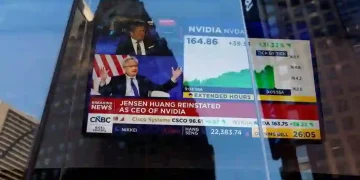







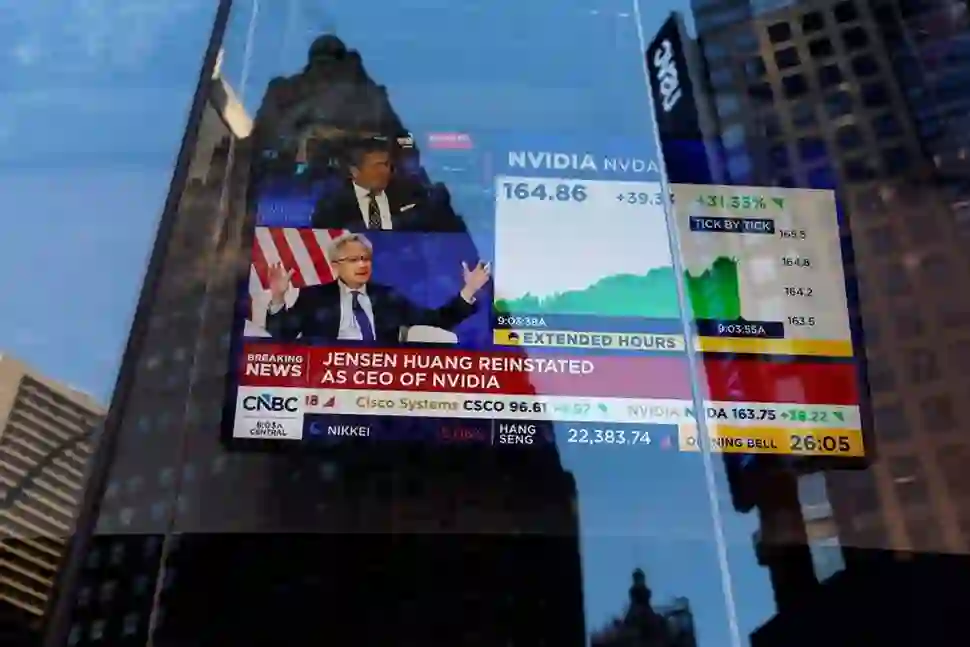
Nvidia has reinstated its co-founder, Jensen Huang, as Chief Executive Officer (CEO), reversing its earlier decision to remove him following mounting pressure from United States President Donald Trump, investors and industry stakeholders.
The company announced on Monday, November 23, 2026, that Huang would immediately resume leadership of the global technology giant after stepping down on November 12 amid allegations surrounding his personal relationships and concerns that triggered investigations and uncertainty across the technology industry.
The decision reportedly received unanimous approval from Nvidia’s board, which maintained that Huang’s return did not pose any national security threat.
Following the announcement, Nvidia shares reportedly surged by 33 per cent, significantly increasing the company’s market value. The development also boosted shares of other artificial intelligence-related companies, including CoreWeave and Nebius, which recorded gains of nearly 25 per cent.
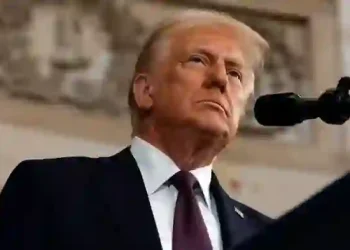
US President Donald Trump welcomed the decision, describing Huang’s reinstatement as the correct and proper move.
In a statement on his Truth Social platform, Trump said the US government had no reason to believe Huang’s return would create national security concerns. He also maintained that there was no evidence that the Nvidia founder had engaged in unlawful activities.
Trump had reportedly been pushing for Huang’s return in recent days, despite the company’s earlier position against reinstating him.
Speaking during an interview with CNBC on Monday, Trump said Huang had done nothing wrong and described him as a highly talented individual whose contributions to the technology industry should be protected.
The US president also disclosed that he had communicated directly and indirectly with members of Nvidia’s board before the decision was reversed.
Trump further stated that his intervention played an important role in securing Huang’s return to the company.
Nvidia Reverses Earlier Decision
Huang’s reinstatement represents a significant reversal of the company’s earlier position.
Just days before the announcement, Nvidia Chairman Harvey Jones had reportedly ruled out bringing Huang back, arguing that his alleged personal conduct was inconsistent with the company’s code of conduct, standards and corporate culture.
Following his departure, Nvidia appointed its Chief Financial Officer, Colette Kress, as interim CEO. Kress had assured employees and stakeholders that the company would continue operating normally.
However, growing pressure from investors, industry figures and supporters of Huang reportedly influenced calls for his return.
A petition demanding his reinstatement attracted more than 180,000 signatures, with prominent technology entrepreneur Elon Musk among those supporting the campaign.
Musk also welcomed the latest development, writing on X that the mistake had been corrected.
In his reaction, Huang expressed appreciation for the opportunity to return to the company, describing Nvidia as one of the most important technology businesses in the world.
He said he was honoured to resume leadership at a time he described as the beginning of a new industrial revolution driven by artificial intelligence.
Investigations And National Security Concerns
Despite his return, Nvidia continues to face several investigations involving regulatory compliance, accounting practices and allegations of illegal chip smuggling.
The company is also under increased scrutiny from US authorities over the movement of advanced artificial intelligence chips to China.
The United States has introduced stricter export licensing requirements for certain advanced semiconductor products and overseas data centres serving Chinese businesses.
Nvidia has established a board committee to examine whether foreign intelligence operations targeted Huang. It has also commenced the process of appointing a new chief compliance officer.
The company previously created another committee to oversee national security issues and compliance with US export restrictions.
Colette Kress will, however, remain in her position as Chief Financial Officer.
The developments come amid growing concerns in Washington over Nvidia’s business activities in China, particularly as the company continues to seek greater access to the Chinese technology market.
Huang’s departure had reportedly created uncertainty among some Chinese customers, with certain businesses cancelling or delaying orders, potentially putting billions of dollars in revenue at risk.

Huang’s Influence On Nvidia And The AI Industry
At 63, Huang is widely credited with transforming Nvidia from a company primarily known for designing graphics processors for video games into the world’s leading supplier of advanced artificial intelligence chips.
Under his leadership, Nvidia became a major beneficiary of the global AI boom, supplying processors used by technology companies, cloud computing providers and artificial intelligence developers.
He has also played a central role in shaping the company’s product development, maintaining relationships with major customers and engaging with government officials over technology and export policies.
Huang is known for his hands-on management approach and has maintained close involvement in several aspects of the company’s operations.
Nvidia has also invested in other businesses across the artificial intelligence industry, including cloud computing companies CoreWeave and Nebius, as well as semiconductor and technology suppliers such as Marvell and Corning.
His return is expected to restore some confidence among investors who had expressed concerns about the company’s leadership uncertainty.
Legal Challenges Still Hang Over Nvidia
Despite the reinstatement, Huang and Nvidia continue to face legal challenges linked to allegations surrounding his personal relationships and the company’s corporate governance.
The company is facing a shareholder lawsuit accusing Nvidia and Huang of misleading investors by allegedly concealing information about Huang’s reported relationship with Alice Huang, a Chinese businesswoman alleged to have connections with Beijing.
Reuters also reported that Huang allegedly misled some senior Nvidia executives, including the company’s general counsel, about the nature of the relationship.
Nvidia is separately facing a derivative lawsuit seeking to hold members of its board accountable for allegedly failing to properly supervise the company’s operations and management.
The legal actions raise questions about corporate governance, transparency and the responsibilities of directors in overseeing major technology companies.
Huang’s return has drawn comparisons with the 2023 leadership crisis at OpenAI, when Sam Altman was reinstated as CEO four days after his removal following strong opposition from employees.
However, some market analysts have expressed concerns about the implications of Nvidia’s decision, particularly regarding corporate accountability and the influence of political authorities in major business decisions.
With Huang back at the helm, attention will now turn to how Nvidia manages its ongoing investigations, regulatory challenges and growing international competition while maintaining its position in the global artificial intelligence industry.
READ ALSO:
- Talata Mafara Agog As Gov. Lawal Flags Off APC Campaign In Zamfara
- Nvidia Reinstates Jensen Huang As CEO Following Trump’s Intervention
- More Than 450 Schools Receive Bomb Threats Across Germany
- Ifẹ́ Oracle Rejects Ayiri, Picks Eyewuoma as Ologbotsere
- Tinubu Approves N250m Relief For Bayelsa Boat Accident Victims As Death Toll Hits 29