







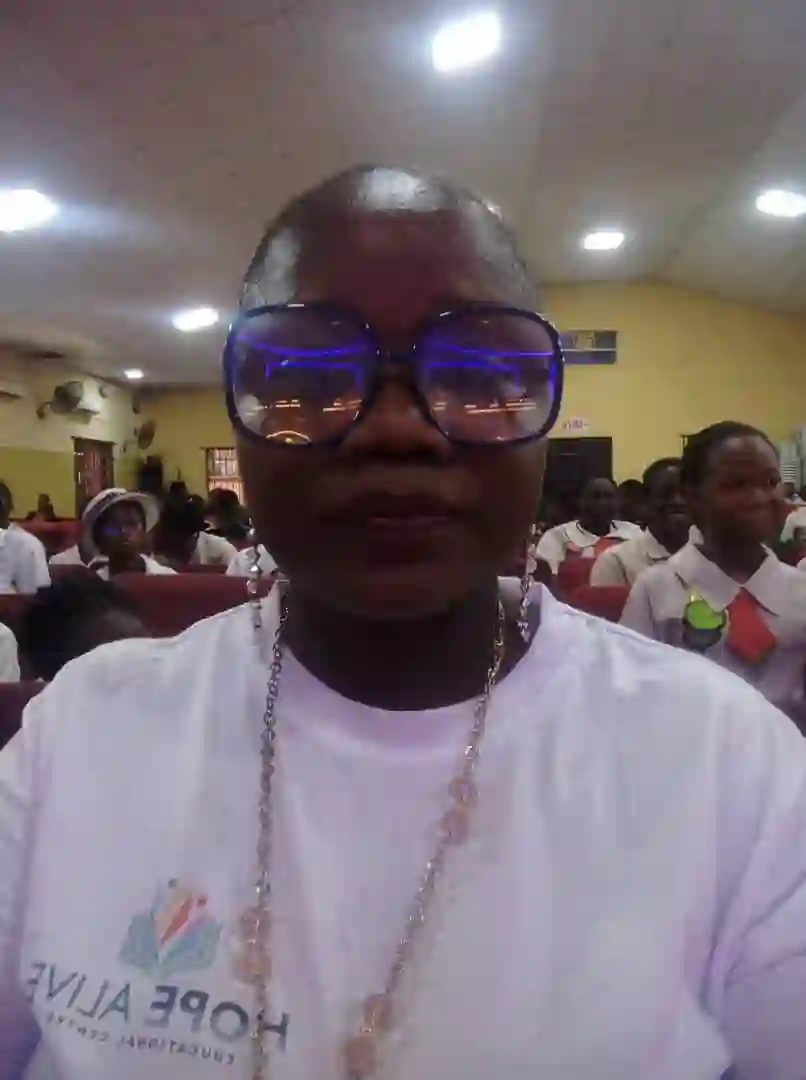
Adeyinka Adeyefa, founder of the Hope Alive Educational Centre, has opened up on the deeply personal and systemic meaning of Gender-Based Violence (GBV) activism, describing it as a journey of healing, advocacy, and justice for survivors across Nigeria.
In an exclusive conversation with Seunmanuel Faleye of Apples Bite International Magazine, Adeyefa said activism, for her, represents “three big things at the same time”, healing herself, protecting others, and fighting for stronger institutions.
According to her, the first layer of activism is self-healing and refusing to be silenced by the violence she endured. “As a GBV survivor, activism is my ‘No More’,” she said, noting that her voice today is a form of reclaiming power from people and systems that attempted to break her.



She expressed deep empathy for victims still trapped in abusive situations, stressing that abuse in any form, physical, emotional, financial, sexual, spiritual, or technological, is never normal. “Love does not hurt, humiliate, threaten, or control you,” she cautioned, urging victims to prioritise safety over societal expectations or family pressure.
Adeyefa encouraged survivors to seek help in whatever way they can, even quietly. She advised victims to tell at least one safe person, use code words when necessary, keep emergency contacts, and begin taking small steps toward safety, from saving essential documents to identifying emergency escape points.
“There is no shame in surviving. The shame belongs to the abuser,” she emphasised.
Addressing the emotional complexities many survivors face, she noted that victims who leave and return multiple times still deserve help without judgment. “Even if you go back and forth, you still deserve support,” she said.
Adeyefa highlighted the psychological toll of prolonged abuse, urging victims experiencing despair or suicidal thoughts to reach out for support immediately. She pointed to organisations such as FIDA, Mirabel Centre, the National Human Rights Commission, the Office of the Public Defender, and the Lagos State Domestic and Sexual Violence Agency as critical lifelines. While noting that police response can be inconsistent, she advised survivors to first consult GBV-focused organisations for guidance when reporting cases.
The second dimension of her activism, she explained, is turning her pain into protection for others. Through her work as a human rights advocate, Adeyefa is committed to ensuring that no survivor feels alone or blamed. “It means educating communities, challenging harmful norms, and insisting that women’s and girls’ bodies, voices and lives are not negotiable,” she said.
For her, activism also means validating the experiences of survivors: “You are believed. You are not alone. What happened to you was wrong – and it is a human rights violation, not your fault.”
The third pillar of her advocacy is fighting for systems that protect, not punish. Adeyefa stressed that activism goes beyond emotional solidarity to demanding strong laws, safer institutions, and accountability from families, religious bodies, schools, workplaces, the police, and the judiciary.
“Activism against GBV is not just about feelings; it is about justice and systems,” she emphasised, calling for a society where survivors are protected and perpetrators face consequences.
For Adeyefa, the mission is clear: to use her life, voice, and platform to help build a world where women and girls can live free from fear. “Activism is my way of transforming trauma into power, silence into voice, and fear into protection, for myself, for other survivors, and for the next generation,” she said.

Seunmanuel Faleye is a brand and communications strategist. He is a covert writer and an overt creative head. He publishes Apple’s Bite International Magazine.