

The Adamawa State Government has come under scrutiny over its 2026 budget priorities after allocating N9.8 billion for the purchase of sports utility vehicles (SUVs) and jeeps, while providing just N220 million for capital projects under the State Universal Basic Education Board (SUBEB).
An examination of the state’s third-quarter 2026 budget implementation report shows a significant disparity between government spending on official vehicles and its funding for basic education.
According to the report, the Adamawa State Government initially earmarked N1.26 billion for the procurement of SUVs and jeeps in its 2026 budget. However, the allocation was increased substantially to N9.8 billion in the revised budget.
As of September 2026, the government had spent N1.603 billion on vehicle procurement, representing approximately 16.4 per cent of the revised allocation. This left about N8.197 billion yet to be spent.
The expenditure included N342.9 million recorded in the third quarter, while total spending on the procurement during the first nine months of the year stood at N1.603 billion.
In contrast, the State Universal Basic Education Board received a capital allocation of just N220 million in the revised budget. However, the budget performance report showed that no expenditure had been recorded against the allocation as of September 2026.
This means that while the government had spent more than N1.6 billion on SUV procurement, nothing had been recorded as expenditure on the N220 million allocated to the agency responsible for supporting basic education development in the state.
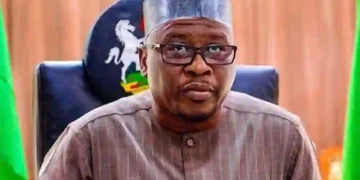
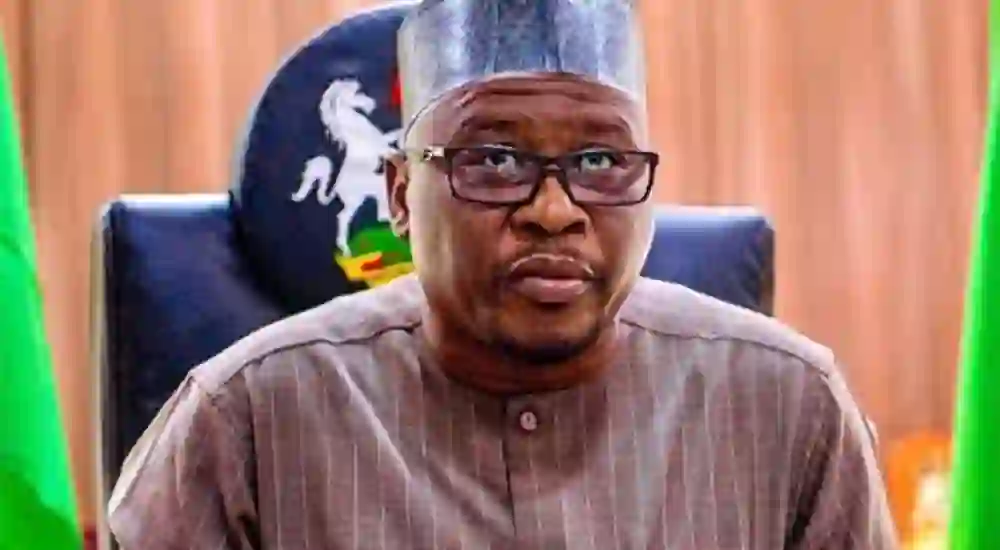
The figures have raised questions about the spending priorities of the administration of Governor Ahmadu Fintiri, particularly at a time when public schools across the country continue to face challenges relating to infrastructure, access to education and learning facilities.
The situation is also concerning given a report by the National Bureau of Statistics (NBS), which indicated that approximately 43 per cent of school-age children in Adamawa State do not have access to schools.
Further comparison of the revised budget shows that the N9.8 billion allocated for SUVs and jeeps is approximately 44 times the N220 million provided for the State Universal Basic Education Board.
Several Education Institutions Record Zero Expenditure
The budget implementation report also revealed that several educational institutions and agencies in Adamawa State recorded little or no capital expenditure during the first nine months of 2026.
The Adamawa State Polytechnic, Yola, recorded no expenditure against its N180 million capital allocation.
Similarly, the College of Education, Hong, had yet to record any spending against its N100 million provision.
The College of Agriculture, Science and Technology, Ganye, also recorded zero capital expenditure despite having a revised allocation of N670.48 million.
The College of Nursing Sciences, Yola, equally recorded no expenditure against its N641.43 million allocation, while the College of Health Technology, Michika, had not spent any amount from its N751.8 million capital provision.
The Education Resource Centre also recorded zero expenditure against its N120 million allocation.
Meanwhile, Adamawa State University, Mubi, recorded N1.02 billion in capital expenditure from its revised budget allocation of N13.9 billion, representing approximately 7.3 per cent implementation as of September.
These figures suggest that several key institutions within the state’s education sector were yet to translate their approved capital allocations into actual spending during the period under review.
Beyond education, the report also highlighted considerable differences between budgetary allocations and actual expenditure across other sectors of the state economy.
The contrasting spending patterns have renewed concerns about the implementation of Adamawa State’s 2026 capital budget and the government’s commitment to sectors that directly affect the welfare and development of residents.
With N9.8 billion earmarked for SUVs compared with N220 million for basic education, the figures have brought the state’s expenditure priorities under fresh scrutiny, particularly amid growing calls for responsible management of public funds and increased investment in education.
As the state government continues to implement its 2026 budget, attention is likely to remain on how public resources are distributed and whether critical sectors such as education receive the funding and attention they require.
READ ALSO:
- WYCDF Announces New Board and Executive Team to Lead Foundation’s Next Chapter
- JAMB Announces UTME Fee Refunds, Free Support For Candidates With Disabilities
- Tinubu Approves Kebbi Dry Port, Unveils N200bn Fertiliser Scheme For Farmers
- INEC Includes Atiku, Tinubu, Obi In Final List Of 2027 Presidential Candidates
- UK Court Jails Nigerian Pastor 11 Years For Raping Woman Three Times