


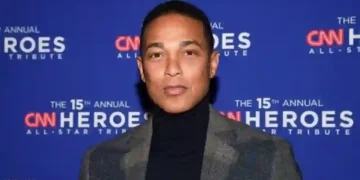





Despite billions of Naira allocated to agricultural intervention schemes, a stark disconnect persists between government efforts and the realities on the ground. Why do these well-publicised programs so often fail to move the needle on food security and farmer prosperity? In this exclusive interview with Kehinde Olusegun Gabriel, President of the Farmers Club International, the answer lies in a fundamental flaw in the distribution system. In a damning assessment, Gabriel asserts that the “big men” and “political farmers” are the primary beneficiaries of initiatives like the Anchor Borrowers’ Programme, while the genuine tillers of the soil are left with nothing.
He pulls back the curtain on a culture of “kickbacks” and systemic sabotage, where civil servants, transport sector workers, and “agberos who have never been to the farm” receive inputs and loans meant for actual farmers, only to resell them at a profit. This candid interview exposes the broken pipeline of agricultural support and reveals why, despite fantastic government policies, the real drivers of Nigeria’s food production continue to struggle. Enjoy the Interview.
Q1: Mr. President, Nigeria has been discussing agricultural revolution for decades. In your honest assessment, are we truly experiencing an agricultural revolution today, or are we still grappling with the same fundamental challenges our farmers faced 20 years ago?
Thank you for this salient question. My humble reply is simply NO. Agricultural revolution can never take place using old or manual farming methods. Agricultural revolution means aggressive agricultural transformation where every stage of farming involves mechanization. We are in the era of technology, and Nigeria is still far behind. If we are to move forward as a nation, we have to change our mindset towards genuine transformation in the agricultural sector of the economy.
Q2: Nigeria’s population has exceeded 220 million people. How do you evaluate our current capacity to feed this massive population, and what are the most critical gaps that require immediate government intervention?
Yes, the Nigerian population has grown significantly over the years. The capacity to feed ourselves and have excess to export exists if we do the right things. To do the right thing, however, includes full implementation of agricultural mechanization in Nigeria through the combination of all stakeholders in the industry—government, private organizations, individual investors, and NGOs.
Youths are running away from agribusiness and farming because they believe it is a poor man’s job and that they cannot excel in it, simply because we are still using manual or primitive farming methods.
Q3: We were once the world’s largest producer of palm oil and a major exporter of cocoa and groundnuts. How did we transition from being an agricultural export giant to importing basic food items, and what will it realistically take to reverse this trend?
The advent or discovery of oil in Nigeria has become an albatross on the neck of the people. There is no doubt that Nigeria is one of the developing nations in the world and is categorized as one of the most populated in Africa.
Nigeria gained independence in 1960 with a relatively healthy economy and vibrant populace. Agricultural and agro-allied business was the mainstay of the economy, with cocoa, groundnut, and coal forming the fundamental foundation until the discovery, exploration, and exportation of oil—which regrettably has led us to where we are today as a nation.
Almost everyone abandoned the original source of economy and wealth creation to seek white-collar jobs. Most past governments tried their best but couldn’t produce fruitful outcomes as a result of faulty and inconsistent government policies. To reverse this trend, all hands must be on deck to change the mindset of the people, particularly the youth, and adequately empower them through gradual capacity-building training and genuine input empowerment.
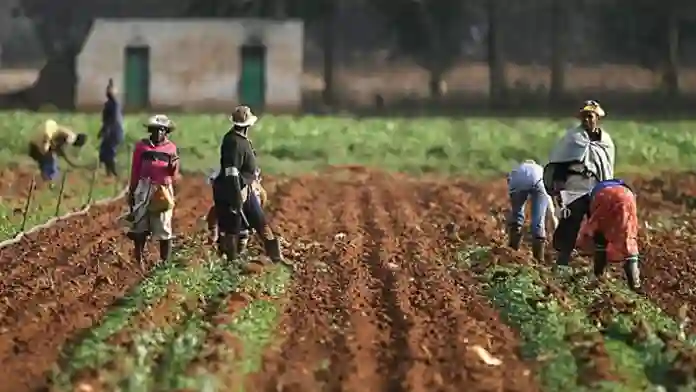
Q4: States like Benue, Plateau, and parts of Northern Nigeria are often called our food baskets. Given the current security challenges, climate change impacts, and farmer-herder conflicts, how would you describe the health of these food production regions?
Like I said earlier, changing the mindset of the people is a key factor here. The challenges we are facing today in the North, Benue, and some other parts of the country did not start today. They escalated due to mismanagement of disputes among stakeholders, particularly herdsmen and crop farmers.
Until we realize and help them understand that they are one—especially in the line of business, which is agriculture—the problems will continue. There must be adequate awareness through agencies like the National Orientation Agency (NOA). In marketplaces, religious centers, and communities, we must go out to educate them.
Some of these problems were very little in nature, but disappointment and cheating escalated them. From my experience moving around the country on this singular issue, I encountered a case where cattle mistakenly entered a groundnut farm and ate everything. The owner arrested the herdsmen. Instead of settling amicably with monetary compensation, they forcefully collected a cow worth about ₦400,000 for a groundnut farm worth not more than ₦30,000. What do we expect in this kind of situation?
To be climate-conscious, government at all levels must engage the services of professionals in this area to determine when to farm, what species to plant, or what animals to rear at any material time. This will go a long way toward adaptation to climate change.
Q5: Food prices have skyrocketed, with many families struggling to afford basic meals. From your perspective as a farmers’ leader, what are the real drivers of food inflation, and how can increased local production help stabilize prices?
These are the same issues—our mindset or our leaders’ mindset toward agricultural revolution has to change. When the cost of production is high as a result of manual farming and the cost of agricultural inputs such as chemicals, herbicides, fertilizers, farming tools, and manpower, then prices have to go up.
The orientation of farmers has to be changed through adequate capacity-building training and agricultural mechanization. Also, government has to subsidize the cost of inputs for farmers. Our financial institutions have to step up and help out. Loans are not approved or disbursed at the appropriate time, and approved loans sometimes don’t match farmers’ requests.
On the other hand, government incentives for farmers always go to the wrong hands. Most beneficiaries are just political farmers and not the real ones. By the time we put our house in order in this manner, believe me sincerely, the prices of food items will come down in our nation.
Q6: Despite having suitable climate and soil conditions, Nigeria still imports rice, wheat, and other staples worth billions of dollars annually. What structural problems prevent us from achieving food self-sufficiency in these crops?
Mindset toward agricultural revolution, mechanization, and adequate farmers’ capacity-building training has to be more effective. All stakeholders have to genuinely participate. We have to channel everything about farmers or farming—whether from government bodies, private organizations, or NGOs—through all local government councils. They have to be involved because they know all the farmers within their domain.
The era of getting something from Abuja and taking it down to the local level without the knowledge of local government councils has to be abolished. This is the only way we can achieve food self-sufficiency in Nigeria.
Q7: Young Nigerians are increasingly interested in agribusiness. What are the most viable agricultural business opportunities you would recommend to a young entrepreneur with limited capital but strong determination?



The agricultural capacity-building training that I am talking about has to do with the youth. They should look outside the box. Agriculture is relatively based on value chain—they need to take it and understand it as a business and empowerment, not as a mere venture.
They should take one unit out of the value chain to explore: INPUTS → PRODUCTION → PROCESSING → MARKETING/EXPORT. The youth are advised to take one out of this—the one that is most interesting to them individually—build on it, and they will definitely make it in life.
Also, we have to absorb them into National Housing Schemes, Health Insurance, and National Pension Scheme through the informal sector of the economy. This is the only way they can feel a sense of belonging and make agricultural business more attractive.
Q8: Value addition and food processing remain our weakest links. Can you identify specific processing opportunities that could transform our agricultural economy and create jobs for our youth?
Almost all agricultural produce is lucrative if we add value to it: cassava to garri/flour, groundnut to oil, yam to pounded yam, rice processing mills, cocoa to beverages and tea. Even in livestock, there are value chains—investing in cool rooms for preservation would be beneficial.
These will attract exportation, create massive employment, and promote food security across the country.
Q9: Technology is revolutionizing agriculture globally. How can Nigerian agribusiness entrepreneurs leverage digital farming, precision agriculture, and other modern technologies despite infrastructure challenges?
Mindset has to be changed. Instead of using technology for bad purposes such as yahoo-yahoo, why can’t they pick up some agricultural produce, begin to advertise, and sell them through the internet? The world has become a global village. With honesty and integrity, you can sell your produce or products across the world. Government has to step up in their own dealings too.
Q10: The current administration has launched several agricultural programs including the Anchor Borrowers’ Programme and various intervention schemes. Which of these initiatives have genuinely impacted farmers positively, and which have been disappointing?
Honestly, these initiatives and interventions are so fantastic and good for every farmer in Nigeria. But there are missing links—there are bad elements who are sabotaging the efforts of the government. Most of the initiatives did not go to the real farmers but to political farmers. The majority that benefited have to pay a “kickback.” How will they pay back in this manner, and how will it be possible for others to benefit?
The majority of these benefits go to civil servants, those in the transport sector, those in oil and gas, those in the health sector, and agberos who have never been to the farm in their whole lifetime. What do we expect in this regard? The worrisome part is that anything they collect from the government, they will still go and sell outright to the real farmers in their farm locations. My brother, God will help us in this nation.
Q11: Insecurity has devastated farming communities, particularly in Northern Nigeria. How would you grade the government’s response to protecting farmers and securing agricultural lands? What more needs to be done urgently?
I tell you, in my own judgment, government is trying its best, but there are lots of saboteurs who don’t want it to work. What I will advise based on my own experience is to do community vetting. What are the problems in each community? Every community has its own peculiarity and ideology. Let us respect their values and provide for their needs.
The era of bringing out an idea from the national government and saying everyone must buy into it is not good at all. There was a time in one of the states in the North when the governor just woke up one day and said everybody must go back to the farm. The idea is good, but does it meet the need or interest of everyone? If you want to engage someone in one area, it has to be their area of interest. You cannot just impose.
I learned that in America, the percentage of farmers is not more than about 5%, yet they can still feed the world. Must everyone become a farmer before they can succeed in life? Government must be sincere in approaching things. If you know you are a real farmer, come out and let everyone address your issues. If your area is transport, let government come up with a good initiative to address those issues. The same applies to health, education, oil and gas, etc.
Q12: Access to affordable credit remains a nightmare for most farmers. How effective have government efforts been in improving agricultural financing, and what alternative models could better serve our farmers’ needs?
It is true—accessing affordable credit is a big problem. There are three factors: the behavior of the farmers, the timing, and the banks themselves.
Some local farmers believe that any opportunity that comes from anywhere, including the bank, is government money and doesn’t need to be paid back. On the other hand, banks themselves don’t carry out due diligence on farmers before extending credit facilities. Sometimes they say the cost of visiting or monitoring farms is very high. They end up giving loans to the wrong people—those who don’t need them. At times, they give loans to highly politically exposed people thinking they are big men who will pay. I can tell you, the majority of loan defaulters, particularly in the agricultural sector, are the “big men.”
Another issue is timing. A farmer may need a facility in April, but because of processing, approval comes out in July. How do we reconcile this?
What I will advise banks to do is establish a special department for agriculture and adopt the value chain system. If someone appraises a farmer to the point of approval, they must have carried out due diligence on that farmer. Let another person take over disbursement of the loan based on attached conditions, and let another person be in charge of monitoring and repayment. This will go a long way in loan performance and will equally help farmers.
Like us at Farmers Club International, we have an internal task force that does this differently. When your loan is under processing, it is a different person. During disbursement, it is a different person. When it comes to monitoring and repayment, it is another person.
We should equally know the life cycle of the loan. Farmers in crop farming cannot pay on a monthly basis, except for people in buying and selling. Livestock too has its time of rearing and time of harvesting. We should understand this in repayment plans.
Q13: As President of Farmers Club of Nigeria, how can your organization more effectively bridge the gap between grassroots farmers and government policymakers to ensure agricultural policies actually work on the ground?
Thank you for this question. Firstly, we are not dealing with political or speculative farmers. We deal with farmers that have taken farming up as their means of livelihood, irrespective of the type of farming—livestock or crops.
After that, we identify their area of interest, capture them, index, and administer them accordingly. We believe that every farmer comes from a country, from a state, from a local government area, and from a community called ward level. This is how we put up their data, so that if we have something to do in Sokoto or Enugu, we have them and we know where they are. The beauty of it is that you can be in America or Europe and know the location of each of our farmers (members) in Nigeria.
We have a yearly conference where we come together in Abuja for stock-taking and appraisal of all our activities. This is where we invite all stakeholders and organize capacity-building training. The majority of the outcomes always form policies that we can adopt and pass to the appropriate government agencies and authorities for possible adoption.
Q14: What specific support programs, training initiatives, or advocacy efforts is the Farmers Club of Nigeria implementing to complement government agricultural transformation efforts?
Back to Farm Initiative: This is to encourage the youth or citizens who have an interest in agriculture but don’t have time—like civil servants, bankers, security personnel, etc. We get the farm for them on rent or lease based on their area of interest. We farm it up till harvest with a solid understanding. But if you say you want to farm it yourself, fine and good—we just collect rent/lease fees and allocate them to you.
We are doing a kind of conflict resolution among the farmers (members) by calling their attention to the fact that they are all one family and in business. If there is any issue at all, we have an internal committee that will come in to resolve the matter and not necessarily escalate it—except if it has to do with criminal tendencies, then we hand over the matter to the appropriate authority for further action. The initiative is called “Operation Save Our Farmers Initiative” (OSOFI).
Q15: Looking toward the future, what strategic partnerships between Farmers Club of Nigeria and government agencies would be most impactful in achieving food security and agricultural prosperity for our nation?
Already, we are partnering with the Federal Ministry of Agriculture and Food Security (the major stakeholder), the Ministry of Budget and Economic Planning (which regulates NGOs in Nigeria), the National Orientation Agency (NOA) for advocacy and farmer awareness on government policies, the Federal Ministry of Women Affairs, and the Nigerian Export Promotion Council.
Also, we are partnering with some private agricultural players such as WAMUFAT Agro-Allied Limited, Dambewa Fertiliser Ltd, and some relevant NGOs like WEBMARK Group Empowerment Foundation, etc.
These are strategies in line with our quest to support the government in promoting food security, empowerment through agriculture, peacebuilding among stakeholders such as crop farmers and cattle rearers across the nation, farmer markets, and their agribusiness networking.
And to encourage our youth, we are working on absorbing them into the National Housing Funds/Schemes, National Pension Scheme, and National Health Insurance Scheme through the informal sector of the economy.
Interview conducted and prepared for publication on Apples Bite International Magazine.

Seunmanuel Faleye is a brand and communications strategist. He is a covert writer and an overt creative head. He publishes Apple’s Bite International Magazine.