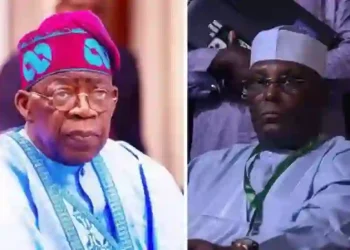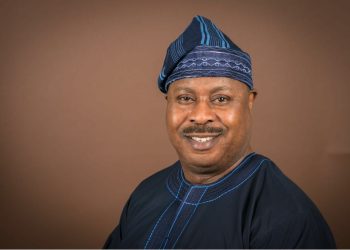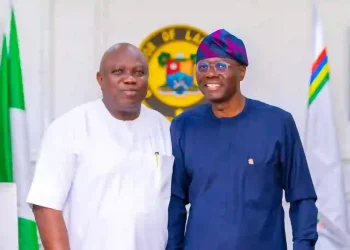









Following the alleged endorsement of Governor Dapo Abiodun by a gathering of Remo Division political officeholders, the Ogun East Senatorial District has responded not with celebration but with emphatic rejection, delivered not in press releases but in the unfiltered language of citizens who say they have been neither consulted nor convinced.
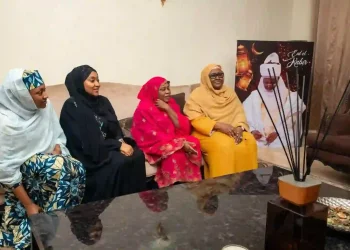
The Tuesday meeting, which brought together party functionaries, council chairmen, commissioners, and special advisers under the banner of “stakeholders,” produced a formal declaration: Governor Abiodun is the preferred candidate of Remoland for the Ogun East Senate seat in 2027. Motions were moved and seconded. Speeches were delivered. Photographs were taken.
But almost immediately, the declaration was met with a wave of public scepticism that exposed the widening gulf between political officeholders and the voting public.
‘Fake news, dapo is going no where’
The first response was also the most succinct.
“Fake news, dapo is going no where,” Olawunmi Babs wrote, dismissing the endorsement as manufactured consensus. The comment, posted within minutes of the announcement’s circulation, captured the prevailing sentiment: that declarations issued from meeting rooms, however well-attended, do not constitute political reality until ratified by voters.
The question of who actually attended the meeting became, in itself, a subject of scrutiny. The list of participants included commissioners, special advisers, local government chairmen, and party executives, individuals whose professional livelihoods are directly dependent on the governor’s continued favour. What it did not include, observers noted, was independent verification that the broader Ogun East electorate shares this enthusiasm.
“When I was reading the article, I thought I was dreaming until I got to the point I read the author is a paid SSA,” Luqman Soliu observed. “Well, what else can the SSA do if not to promote his pocket?”
The Incumbent Question
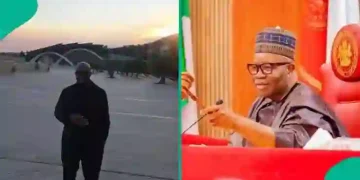
A central theme of the rejection was the apparent disregard for the district’s sitting senator, Otunba Gbenga Daniel, whose tenure concludes in 2027. Nowhere in the Remo leaders’ declaration was there mention of the incumbent or any consultation with his political structure.
“It is not Ogun east aimoye odun for Senate o lule,” Ifagbemi Fatunbi wrote. “O G D Carry go listening leader.”
The proverbial formulation conveyed what formal political language could not: that the seat is not vacant, that the occupant has performed creditably, and that the people have not signalled any desire for change. The instruction to Senator Daniel—“Carry go”—was unambiguous. Continue. The road is clear. The support is yours.
“Hope say no be the same ogun east wey Daniel dey sha,” Crystal Paths added, the sarcasm unmistakable. “…..and the person that wrote this thing actually knows the truth o…issokay.”
‘Who will vote for U????’
Perhaps the most devastating response came in four words, punctuated with four question marks.
“Who will vote for U????” —Franklin David
The question exposed the fundamental weakness of the Remo endorsement. It was issued by people whose political survival depends on the governor. It did not emerge from the marketplaces, farm settlements, and residential streets where actual elections are decided. And it offered no evidence, beyond the confident declarations of salaried appointees, that the voting public shares this preference.
“You can fool me one time but you can’t fool me all the time,” Olatunji Muyiwa Micheal wrote. “Is not the Special adviser that will write good things about the Governor but the citizens. We are waiting.”
Achievements vs. Accountability
Chief Kola Ogunjobi, announcing the endorsement, had cited the governor’s record: over 1,600 kilometres of roads constructed, the Gateway International Airport completed, and significant industrial investment attracted to the state. The implication was that such achievements naturally qualify the governor for higher legislative office.
The public response suggested otherwise.
“Continue to deceive yourself,” Ojedele Shakirudeen wrote. “Sha, tell him to fix our roads.”
Not the 1,600 kilometres featured in government briefings. Not the airport that serves occasional commercial traffic. Our roads. The ones that remain unfixed after seven years. The ones that connect the very communities the Remo leaders claim are awaiting the governor’s senatorial candidacy.
“A DISASTER TO THE PEOPLE OF OGUN STATE,” Fowowe Babatunde declared. “NOW PLANNING FOR SENATE. THEY PLAY.”
The accusation, “THEY PLAY”, suggested that governance itself has been subordinated to political positioning and that the governor’s attention has shifted from administering the state to securing his next office.
The Problem of Mandate
Political scientists distinguish between two types of political legitimacy: the formal legitimacy conferred by election, and the informal legitimacy conferred by genuine popular support. The Remo endorsement, critics argue, possesses neither.
“NO reputational reference,” Taiwo Adesanya wrote. “Let election determine.”
The comment reflected a broader impatience with preemptive declarations that seek to anoint candidates years before voters have an opportunity to express their preference. If Governor Abiodun genuinely commands the support of Ogun East voters, the argument runs, he should test that support at the ballot box—not through press releases issued by political appointees.
“Na una problem be that,” Ogunjimi Joseph Oluwaseun concluded. “As long it is not Ogun central.”
The geographical reality is inescapable. Ogun Central is the governor’s home base. Ogun East is Senator Daniel’s constituency. And the voters of Ogun East, if social media is any measure, have not yet signalled any willingness to transfer their allegiance.
‘Awon Oloshi followers and Oloshi leaders’
Otunba Biodun Filas dispensed with diplomatic language entirely.


“Awon Oloshi followers and Oloshi leaders.”
The Yoruba term oloshi carries connotations of worthlessness, futility, and complete uselessness. It was directed not at any single individual but at the entire ecosystem of political endorsement that produced the Remo declaration—an ecosystem in which officeholders endorse officeholders, appointees celebrate appointees, and the actual business of securing voter support is deferred indefinitely.
‘OGD continuity’
While the Remo leaders positioned Governor Abiodun as the natural successor to Senator Daniel, the public response positioned Senator Daniel as the natural incumbent deserving of renewal.
“OGD continuity,” Abdulwasiu Gbolade wrote.
Three words. No elaboration. The contrast with the lengthy Remo declaration was instructive. The people do not require press releases to express their preference. They do not need motions and secondments to communicate their will. They simply state it.
OGD continuity.
‘After performing MIRACLES… abi?’
Eko John Nicholas employed irony to puncture the governor’s self-presentation.
*”After performing MIRACLES as governor of Ogun state for 7 years+ abi?”*
The question mark invited agreement while simultaneously expressing doubt. Miracles. The word has featured prominently in government communications, deployed by special advisers and embraced by supporters. But the public’s response to the Remo endorsement suggested that seven years of claimed miracles have not translated into senatorial affection.
“Failure personification,” Kolade Lukman wrote.
Two words. No qualification. No mitigation.
The Distinction Between Endorsement and Endorsers
What the Remo leaders presented as a unified show of grassroots support, the public received as something else entirely: a gathering of political beneficiaries endorsing their benefactor.
The distinction matters. Endorsements from individuals who cannot afford to withhold their endorsement are not endorsements at all. They are contractual obligations, performed annually, renewed at the governor’s pleasure, and utterly disconnected from the preferences of voters who face no such constraints.
“Mr Governor, don’t allow anybody to deceive you,” Aborlanle Temmytorpe wrote, addressing the governor directly with something approaching pity. “You just completed your 8-year tenure and went straight to your house for relaxation. You see that Senator seat. OGD IS OUR CHOICE O.”
The Limits of Meeting Room Politics
Following the alleged endorsement of Dapo Abiodun by Remo Leaders, Ogun East has come out to reject the endorsement—not through counter-declarations from rival political elites, but through the accumulated testimony of citizens who say they have not been consulted, are not convinced, and have already made up their minds.
The Remo leaders have their meeting room. They have their motions and secondments. They have their photographs and press statements.
The people of Ogun East have their votes.
And they have already made their preference clear.
“Fake news, dapo is going no where.”
“OGD IS OUR CHOICE O.”