








The Federal Government has announced that Nigeria will need an estimated 315,000 community health workers by 2030 to strengthen primary healthcare services and improve access to essential medical care across the country.
To address the shortage, the government plans to recruit 100,000 salaried community health workers by the end of 2028. It also intends to train more frontline health personnel and strengthen primary healthcare centres nationwide.
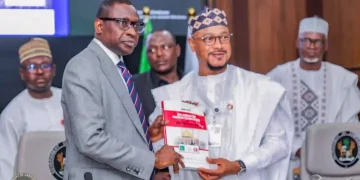
Vice President Kashim Shettima disclosed this on Friday in Abuja while representing President Bola Tinubu at the launch of the Community Health Programme Continental Acceleration Plan 2026–2030.


The initiative brings together 51 African countries and more than 30 development partners, with the goal of recruiting two million community health workers across Africa by 2030.
Speaking at the event, Shettima described community health workers as an essential part of the healthcare system, particularly in reaching underserved communities and providing basic medical services.
He explained that these workers play important roles in identifying maternal health risks, reaching children who have not received vaccinations, gathering household health information and detecting possible disease outbreaks.
The Vice President stressed that community health workers must receive legal recognition, regular salaries, adequate support and fair deployment across different communities to ensure effective healthcare delivery.
He said the Federal Government was pursuing the recruitment of 100,000 salaried community health workers under the Nigeria Health Sector Renewal Investment Initiative.
According to him, the initiative also includes plans to revitalise more than 17,000 primary healthcare centres and train 120,000 frontline health workers to improve the quality of healthcare services.
Shettima further urged African governments to increase domestic funding for community health programmes rather than depending heavily on external financial support.
He said countries must develop clear national implementation plans, allocate dedicated budgets and establish effective monitoring systems to ensure that commitments produce measurable improvements in healthcare delivery.
Providing a continental perspective, the Africa Centres for Disease Control and Prevention (Africa CDC) said the target of employing two million community health workers across Africa was based on a 2017 African Union commitment.
However, the agency disclosed that just over half of the original target had been achieved.
Africa CDC estimated that the continent would require $4.3 billion annually to achieve the recruitment target, noting that every $1 invested in community health programmes could generate up to $19 in economic and social benefits.
The agency also identified Nigeria’s plan to employ 100,000 salaried community health workers as a major contribution towards achieving the continental target.
Also speaking, the Minister of State for Health and Social Welfare, Dr Iziaq Salako, commended President Tinubu for approving Nigeria’s hosting of the high-level forum.
Salako described the initiative as an important step towards strengthening community health systems and improving primary healthcare delivery across Africa.
Meanwhile, the Coordinating Minister of Health and Social Welfare, Professor Muhammad Pate, represented by the ministry’s Permanent Secretary, Daju Kachollom, reaffirmed the government’s commitment to expanding the community health workforce.
Kachollom said the Federal Government would continue to strengthen primary healthcare services in line with the Renewed Hope Agenda and the Nigeria Health Sector Renewal Investment Initiative.
She also acknowledged the contributions of the African Union Commission, Africa CDC, development partners and other stakeholders.
She emphasised that sustained investment, strong partnerships and coordinated implementation would be necessary to achieve the objectives of the Community Health Programme Continental Acceleration Plan.
READ ALSO:
- Nigeria, Russia Begin Talks To Replace 59-Year-Old Aviation Agreement
- FG Says Nigeria Needs 315,000 Community Health Workers By 2030
- FG Launches 2,000 Housing Units In Lagos, Says Teachers, Nurses And Police Officers Can Own Homes With N100,000
- Tinubu Welcomes Airtel’s Open Network Initiative, Says It Will Improve Telecom Services
- EFCC Chair commends Governor Dauda Lawal’s Transformational Leadership