










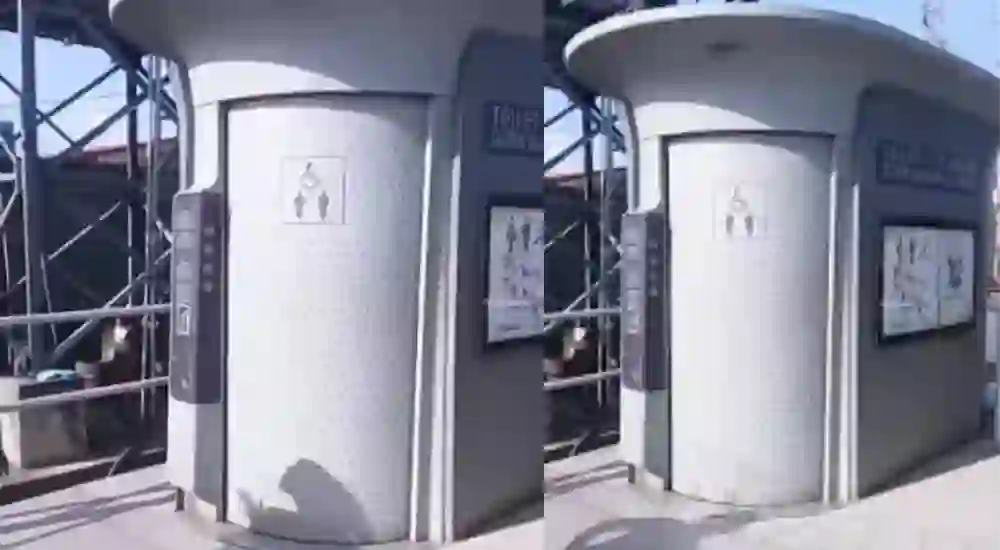
The Lagos State Government has announced plans to construct 200 additional public toilet facilities as part of efforts to tackle open defecation and improve access to hygienic sanitation services across the state.
The government disclosed that Lagos currently has more than 1,769 functional public toilet facilities, while construction is ongoing on 200 additional toilets and 80 bathrooms. The initiative will also provide 100 urinals and 160 handwashing basins across the five divisions of the state.
The Special Adviser to the Governor on Environment, Engr. Olakunle Rotimi-Akodu, disclosed this while delivering the keynote address at the 2026 World Toilet Day celebration held in Alausa, Ikeja.
According to a statement issued on Saturday by the Director of Public Affairs, Ministry of the Environment and Water Resources, Kunle Adeshina, the event was organised around the theme, “Sanitation and Gender Equality.”
Speaking at the event, Rotimi-Akodu emphasised that access to decent toilet facilities goes beyond providing infrastructure, describing sanitation as an essential part of human dignity, personal security, social inclusion and sustainable development.
He explained that inadequate sanitation facilities disproportionately affect women and girls, exposing them to security risks, harassment and challenges associated with menstrual hygiene management.
The Special Adviser noted that the absence of safe, private and accessible toilets in schools, workplaces, markets, transport terminals and healthcare facilities could discourage female students from attending school, reduce women’s economic productivity and negatively affect their general well-being.
He stressed that achieving genuine gender equality would remain difficult without addressing the inequalities surrounding access to adequate sanitation.
Rotimi-Akodu explained that the Lagos State Government, through the Ministry of the Environment and Water Resources, was implementing several interventions to address sanitation deficiencies in response to the state’s increasing population and rapid urbanisation.
He added that the government’s sanitation programme was not limited to constructing public toilets but also involved ensuring that the facilities were properly designed, strategically located, adequately maintained and effectively managed.
According to him, the facilities must meet established standards of safety, accessibility, privacy, cleanliness and gender sensitivity, with particular attention to women, girls, children, older persons and people living with disabilities.
He further called for menstrual hygiene management to be incorporated into sanitation planning, particularly in schools, markets, workplaces and public institutions.
The Special Adviser emphasised the importance of providing adequate privacy, regular water supply, functional handwashing facilities and appropriate systems for disposing of menstrual waste in public toilets.



He also appealed to commercial establishments, including banks, restaurants and filling stations, to make their restroom facilities available to members of the public to complement the government’s efforts.
Rotimi-Akodu called for stronger collaboration among government agencies, private sector organisations, international development partners and non-governmental organisations to accelerate the state’s drive towards achieving Open Defecation-Free status.
Citing figures from the World Health Organisation and UNICEF Joint Monitoring Programme, he disclosed that approximately 3.4 billion people worldwide lacked access to safely managed sanitation services, while 354 million people still practised open defecation.
He urged Lagos residents to adopt responsible sanitation habits, stressing that maintaining clean and functional toilet facilities required the collective efforts of individuals, communities and relevant institutions.
Earlier, the Permanent Secretary, Office of Environmental Services, Dr. Gaji Tajudeen, represented by the Director of Sanitation Services, Dr. Hassan Sanuth, described World Toilet Day as an important opportunity to draw attention to sanitation challenges and their consequences for public health and human dignity.
Tajudeen said the 2026 celebration was in line with the United Nations Sustainable Development Goal 6, particularly Target 6.2, which seeks to ensure equitable access to adequate sanitation and hygiene for everyone while ending open defecation by 2030.
He warned that poor sanitation contributes to water contamination and the spread of preventable diseases, including cholera and diarrhoeal infections. He added that inadequate sanitation also affects productivity, particularly among children and other vulnerable groups.
The Permanent Secretary called for increased cooperation among government institutions, private organisations, development partners and communities to address the state’s sanitation challenges.
He also urged residents to take responsibility for maintaining clean, safe and accessible toilet facilities in their homes, schools, markets, motor parks and places of worship, including ensuring that people living with disabilities could use them conveniently.
The Lagos State Government reiterated that improving sanitation infrastructure and encouraging responsible hygiene practices remained essential to protecting public health and achieving its target of ending open defecation across the state.
READ ALSO;
- FG Trains 87,701 Nigerians, Enrols 150,000 More In TVET Programme
- Lagos Builds 200 More Public Toilets Amid Rising Open Defecation Concerns
- Kano Begins 20-Year Water Supply Plan To End Persistent Shortages
- 2027: Obi Pledges 10,000MW Electricity, 10,000 Health Centres, 40,000 School Blocks
- NSCDC Redeploys Nine State Commandants, Appoints New FCT Commander