








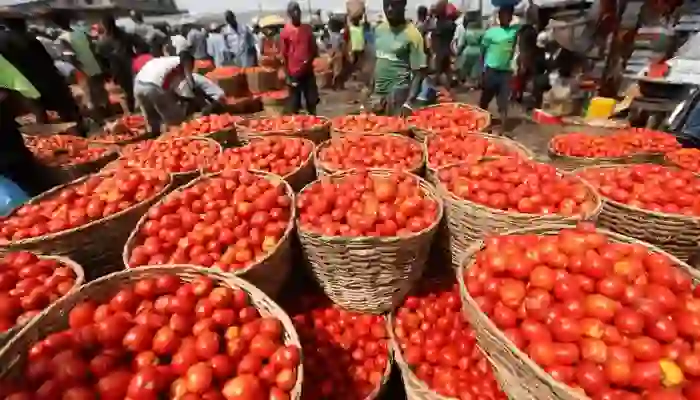
Nigeria could experience shortages of rice, tomatoes and other staple foods within the next three months unless urgent measures are taken to address production and supply chain challenges, the Organisation for Technology Advancement of Cold Chain in West Africa (OTACCWA) has warned.
The President of OTACCWA, Mr. Alexander Isong, who is also the Nigeria Country Director of the World Agriculture Forum, issued the warning during an interview with the News Agency of Nigeria (NAN) in Lagos.
According to Isong, declining agricultural production, insecurity, rising transportation costs and poor storage infrastructure are threatening food availability and could trigger another surge in food prices.
He said rice production is expected to fall by about six per cent to 8.3 million tonnes, while the area under cultivation is projected to decline by seven per cent to approximately 4.2 million hectares.
He noted that data from the United States Department of Agriculture also indicates a five per cent year-on-year drop in rice production, warning that reduced planting would significantly affect food supplies across the country.
Isong also expressed concern over tomato production, saying shortages could continue until the late harvest season expected in October. He added that maize, sorghum and millet may also face supply pressures due to reduced cultivation in recent planting seasons.
He attributed the worsening situation to insecurity in major farming communities, which has displaced thousands of farmers and disrupted agricultural activities, particularly in northern Nigeria.
According to him, transporting one tonne of grain from Kano to Lagos now costs about ₦70,000, compared to ₦45,000 previously, while transport costs on some routes have doubled or tripled because of rising fuel and energy expenses.
He further disclosed that onions and peppers are already in limited supply in major producing areas, contributing to sharp increases in market prices.
The OTACCWA president also noted that Nigeria is expected to remain heavily dependent on wheat imports, with an estimated 7.2 million tonnes likely to be imported to meet domestic demand.
Isong stressed that although agriculture recorded stronger Gross Domestic Product growth in the first quarter of 2026, the gains have not translated into improved food availability because of post-harvest losses, insecurity and declining cultivation.
He urged the Federal Government, state governments, private investors and development partners to work together to prevent shortages by improving security in farming communities, reducing transportation costs and strengthening food logistics.
He called for increased investment in rural roads, expanded rail freight services for agricultural produce and more efficient distribution systems to lower the cost of moving food from farms to markets.
Isong also advocated greater investment in aggregation centres, cold storage facilities, food processing plants and produce markets located close to farming communities to reduce post-harvest losses.
He encouraged the government to speed up the distribution of improved seeds, fertilisers, irrigation support and affordable credit ahead of the 2026/2027 planting season to boost production.


He further appealed to private investors to expand cold chain infrastructure, food processing and contract farming through accessible financing.
According to him, Nigeria loses between 30 and 50 per cent of its perishable produce before it reaches consumers, stressing that reducing these losses would significantly improve food availability and help stabilise prices.
Isong also called for stronger collaboration among governments, commodity associations, farmer cooperatives, logistics companies and development partners to monitor food supplies and respond quickly to emerging shortages.
He maintained that with improved security, better logistics, reduced post-harvest losses and stronger support for farmers, Nigeria can prevent food shortages and ease pressure on household food costs.
READ ALSO:
- Zamfara and XEJET signs agreement to commence Abuja-Gusau Flight
- Nigerian Baptist Convention President Lauds Daniel’s Support For Christians During Sagamu Visit
- Exclusive! What is Senator Adeola Yayi Hiding About His Company, Sootem?
- NANYD Cautions Political Parties Against Exploiting Niger State Miners’ Death for Political Gains
- The Dangote IPO: Billionaire’s Shield or Nigeria’s Open Door? | The Surge By Boma Lilian Braide (Esq)