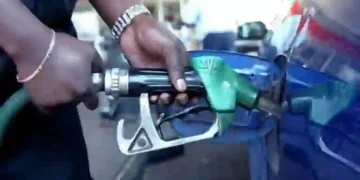










Oil marketers say they will raise pump prices for petroleum products as international crude benchmarks climbed past $100 per barrel, pushing up the cost of crude and adding fresh pressure on domestic fuel prices.
The OPEC Basket, which includes Nigeria’s Bonny Light, rose from over $95 to above $100 per barrel — a jump of about 5.2 per cent. Brent crude settled at $100.60, up 2.77 per cent, while Murban crude surged 6.83 per cent to $118.30 per barrel, according to Oilprice.com data. The rally has been driven by escalating tensions in the Middle East and fears of further supply disruptions.
Joseph Ehimen, Lagos State Chairman of the Petroleum Products Retail Outlets Owners Association of Nigeria (PETROAN), confirmed marketers would adjust prices after their next round of purchases, with the new rates reflecting market forces and logistics costs.
Nigeria’s output shortfall clouds the windfall
Despite the price surge, Nigeria may not fully benefit. OPEC’s latest Monthly Oil Market Report shows the country’s crude production, excluding condensates, fell to 1.44 million barrels per day in July — down from 1.51 million bpd in June and about 60,000 bpd short of Nigeria’s 1.50 million bpd target. That shortfall limits how much of the higher prices translate into extra foreign exchange for the country.
Diesel, transport, freight costs seen climbing



Economist Clifford Egbomeade warned that the immediate impact would be a broad cost shock, with diesel, transport, freight and other energy-intensive costs rising and squeezing both businesses and households. He cautioned against a return to broad petrol subsidies, urging government instead to capture extra oil revenue, cut wasteful spending, shore up forex liquidity and ensure local refineries like Dangote can access Nigerian crude on commercial terms.
Adetunji Oyebanji, former MD/CEO of 11 Plc, argued that since Nigeria operates a deregulated market, global price swings are largely unavoidable. He called for government to subsidise mass transit and public services such as the BRT, hospitals and schools instead of reintroducing fuel subsidies, and pressed for accountability on how oil revenue reaching states is spent.
“Mixed blessing” for small businesses — ASBON
Femi Egbesola, President of the Association of Small Business Owners of Nigeria, described the price surge as a mixed blessing — boosting government oil revenue and forex inflows, but raising costs for businesses and cutting household purchasing power. He warned MSMEs would be hit hardest given their already-high energy and financing costs, and urged government to channel windfall revenue into stable fuel supply, local refining, reduced levies on businesses, infrastructure investment and targeted support for vulnerable households.
Domestic prices yet to fully reflect the surge
Mid-day market data showed Lagos petrol prices largely holding between N1,266 and N1,300 per litre. Dangote Refinery kept its depot price at N1,266, MRS at N1,267 and NIPCO at N1,280. Some depots edged up — A.A. Rano to N1,272, Aiteo to N1,275, ASCON and Integrated to N1,280 each — while Bono posted the steepest rise, up N30 to N1,300, and Pinnacle rose to N1,273.
The muted movement suggests the crude rally hasn’t yet fully hit the domestic market, though analysts warn sustained high crude prices could eventually raise refinery feedstock and supply-chain costs.
Calls for government intervention
Mazi Colman Obasi, National President of the Oil and Gas Services Providers Association of Nigeria, urged the Federal Government to act swiftly to shield consumers and businesses before rising crude costs feed into a broader cost-of-living increase — without reviving the inefficiencies of the old subsidy regime. He called for stronger domestic refining capacity, reliable crude supply to local refineries, and improved distribution infrastructure, alongside investment in public transport and alternative energy to cut petrol dependence.
David Adonri, Managing Director of Highcap Securities, said rising crude prices would worsen inflation through multiple channels. With government’s finances already strained, he said the cost of cushioning consumers may fall largely on households in the short term — though wisely invested windfall revenue could fund infrastructure and job creation over the long run.
READ ALSO:
- Transport Workers Endorse Gov. Lawal For Second Term Over Improved Infrastructure In Zamfara
- Oil Marketers to Hike Pump Prices as Crude Tops $100/Barrel Amid Middle East Crisis
- Obi Insists He Won 2023 Poll, Vows to Respect 2027 Outcome — If Credible
- Moniepoint Founder to Lead $200,000 Pan-African AI Startup Programme
- 2027: Tinubu urges bishops to promote peace, reject election incitement