




Nigeria is passing through one of its hardest seasons since the return of democracy in 1999. Every Nigerian knows exactly where the shoe pinches. Inflation has emptied pockets, the naira changes value faster than a chameleon changes colour, insecurity keeps families awake from Zamfara to the South East, and a quiet confusion hangs over where the country is heading.
When times are this tough, we look to the top and ask: Who truly has what it takes to fix this country? Who has the real presidential material?
Think of Nigeria as a massive luxury bus on a rocky, muddy road. More than 200 million passengers are inside, hungry and arguing. The tyres are worn out and the engine is knocking. You do not choose a driver because he speaks fine English, comes from your village or worships in your church or mosque. You choose the one who can handle the steering, understands the engine, stays calm when the brakes fail on a steep hill, and treats every passenger fairly.
Presidential material is not a title you buy, It is a combination of three things: a clear vision for where the country should go, the practical capacity to manage complex systems, and the emotional intelligence to unite a Nation divided along ethnic, religious and regional lines. A true leader must have the courage to make hard choices today so that the next generation can eat tomorrow. He must also have the empathy to ensure the poorest citizens do not starve while waiting for those choices to bear fruit.
So, if we strip away the campaign jingles, the party colours and the expensive rallies, what does the Presidential Material actually mean? Is it raw political power or A head for business or A radical spirit that wants to pull down the old house or a brilliant legal mind that knows the constitution inside out?
To answer honestly, we must examine the personalities who have offered themselves for leadership; Bola Ahmed Tinubu, Atiku Abubakar, Peter Obi, Omoyele Sowore and Adewole Adebayo. My aim is not to campaign for or against anyone, but to look through a clear window at what each one brings to the table, and what each one leaves off it.
Let me bring the first personality under our analytical magnifying glass with the man in Aso Rock, the current President; Bola Ahmed Tinubu GCFR. His greatest strength is his long record as a builder of political structures and a scout of governing talent. His strongest credential is Lagos. Supporters credit him with taking a cash strapped state between 1999 and 2007 and laying the revenue foundations that helped turn it into one of Africa’s largest urban economies. He knows how to gather capable people and stitch coalitions together.
But the problem is, Lagos is not Nigeria. The formula for running a wealthy coastal hub does not automatically work for a vast federation with insecurity in every geopolitical zone. In office, he moved boldly; fuel subsidy was declared gone on inauguration day and the foreign exchange windows were unified within weeks. Many economists agree those leaks needed plugging. The trouble was sequencing. Without a solid safety net in place first, the cost of living exploded and millions slipped into distress. He has the political weight to make big moves; his critics ask whether he has shown enough empathy and planning to shield the poor from the pain of his reforms.
Next is Atiku Abubakar GCON, the former Vice President who has pursued the presidency across several election cycles. Atiku represents the institutionalist model. His selling point is an insider’s knowledge of how the federal machine works from the very top. As Vice President, he chaired the National Council on Privatisation, and the opening of the telecoms sector in that era put a GSM phone in the hands of the mai shayi and the market woman alike. His vision has been consistent: government as regulator, the private sector as job creator, and restructuring to give states more power.
His weakness is just as clear. To the man on the street, privatisation often sounds like selling national assets to well connected friends, and controversies around some of those sales still follow him. After decades at the heart of the political class, he also carries the baggage of that system. Young Nigerians find it hard to see a lifelong insider as the face of fresh, transparent reform.
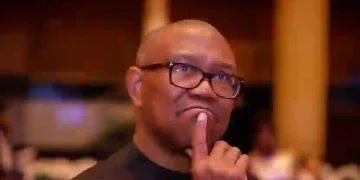
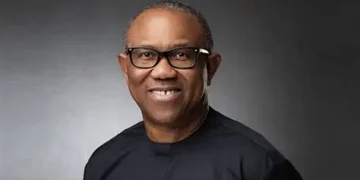
This brings me to Peter Obi, the former governor of Anambra State, who galvanised a massive following, especially among young people, by presenting himself as an alternative to the establishment. For many Nigerians, this is where the disappointment cuts deepest. We followed Obi with genuine hope. Here, we thought, was a different man, a prudent man who speaks with data. Yet after listening again and again, many now ask, where is the substance behind the statistics?
He talks plenty. China today, Indonesia tomorrow, figures up and down. But where is the detailed blueprint? His campaign is anchored on slogans like “from consumption to production”. Fine on a poster, but what is the industrial policy? What is the security plan for Zamfara, for Borno, for the South East? What is the power sector roadmap Nigerians can hold in their hands and interrogate? His supporters point to speeches and policy outlines; critics reply that interviews and motivational talks are not a governing document.
His Anambra record is now presented as sainthood. We are told he saved money while others borrowed. Supporters point to the savings and investments he left behind and to improved school results in the state. Fair enough. But saving money in the bank while doctors went on strike and poverty remained stubborn raises a fair question; is that prudence, or a lack of ambition? Where is the signature Anambra project that other states copy? We wanted substance; too often, we got packaging.
Then there is Omoyele Sowore, the human rights activist and publisher who speaks for the radical wing of Nigerian politics that rejects the establishment entirely. Sowore is different because he does activism as if activism were governance. He does not want to reform the system; he wants to dismantle it. From his student union days to his repeated detentions under successive governments, his life has been defined by confronting bad governance, and that courage deserves respect. His vision is total justice, free education and the transfer of wealth from the elite to the workers.
It is inspiring, but activism is not administration. Where is the party structure across all 774 local governments? Where are the governors, senators and House members? You cannot run a fragile, complex country like Nigeria on X Spaces and street protests. Governance demands compromise, diplomacy, trade agreements and steady markets, not only fire.
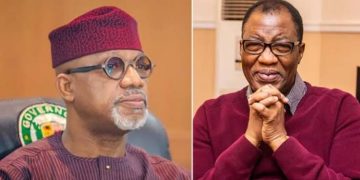
There is also another candidate, Prince Adewole Adebayo, the legal practitioner who fly the flag of the Social Democratic Party. Adebayo represents the intellectual and constitutional model. He reads Nigeria through law, history and constitutional order, arguing that our problem is not a lack of resources but the breakdown of the rule of law. He speaks about strong institutions, merit and the separation of powers, themes that resonate with anyone who has watched our courts settle what the ballot should have settled.
His challenge is the gap between theory and the street. A brilliant diagnosis is valuable, but can he mobilise millions behind it? In a country where poverty is widespread and elections are shaped by heavy spending and regional networks, big grammar does not put food on the table. His ideas remain untested in the messy reality of public administration.
As for the rest of the field, many are placeholders whose names most Nigerians cannot recall. They have no national structure, no clear programme and no serious campaign. They appear at election time, paste posters, and vanish once results are announced. They cannot be taken seriously as contenders.
Place everyone side by side and one truth is unavoidable: Nobody is flawless. Tinubu has structure but has struggled to cushion the pain. Atiku has experience but carries old baggage. Obi promised prudence but has yet to show a visible, scalable blueprint. Sowore has moral courage but no administrative machinery. Adebayo has intellect but no grassroots movement.

That is what breaks the heart of many Nigerians. We are blessed with oil, gas, fertile land, brilliant youth and enterprising people, yet we keep meeting leaders who cannot show us a clear road. With Obi, the pain cuts deeper precisely because so many believed. We thought, finally, here is a different option. But on close inspection, there is still no plan you can touch in your daily life.
We are tired of being told to hope without a plan. Tired of being used for campaign as crowd extras and forgotten once the canopies come down. We deserve a leader whose ideas we can see in our pot of soup, in steady light in our homes, in the safety of our streets. Yet that responsibility does not rest on politicians alone. As 2027 approaches, voters must demand written plans, question every slogan, and refuse to trade their votes for a bag of rice.
Right now, looking at this lineup, I am searching and searching, and I am not seeing it. That is why many of us still go to bed with a heavy heart, praying that one day Nigeria will find its true driver.
READALSO:
- Sanwo-Olu Appoints Sanuth as New LAWMA MD Amid Lagos Waste Crisis
- Obi Denies Asking UK-Based Nigerians to Stop Supporting Families
- Fuel Subsidy Return Could Push Naira to ₦4,000/$, Oyedele Warns
- Who Truly Has The Presidential Material? | The Surge By Boma Lilian Braide (Esq)
- Former Delta Governor Emmanuel Uduaghan Dies At 71