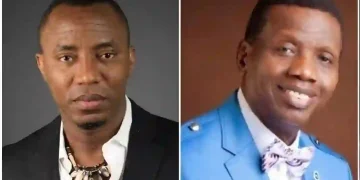







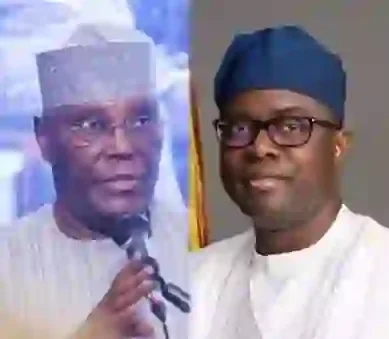
Former Vice-President Atiku Abubakar and Oyo State Governor Seyi Makinde were absent on Tuesday as presidential and National Assembly candidates signed the first National Peace Accord ahead of the 2027 general elections.
The agreement was signed in Abuja at an event organised by the National Peace Committee in partnership with The Kukah Centre, less than a day before the official commencement of political campaigns and rallies.
The signatories pledged to conduct peaceful, issue-based campaigns and reject electoral violence, hate speech, misinformation, personal attacks, incitement and other actions capable of undermining the electoral process.
The event was attended by the Chairman of the Independent National Electoral Commission (INEC), Prof. Joash Amupitan; Inspector-General of Police, Olatunji Disu; political party leaders and candidates; members of the diplomatic community and other stakeholders.
President Bola Tinubu was represented by the Secretary to the Government of the Federation, George Akume. Presidential candidates including Peter Obi of the Nigeria Democratic Congress, Adewole Adebayo of the Social Democratic Party and Omoyele Sowore of the African Action Congress signed the accord.
Other prominent participants included APC National Chairman, Nentawe Yilwatda; Deputy President of the Senate, Barau Jibrin; PRP National Chairman, Hakeem Baba-Ahmed; and several lawmakers and political leaders.
However, Atiku, who is contesting the presidency on the platform of the African Democratic Congress, and Makinde, the presidential candidate of the Allied Peoples’ Movement, did not attend the ceremony.
The peace pact comes amid heightened political activities ahead of the 2027 elections, with the economy, insecurity, unemployment, poverty, infrastructure, healthcare and electoral credibility expected to dominate the campaigns.
Under INEC’s revised timetable, the presidential and National Assembly elections are scheduled for January 16, 2027, while governorship and State House of Assembly elections will take place on February 6, 2027.
Tinubu Urges Candidates to Campaign on Ideas
Speaking through Akume, President Tinubu called on political parties and candidates to place national interest above personal and partisan ambitions.
He warned politicians against turning the 2027 contest into a do-or-die affair and urged them not to exploit ethnic or religious sentiments for political gain.
Tinubu said the election should be based on ideas, policies and programmes, with candidates focusing on the challenges facing Nigerians and offering practical solutions.
He also reaffirmed the APC’s commitment to rejecting violence, hate speech, misinformation, incitement and digital manipulation during the campaign.
INEC Chairman: Elections Are Not Warfare
INEC Chairman Joash Amupitan described the peace accord as an important step towards setting acceptable standards for political campaigns ahead of the official commencement of rallies on Wednesday, August 19.
He urged candidates to focus on national challenges rather than personal attacks and inflammatory rhetoric.
According to Amupitan, information from the National Peace Committee’s Election Security Information Hub showed an “alarming resurgence” of hate speech, toxic political polarisation, coordinated misinformation and personality-driven political discourse.
He stressed that elections should be treated as a competition for public office rather than warfare.
Amupitan also warned politicians against premature victory claims and the spread of unverified information on social media. He said INEC was preparing to deploy about 1.4 million ad hoc personnel across more than 176,000 polling units for the 2027 elections.
Obi Calls for Credible Elections
Peter Obi said political leaders should be expected to conduct themselves responsibly without needing a peace agreement.
He maintained that anyone seeking public office should demonstrate exemplary behaviour and ensure that campaigns focus on the issues affecting Nigerians.
Obi also expressed concern over the integrity of the electoral process, calling for an election in which Nigerians’ votes would genuinely count.
Sowore Doubts Effectiveness of Peace Pact
Omoyele Sowore questioned whether the peace accord would be effective without strong enforcement mechanisms.
He argued that previous agreements had not prevented electoral violence and called for a system that would impose consequences on politicians who violate the pact.
Sowore also criticised aspects of the handling and uploading of results from the recent Osun governorship election and advocated for what he described as a “justice accord.”
Police Pledge Neutrality
The Nigeria Police Force, represented by Deputy Inspector-General Umar Shehu, pledged to provide security for voters, candidates and other participants throughout the electoral process.


Shehu said the police were not concerned with which candidate wins but were focused on ensuring that eligible Nigerians could vote without intimidation or fear.
The Inter-Party Advisory Council also urged political parties, candidates and their supporters to respect the peace accord, avoid fake news and personal attacks, and promote tolerance and constructive political debate.
READ ALSO:
- Lagos-Calabar Highway: Group Petitions Tinubu, National Assembly Over Ondo Route Diversion
- Sowore Reveals What Pastor Adeboye Told Him During Recent Meeting
- International Day of the Girl Child 2026: Pad Me A Girl Reaches Over 15,000, Calls for More Support for Menstrual Health
- Adebutu, Pantami and Gwarzo missing from final lists as parties race to correct omissions
- Tension grips Delta community over fresh crude oil discovery