







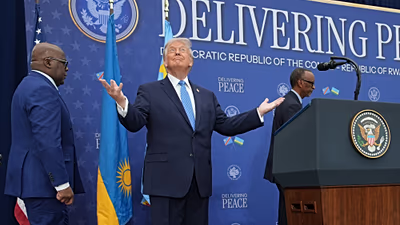
When Donald Trump presided over a stilted handshake between DRC President Félix Tshisekedi and Rwanda’s Paul Kagame, the ceremony promised an end to a three-decade war. Yet the real accord may have been signed in the fine print: a parallel pact granting U.S. companies access to the Congo’s mineral-rich earth. Is this a bid for lasting stability, or a resource rush dressed as diplomacy?
The Washington signing, at the aptly renamed Donald J. Trump Institute of Peace, was a legacy moment for the president, who has openly coveted a Nobel Prize. But his language swiftly shifted from peace to profit. “Everybody’s going to make a lot of money,” Trump declared, detailing separate deals to unlock the DRC’s cobalt and lithium, critical for everything from iPhones to fighter jets. This aligns with a stark U.S. priority: breaking China’s stranglehold on the global rare earth supply chain.
On the ground, the “peace” feels spectral. As leaders posed in Washington, clashes continued in eastern Congo between government forces and the Rwanda-backed M23 rebels. The deal appears designed not to immediately silence guns, but to create a stable enough façade for extraction. For Washington, the primary dividend isn’t regional harmony; it’s a secure pipeline for the minerals that power the modern world.
So, who truly benefits? The pact serves Trump’s quest for a grand diplomatic trophy, offers the U.S. a strategic win over China, and opens a treasure trove for Western mining firms. For the people of the DRC, however, a lasting peace requires more than a signature. It demands genuine security, equitable benefits, and an end to exploitation—not merely a new chapter in an old story of resource extraction.