

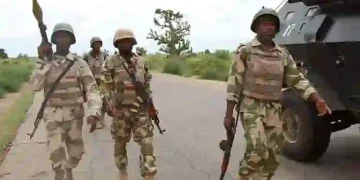






The United States plans to send 200 troops to Nigeria to provide training and technical support to Nigerian armed forces combating jihadist insurgencies, officials from both nations confirmed Tuesday. The deployment marks an expansion of US-Nigeria military cooperation.
“We are getting US troops to assist in training and technical support,” said Major General Samaila Uba, spokesman for Nigeria’s Defense Headquarters.
The Wall Street Journal first reported the deployment, which will join a small existing US team that currently assists with air strike targeting. The additional personnel, expected within weeks, will deliver “training and technical guidance,” particularly in coordinating simultaneous air and ground operations, according to the newspaper.
US Africa Command confirmed the deployment details.
The announcement comes amid US diplomatic pressure over security challenges in Nigeria. President Donald Trump has described violence in the country as “persecution” and “genocide” against Christians, though Christians are not the only victims. Massad Boulos, Trump’s senior advisor on Arab and African affairs, acknowledged last year that Boko Haram and Islamic State “are killing more Muslims than Christians.”


Nigeria disputes claims of systematic Christian persecution—a narrative promoted by some US religious conservative groups. Independent analysts attribute the violence to broader state failure in controlling jihadist organizations and armed gangs operating across poorly governed rural areas.
Despite diplomatic tensions, both countries have strengthened military cooperation. US forces conducted strikes against militants in northwestern Sokoto state in December through joint operations with Nigeria.
The US military has committed to providing intelligence for Nigerian air operations and expediting arms sales. However, Uba emphasized that the incoming troops “aren’t going to be involved in direct combat or operations.” Nigeria requested the additional support, he noted.
Africa’s most populous nation faces a protracted jihadist insurgency centered in the northeast, while criminal gangs conduct ransom kidnappings and village raids in the northwest. Central regions experience periodic violence between predominantly Christian farmers and Muslim Fulani herders, though researchers identify competition over scarce land and resources as the primary driver.
READ ALSO:
- Adeyemi Says He Survived a Gun Attack, Now Offers to Turn Himself In as Investigation into Alledged ‘Fake Agency’ Intensifies
- Messi: I Cried Over Missed Penalty, Not Victory
- Journalist Stanley Ugagbe Detained for 48 Hours, Blindfolded, Over Investigative Report on CBN Deputy Governor, Enem Usoro
- Two Senior Terrorist Commanders Surrender To Troops In Borno
- Court Voids ARCON’s ₦60bn Sanction Against Facebook Nigeria