









The countdown has begun. With roughly two years separating Governor Dapo Abiodun from the end of his constitutionally mandated second term, Ogun State now enters the season of reckoning, a period in which political promises must be measured against lived reality, and the gap between governance and grandstanding must finally be accounted for.
Abiodun, who has been governor since May 2019, recently assured residents that his administration would deliver a smooth, rancour-free handover in 2027, pledging to set what he called a historic benchmark as the first peaceful power transition in the state’s fifty-year history. It is a bold claim. It is also, notably, a procedural one. Peace during a handover is the floor of governance, not the ceiling.
The governor’s self-assessment is confident: a budget expanded from roughly 355 billion naira to over 2.7 trillion naira, more than 2,000 schools reconstructed, new industries attracted, farmers empowered, and the Gateway International Airport cited as a flagship infrastructure legacy. These are the metrics his administration will carry into history. But metrics issued by a government about itself are only the beginning of an audit, not the end.
The people of Ogun State are owed something more rigorous.
Ten Questions the Record Must Answer
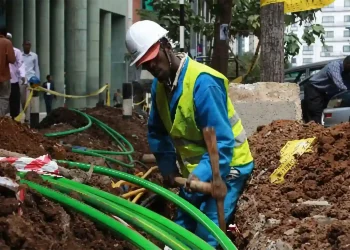
On Infrastructure: Ogun State borders Lagos, Nigeria’s commercial engine, and hosts one of the country’s densest concentrations of manufacturing activity. The administration positioned itself as delivering infrastructure with purpose, citing roads, the airport, and integration with rail corridors. Yet residents across Ogun East, West, and Central continue to report deplorable road conditions in communities outside the spotlight of government publicity. The question is not whether roads were built. It is whether the right roads reached the right people.
On Economic Growth: The governor claims Ogun’s economy has grown nearly fivefold, driven by increased industrial activities and investment inflows. However, a budget expansion driven largely by federal transfers and naira devaluation is not the same as genuine economic productivity. Has unemployment measurably declined? Are youth entering formal employment, or have they simply been cycled through periodic empowerment schemes with no structural follow-through?
On Industrial Development: The claim of new factories and industries is consistent with Ogun’s long-standing industrial corridor reality, a legacy that predates Abiodun. The sharper question is attribution and sustainability: how many of the industries cited were attracted under this administration’s specific policies, and how many local residents hold skilled, permanent employment within them?
On Education: The reconstruction of over 2,000 schools is listed among the administration’s headline achievements. Reconstructed structures, however, are measurable. Teacher welfare, consistent salary payment, classroom ratios, and student performance outcomes are equally measurable, and conspicuously absent from official briefings. Infrastructure without quality is renovation without education.
On Healthcare: Are the general hospitals in Sagamu, Ijebu Ode, Ilaro, and Abeokuta materially better equipped today than they were in May 2019? Are specialists present? Are drugs consistently available? These are not rhetorical questions. They are the benchmarks by which the sincerity of any healthcare policy is ultimately judged.
On Security: Farmers across Ogun’s rural belt have faced escalating threats from herder-farmer conflicts, kidnapping, and cult violence. Do residents in Yewa, Ijebu, and Remo divisions report greater personal safety today than at the start of this administration? Security cannot be assessed from Abeokuta.
On Transparency and Accountability: The Pandora Papers identified Abiodun as the sole director of two offshore companies in the British Virgin Islands, a known tax haven, with neither declared upon his election as governor, in apparent violation of the Code of Conduct Bureau and Tribunal Act. That disclosure never received a satisfactory resolution in the public domain. Transparency in governance begins with the governor’s own financial disclosures, not press releases about project commissioning.
On Rural Development: Every administration in Nigeria’s history has concentrated visible development in state capitals and senatorial headquarters. The test of this administration is whether the 2.7 trillion naira budget translated into measurable improvements in Ota, Owode, Ifo, Imeko, or Yewa communities, places where the cameras rarely travel.
On Youth Empowerment: Structured, sustainable empowerment means skills acquisition with verifiable placement outcomes, enterprise grants with monitoring frameworks, and apprenticeship pipelines connected to the state’s industrial base. How many programs launched under this administration have produced independently verifiable employment data?
On Legacy: The Gateway Agro-Cargo Airport at Iperu is described as a statement of economic intent, designed as a cargo and logistics hub aligned with the state’s agricultural and industrial ambitions. If completed and operationally functional before handover, it would represent a genuinely significant legacy project. The operative word is functional, not commissioned.
The Standard That Should Not Move
Governor Abiodun came to office on a platform of industrialisation, infrastructure, and innovation. He was re-elected in 2023, narrowly, which itself carries a signal that public confidence, while present, was not overwhelming. Two more years remain. They are not a grace period to manage perceptions. They are working years in which the administration’s record either solidifies or collapses under scrutiny.
The promise of a peaceful handover in 2027 is welcome. Ogun State has indeed suffered from politically volatile transitions. But peace at handover is a political achievement, not a governance one. The citizens of Ogun East, West, and Central deserve to inherit more than a smooth ceremony. They deserve functional hospitals, motorable roads, employed youth, equipped schools, and an economy whose growth they can actually feel.
Leadership is not measured by budget size. It is measured by whose life changed because of how that budget was spent.
That is the question Dapo Abiodun’s final chapter must answer, and the people of Ogun State should demand nothing less than a full accounting before the clock runs out.
The Clock Is Ticking: As Dapo Abiodun Approaches 2027, Ogun State Demands a Reckoning
By Wale Onifade
The countdown has begun. With roughly two years separating Governor Dapo Abiodun from the end of his constitutionally mandated second term, Ogun State now enters the season of reckoning, a period in which political promises must be measured against lived reality, and the gap between governance and grandstanding must finally be accounted for.
Abiodun, who has been governor since May 2019, recently assured residents that his administration would deliver a smooth, rancour-free handover in 2027, pledging to set what he called a historic benchmark as the first peaceful power transition in the state’s fifty-year history. It is a bold claim. It is also, notably, a procedural one. Peace during a handover is the floor of governance, not the ceiling.
The governor’s self-assessment is confident: a budget expanded from roughly 355 billion naira to over 2.7 trillion naira, more than 2,000 schools reconstructed, new industries attracted, farmers empowered, and the Gateway International Airport cited as a flagship infrastructure legacy. These are the metrics his administration will carry into history. But metrics issued by a government about itself are only the beginning of an audit, not the end.
The people of Ogun State are owed something more rigorous.
Ten Questions the Record Must Answer
On Infrastructure: Ogun State borders Lagos, Nigeria’s commercial engine, and hosts one of the country’s densest concentrations of manufacturing activity. The administration positioned itself as delivering infrastructure with purpose, citing roads, the airport, and integration with rail corridors. Yet residents across Ogun East, West, and Central continue to report deplorable road conditions in communities outside the spotlight of government publicity. The question is not whether roads were built. It is whether the right roads reached the right people.
On Economic Growth: The governor claims Ogun’s economy has grown nearly fivefold, driven by increased industrial activities and investment inflows. However, a budget expansion driven largely by federal transfers and naira devaluation is not the same as genuine economic productivity. Has unemployment measurably declined? Are youth entering formal employment, or have they simply been cycled through periodic empowerment schemes with no structural follow-through?
On Industrial Development: The claim of new factories and industries is consistent with Ogun’s long-standing industrial corridor reality, a legacy that predates Abiodun. The sharper question is attribution and sustainability: how many of the industries cited were attracted under this administration’s specific policies, and how many local residents hold skilled, permanent employment within them?



On Education: The reconstruction of over 2,000 schools is listed among the administration’s headline achievements. Reconstructed structures, however, are measurable. Teacher welfare, consistent salary payment, classroom ratios, and student performance outcomes are equally measurable, and conspicuously absent from official briefings. Infrastructure without quality is renovation without education.
On Healthcare: Are the general hospitals in Sagamu, Ijebu Ode, Ilaro, and Abeokuta materially better equipped today than they were in May 2019? Are specialists present? Are drugs consistently available? These are not rhetorical questions. They are the benchmarks by which the sincerity of any healthcare policy is ultimately judged.
On Security: Farmers across Ogun’s rural belt have faced escalating threats from herder-farmer conflicts, kidnapping, and cult violence. Do residents in Yewa, Ijebu, and Remo divisions report greater personal safety today than at the start of this administration? Security cannot be assessed from Abeokuta.
On Transparency and Accountability: The Pandora Papers identified Abiodun as the sole director of two offshore companies in the British Virgin Islands, a known tax haven, with neither declared upon his election as governor, in apparent violation of the Code of Conduct Bureau and Tribunal Act. That disclosure never received a satisfactory resolution in the public domain. Transparency in governance begins with the governor’s own financial disclosures, not press releases about project commissioning.
On Rural Development: Every administration in Nigeria’s history has concentrated visible development in state capitals and senatorial headquarters. The test of this administration is whether the 2.7 trillion naira budget translated into measurable improvements in Ota, Owode, Ifo, Imeko, or Yewa communities, places where the cameras rarely travel.
On Youth Empowerment: Structured, sustainable empowerment means skills acquisition with verifiable placement outcomes, enterprise grants with monitoring frameworks, and apprenticeship pipelines connected to the state’s industrial base. How many programs launched under this administration have produced independently verifiable employment data?
On Legacy: The Gateway Agro-Cargo Airport at Iperu is described as a statement of economic intent, designed as a cargo and logistics hub aligned with the state’s agricultural and industrial ambitions. If completed and operationally functional before handover, it would represent a genuinely significant legacy project. The operative word is functional, not commissioned.
The Standard That Should Not Move
Governor Abiodun came to office on a platform of industrialisation, infrastructure, and innovation. He was re-elected in 2023, narrowly, which itself carries a signal that public confidence, while present, was not overwhelming. Two more years remain. They are not a grace period to manage perceptions. They are working years in which the administration’s record either solidifies or collapses under scrutiny.
The promise of a peaceful handover in 2027 is welcome. Ogun State has indeed suffered from politically volatile transitions. But peace at handover is a political achievement, not a governance one. The citizens of Ogun East, West, and Central deserve to inherit more than a smooth ceremony. They deserve functional hospitals, motorable roads, employed youth, equipped schools, and an economy whose growth they can actually feel.
Leadership is not measured by budget size. It is measured by whose life changed because of how that budget was spent.
That is the question Dapo Abiodun’s final chapter must answer, and the people of Ogun State should demand nothing less than a full accounting before the clock runs out.
READ ALSO;
- Nigerian Man Jailed 44 Weeks for Masturbating in Front of Woman on UK Train.
- Wike Has Tinubu’s Backing For Rainbow Coalition
- NDLEA seizes N3.4bn worth of drugs, arrests fake police officer, others
- Akpabio prays in Italy for peaceful 2027 polls, end to banditry and terrorism
- Catholic Bishops Reject Foreign Aid Regulation Bill