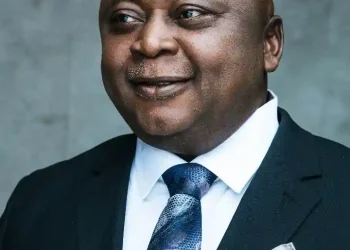








Taiwo Oyedele, Nigeria’s Minister of State for Finance, has admitted that the country’s newly introduced tax reform laws contain errors, but assured that steps are already being taken to correct them.
Speaking at the 2026 annual conference of the Nigerian Bar Association Section on Legal Practice, Oyedele explained that the inconsistencies arose during the drafting and legislative process due to procedural lapses.
In a statement shared by the Fiscal Reforms Committee, he noted that the errors were largely caused by manual processes and multiple review stages involved in developing the laws. He urged the public to await the outcome of an ongoing legislative probe into the discrepancies.
Oyedele said the issues would be addressed through a proposed Finance Bill designed to amend and align the affected provisions. He also called for a more transparent law-making process where all versions of legislation are easily accessible to the public.
He stressed that the implementation of the new tax policies would be guided by fairness, clarity, and transparency, adding that understanding the intent behind tax laws is just as important as interpreting their provisions.
Highlighting the need for reform, Oyedele pointed to long-standing inconsistencies in Nigeria’s tax system, particularly between personal and corporate taxation, which he said have discouraged many businesses from formalising.



According to him, the reforms aim to create a more consistent tax environment, promote business formalisation, and reduce arbitrary practices in tax administration.
He also warned that frequent and unpredictable policy changes could harm investor confidence, noting that stability is key to attracting investment.
On tax equity, Oyedele emphasised that the new framework is designed to protect low-income earners and small businesses. He noted that individuals earning around ₦1 million annually, as well as millions of small enterprises, should not be overburdened by taxation.
He added that the reforms eliminate minimum tax requirements for businesses operating at a loss, describing the previous system as unfairly taxing capital instead of profit.
Oyedele further called for improved efficiency in the use of public revenue, noting that Nigeria still trails countries like South Africa in tax collection performance.
The development follows earlier concerns over discrepancies between the gazetted versions of the tax laws and those passed by the National Assembly. In December 2025, Abdussamad Dasuki, a member of the House of Representatives, raised the alarm over differences in the documents, prompting lawmakers to launch an investigation and set up a special committee to reconcile the variations.
READ ALSO:
- Blessing CEO Loses Son While Still in Kirikiri Prison
- Ogun APC Crisis: Hunye Sues Yayi Over State of Origin Records
- CNN barred from Trump’s Saturday trip to Tennessee
- RCCG brings home first 100 Nigerians from South Africa
- Blind Couple Seek Jobs, Say They Need Opportunity, Not Pity