










Nigeria’s exports have increased by more than 25 per cent in the last two years, following the Federal Government’s economic and port sector reforms, the Managing Director of the Nigerian Ports Authority (NPA), Dr Abubakar Dantsoho, has said.
Dantsoho disclosed this while speaking at the ongoing World Ports Conference in London, organised by the International Association of Ports and Harbours (IAPH).
He explained that Nigeria’s growing population, strategic position and recent government policies have strengthened its competitiveness among countries in West and Central Africa.
According to him, the reforms have not only increased export volumes but have also improved cargo throughput and operational efficiency across the country’s seaports.
Dantsoho said the increase in exports covers several sectors beyond oil and gas, particularly manufacturing and agriculture, where commodities such as cocoa, cashew nuts and other raw materials have recorded significant growth.
He attributed the development to improved collaboration between the NPA and major terminal operators, particularly APM Terminals.
He said, “Statistically, exports from Nigeria in the last two years have increased by 25 per cent. These exports are not mainly from oil and gas alone. We are also recording impressive performance in manufacturing and agriculture, including raw materials such as cocoa and cashew nuts.
“Volumes have increased, and this is to the credit of the partnership between the NPA and major terminal operators such as APM Terminals.”
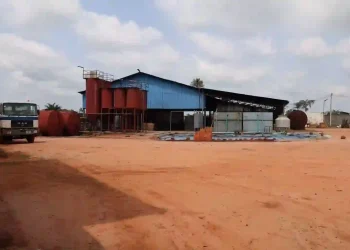
The NPA managing director explained that the authority had introduced measures to sustain the growth in exports, including the establishment of Export Processing Terminals across the country.
He disclosed that Nigeria currently has about four of such facilities, which operate through partnerships involving terminal operators, the Nigeria Customs Service and other relevant government agencies.
According to him, the facilities enable exporters to complete necessary cargo processing and documentation locally before their goods are shipped abroad.
He explained that the initiative would help ensure that Nigerian export products meet international standards and reduce difficulties associated with processing goods at destination ports.
Dantsoho also said the Federal Government’s reforms had strengthened Nigeria’s position to benefit from the African Continental Free Trade Area (AfCFTA), which seeks to increase trade among African countries.
He noted that the country’s economic reforms were attracting investors and creating opportunities for stronger commercial relationships with other African economies.
The NPA boss cited Nigeria’s growing relationship with Morocco as an example, explaining that both countries were exchanging ideas and exploring opportunities in manufacturing and other sectors.



He pointed out that Morocco had developed into a major manufacturing hub for electric vehicles and other automobile products.
Dantsoho further attributed Nigeria’s improved port performance to the reforms, noting that two Nigerian ports were listed among the world’s top 20 most improved ports in the latest World Bank global ports ranking.
He said the achievement reflected improved efficiency, technological advancement and stronger cooperation between the NPA and private sector operators.
According to him, the authority would continue to strengthen its partnerships with major players in Morocco and South Africa to improve port operations and expand regional trade.
He also disclosed that revenue generated from ports across Nigeria had quadrupled following the implementation of the reforms.
Dantsoho said cargo volumes and revenue had recorded significant growth, adding that operational efficiency at Nigerian ports had improved considerably compared with other ports in West Africa.
He explained that his position was informed by performance data available through the Association of Ports in West and Central Africa, which provides information on the operational performance of ports across the region.
While acknowledging improvements in port operations in countries such as Tanzania and Kenya, he said Nigeria must sustain its reform efforts to avoid losing the progress already achieved.
On infrastructure development, Dantsoho revealed that the Federal Government was planning a $1 billion investment to expand and modernise the Apapa Port as part of its medium- and long-term strategy for the maritime sector.
He stressed that the scale of the proposed investment made private sector participation necessary, particularly through partnerships with established terminal operators and other international investors.
He added that the NPA was also working with technology companies to modernise port operations and improve service delivery.
As part of the digital transformation efforts, he disclosed that the authority had partnered with a Singaporean firm to develop a single-window system, which is expected to simplify processes and improve coordination among port stakeholders.
He further revealed that the NPA was collaborating with another company from Abu Dhabi to develop a Port Community System aimed at improving information sharing and operational efficiency among stakeholders.
Dantsoho maintained that continued collaboration between government agencies, private investors and international partners would be essential to sustaining growth, improving Nigeria’s maritime infrastructure and strengthening the country’s position as a major trade hub in Africa.
READ ALSO:
- Nigeria’s Exports Rise 25% in Two Years as FG Reforms Boost Port Operations – Dantsoho
- Otti Calls on Nigerian Elite to Promote Good Governance, Drive National Reforms
- Court Fixes November 19 For Hearing In Iyabo Obasanjo, Sogbesan Amoo Ogun Central PDP Ticket Dispute
- Presidency Mocks Peter Obi Over Exhaustion, Says He Is Not a Superman
- Gov. Dauda Lawal Flags Off Strategic Road Projects Linking Four LGAs