






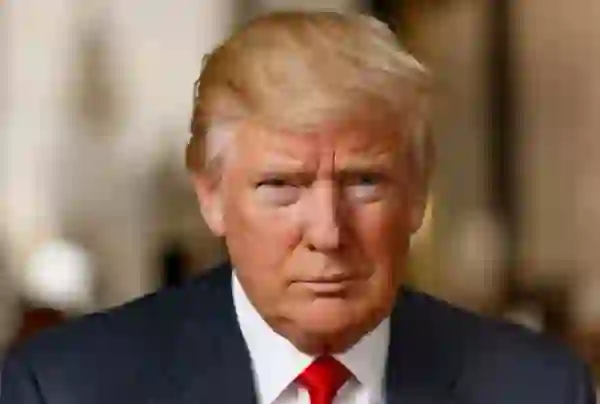
Anger is growing within the Republican Party following the party’s disappointing performance in the 2026 United States midterm elections, with several party members blaming President Donald Trump for the unexpected defeat.
The election results, which saw Democrats record major victories in traditionally Republican strongholds, have triggered criticism of Trump’s leadership, campaign strategy and handling of issues affecting American voters.
According to a report by the BBC, some Republican officials and political strategists believe Trump’s focus on personal projects, unpopular government policies and failure to address the concerns of ordinary Americans contributed significantly to the party’s poor performance.
Democrats recorded surprising victories in traditionally conservative states, including Texas, Kansas and South Carolina. The party also secured control of both chambers of Congress, dealing a major political setback to Trump and his Republican allies.
Bill Miller, a prominent Republican lobbyist in Texas, described the outcome as a complete rejection of the president.
Speaking to the BBC, Miller said the election results represented a major disaster for the Republican Party and insisted that Trump should take responsibility rather than shifting the blame to other party members.
Similarly, Republican strategist Gregg Peppin said the results showed that voters were unhappy with the president’s policies.
He argued that the party suffered because of repeated political mistakes and growing dissatisfaction with the administration across several states.
A White House ally also attributed the defeat to public frustration over the war with Iran, Trump’s tariff policies and the administration’s immigration crackdown.
The source described the combination of these controversies as a perfect storm that weakened Republican support ahead of the election.
The BBC reportedly spoke with several Republican officials, campaign operatives and individuals close to the White House, many of whom expressed disappointment with the president’s approach to the midterm elections.
Before the election, Republicans were already facing difficulties retaining control of the House of Representatives and Senate. However, party members had hoped to secure a stronger performance that would give them political momentum ahead of the 2028 presidential election.
Instead, the results have placed Trump in a difficult position, with Democrats preparing to use their new congressional majority to investigate his administration, oppose his judicial appointments and challenge several aspects of his political agenda.
Trump initially remained silent as the election results emerged before reacting on his Truth Social platform.
The president dismissed suggestions that his absence from the ballot contributed to the outcome, claiming that Republicans would have won overwhelmingly if he had contested the election.
In a subsequent interview with Fox News, Trump admitted that he was somewhat surprised by the results but pointed out that the party controlling the White House traditionally struggles during midterm elections.
Historically, the president’s party has faced difficulties in midterm elections. Since 1934, the party occupying the White House has gained seats in Congress in only three midterm election cycles.
However, Democrats’ performance in 2026 was particularly significant because they secured victories in states where they had struggled for decades.
In Kansas, Democrats won a Senate seat for the first time since 1932, while the party also recorded a major statewide victory in Texas after more than 30 years without such a success.
Democrats also secured unexpected victories in South Carolina and other traditionally Republican territories.
Despite the criticism, some Trump supporters have defended the president, arguing that it was unfair to hold him solely responsible for the party’s losses.
They blamed the performance of some Republican candidates, particularly in competitive states such as Georgia, Michigan and Texas.
One Republican operative specifically criticised Ken Paxton’s campaign in Texas, describing it as poorly organised and suggesting that his Democratic opponent, James Talarico, ran a more effective campaign.
Other party members maintained that Trump had limited time to campaign because of his responsibilities as president.
Krish Mathrani, the Michigan Republican Party’s youth chair, defended Trump’s campaign activities, describing him as an important figure in mobilising Republican voters.
However, the election results raised fresh questions about whether Trump’s ability to attract voters during presidential elections could translate into victories when he was not personally contesting.
Voters also appeared unconvinced by Trump’s claims that the American economy was improving under his administration and that his approach to the war with Iran was producing positive results.
His attempts to portray Democratic candidates as extreme socialists also failed to prevent several moderate candidates from securing victories.
One of the major criticisms against Trump was his apparent lack of attention to the midterm elections during the early stages of the campaign.
While Republican lawmakers were preparing for the elections, Trump was reportedly occupied with the war involving Iran and several construction and renovation projects in Washington.
These projects included the construction of a ballroom at the White House, a proposed helipad on the South Lawn, renovations to a golf course, a proposed memorial arch near Arlington Cemetery and work at the Kennedy Center.
Some Republicans believed these activities created the impression that the president was more interested in personal recognition and projects associated with his legacy than helping party candidates secure electoral victories.
Trump also faced criticism over rising fuel prices and the increasing cost of living, particularly after he repeatedly dismissed concerns about affordability as a political strategy by Democrats.
The president eventually increased his involvement in the campaign in September during the Republican Party’s midterm convention in Dallas.



However, his appearance reportedly frustrated some Republicans who believed the event should have focused more on promoting candidates and presenting the party’s plans to voters.
During his keynote address, Trump made several controversial remarks, including a promise to give $5,000 to anyone who voted for Republicans.
He also attracted criticism after endorsing Ken Paxton while making comments about the Texas candidate’s charisma and physical appearance.
His campaign appearances continued to generate controversy in the final weeks before the election.
Trump was criticised for praising the physical appearance of Republican Senator John Husted and describing Democratic candidate Abdul El-Sayed as a jihadist during the Michigan Senate race.
Meanwhile, controversies within the White House also provided ammunition for Democratic candidates.
Among the issues were the departure of Katie Zacharia as White House press secretary after only five days and the resignation of Kimberly Guilfoyle as US ambassador to Greece following reports that she had asked a donor to pay her credit card debt.
Trump also faced criticism in October over an agreement to purchase Russian diesel, which reportedly surprised members of Congress and attracted opposition from some Republicans.
The controversy came shortly after Trump signed a sanctions bill aimed at restricting Russia’s oil and gas revenue.
Democrats used these developments, alongside other controversies surrounding the administration, to strengthen their argument for taking control of Congress.
Following the election defeat, attention within the Republican Party has increasingly shifted towards the future of the party and the possibility of a new political direction ahead of the 2028 presidential election.
Some party members have already mentioned Vice-President JD Vance, Marco Rubio and Senator Ted Cruz as possible figures who could emerge as leading contenders in the next presidential race.
Republican strategist Gregg Peppin said the election results should serve as a warning that the party needs fresh leadership, new priorities and a different approach moving forward.
He expressed hope that the defeat would mark the beginning of a transition away from the Trump era and create room for new political figures and ideas within the Republican Party.
The outcome of the 2026 midterm elections has therefore created fresh uncertainty for Trump, while raising questions about his influence over the Republican Party and its ability to remain competitive ahead of the 2028 presidential election.
READ ALSO:
- Funke Akindele’s ‘The Four’ Sells Out London Premiere Ahead Of December Cinema Release
- Abiodun’s Ogun ranks 31st of 35 states in BudgIT fiscal report as Lagos leads
- NPA Calls For Private Investment As Lekki Deep Sea Port Reaches Full Capacity
- Two Killed, 20 Abducted As Bandits Attack Kaduna Community
- Tinubu Orders Release Of Over 300 Stranded Power Equipment Containers