








The Nigeria Customs Service (NCS) and the Federal Customs Service of the Russian Federation have signed an agreement to strengthen bilateral cooperation in customs operations, trade facilitation, information exchange and border security.
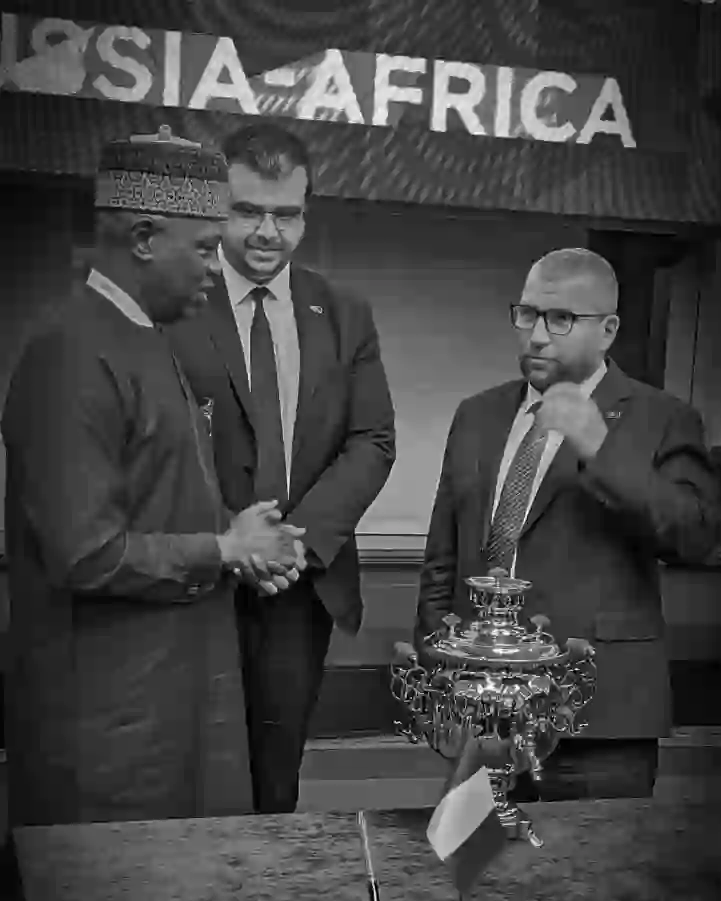
The agreement, known as the Agreement on Cooperation and Mutual Assistance in Customs Matters (CMAA), was signed in Moscow on October 28, 2026, following months of technical consultations, legal reviews and discussions between the two countries.
The Comptroller-General of Customs, Adewale Adeniyi, who led the Nigerian delegation, described the agreement as a strategic step towards protecting economic interests, securing international supply chains and improving trade governance.
Adeniyi explained that the agreement would provide a framework for closer collaboration between both customs administrations, particularly in customs enforcement, financial integrity, capacity development and the exchange of relevant information.
He noted that the Nigeria Customs Service had made significant progress in modernising its operations through digital technology, which has improved the processing of declarations, payments and supporting documents.
According to him, the increasing use of electronic platforms has made customs procedures more efficient while supporting legitimate international trade.
The Customs boss stressed that revenue generation and trade facilitation should work together rather than compete, adding that Nigeria’s approach was consistent with the World Customs Organisation’s SAFE Framework of Standards.


One of the major areas of cooperation under the agreement is the exchange of experience between the two countries’ Authorised Economic Operator (AEO) programmes.
Adeniyi said both administrations had been encouraged to study their respective AEO frameworks, operational procedures and implementation processes, with the long-term objective of achieving mutual recognition of the programmes.
He explained that mutual recognition would strengthen confidence in businesses that comply with customs regulations and potentially make the movement of goods between Nigeria and Russia faster and more efficient.
During discussions with the Head of the Russian Federal Customs Service, Valery Pikalyov, Adeniyi highlighted the similarities in the reform processes of both customs administrations.
He recalled that the Nigeria Customs Service had undergone significant institutional changes, particularly following the enactment of the Nigeria Customs Service Act 2023, which provided a stronger legal foundation for reforms, technological advancement and partnerships with the private sector.
The two sides also discussed opportunities for exchanging customs statistics and trade information to improve their understanding of bilateral commercial activities.
Adeniyi disclosed that Nigeria was participating in the World Customs Organisation’s data initiative, noting that the NCS was the only customs administration to have submitted its trade data to the WCO data project.
He said access to reliable customs statistics and structured information exchange would support comparative analysis, identify trade patterns and promote evidence-based decision-making.
Responding, Pikalyov explained that the Russian Federal Customs Service had the legal authority to collect, process and provide customs statistics obtained from import and export declarations.
He added that Russia already exchanged customs statistics with other countries under existing bilateral agreements, enabling customs authorities to monitor trade flows, identify discrepancies and assess developments in international commerce.
Pikalyov indicated that the Russian administration was willing to explore a dedicated arrangement with Nigeria for the exchange of statistical information, subject to the necessary procedures and legal framework.
The Russian delegation also noted that Nigeria had become one of the first sub-Saharan African countries, alongside Ethiopia and Namibia, to sign a customs cooperation agreement with Russia.
The engagement was held within the framework of the Third Russia-Africa Summit, providing an opportunity to strengthen customs relations as part of the broader diplomatic and economic partnership between both countries.
The agreement covers four major areas of cooperation, including the simplification of customs procedures to encourage legitimate trade and the secure exchange of information to prevent, detect and investigate customs-related offences.
It also provides for measures to tackle illicit financial flows, illegal importation activities and tax evasion, as well as improved border security through joint efforts against counterfeit goods, narcotic drugs, psychotropic substances and other prohibited or hazardous materials.
Additionally, the agreement establishes a legal framework for direct communication and operational assistance between the two customs administrations, including the exchange of professional experience and personnel training.
With the signing of the agreement, Nigeria and Russia are expected to deepen institutional cooperation, strengthen customs intelligence, improve trade transparency and promote safer and more efficient international supply chains.
READ ALSO:
- FG Trains 87,701 Nigerians, Enrols 150,000 More In TVET Programme
- Lagos Builds 200 More Public Toilets Amid Rising Open Defecation Concerns
- Kano Begins 20-Year Water Supply Plan To End Persistent Shortages
- 2027: Obi Pledges 10,000MW Electricity, 10,000 Health Centres, 40,000 School Blocks
- NSCDC Redeploys Nine State Commandants, Appoints New FCT Commander