









Burkina Faso’s Captain Ibrahim Traoré Takes the Helm as New Chairman, Warning of ‘Black Winter’ and Imperialist Threats
The Alliance of Sahel States (AES) is rapidly consolidating its power and influence across West Africa! At a summit in Bamako this past Tuesday, Burkina Faso’s Captain Ibrahim Traoré took over as the new leader of the Alliance of Sahel States, receiving the rotating chairmanship from Mali’s General Assimi Goita. It’s a meaningful shift that shows just how serious these three countries have become about charting their own course, independent of the regional bodies and foreign powers that have long called the shots in West Africa.
The ‘Black Winter’ Warning
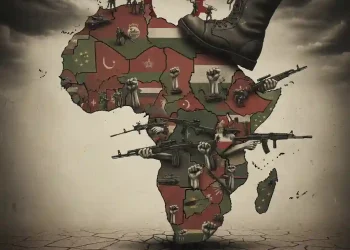
In his inaugural remarks as AES Chairman, Captain Traoré delivered a stark and ominous warning about what he termed a ‘Black Winter’ threatening West African stability. The newly minted chairman did not mince words, directly blaming ‘imperialists’ for sponsoring militant groups with the express purpose of further destabilizing the Sahel region. This inflammatory rhetoric underscores the deep-seated suspicions and tensions between AES member states and former colonial powers, particularly France.


Traoré’s warning went beyond external threats, however. The Burkina Faso leader also took aim at what he described as ‘cowardly heads of state’ within Africa itself, accusing unnamed African leaders of actively undermining regional security forces and deliberately destroying public confidence in the military juntas governing Mali, Burkina Faso, and Niger. This accusation reveals the profound distrust between AES member states and their neighbors, particularly those still aligned with traditional regional bodies like ECOWAS.
The new AES Chairman framed the current regional situation in stark, existential terms, insisting that the Sahel faces a binary choice between ‘unity and subjugation.’ ‘Either we unite against imperialism forever or end up as slaves until we disappear,’ Traoré declared, calling for vigilance and resilience while emphasizing non-violence in response to provocation. This dramatic language reflects the revolutionary fervor that characterizes the AES leadership’s worldview and their determination to chart an independent course for the region.
Breaking Away from ECOWAS
The alliance’s growing momentum cannot be understood without examining its fundamental distrust of the Economic Community of West African States (ECOWAS), the traditional regional bloc that has governed West African affairs for decades. The three AES nations—Mali, Burkina Faso, and Niger—have made it abundantly clear that they no longer believe ECOWAS can adequately represent their interests or protect the region from foreign influence and interference.
This rupture has deep historical roots. Following the military coup in Niger on July 26, 2023, which ousted President Mohamed Bazoum, ECOWAS swiftly announced comprehensive sanctions against Niger on July 27, 2023. The regional body suspended all commercial and financial transactions with Niger, froze the assets of military officers involved in the coup, and threatened military intervention if Bazoum was not reinstated. This aggressive response became a watershed moment in West African regional politics.
Mali and Burkina Faso, both already under military rule themselves, vehemently opposed ECOWAS’s sanctions and issued their own stark warning: any military intervention against Niger would be considered a declaration of war against both Mali and Burkina Faso. This solidarity marked the beginning of the formalized alliance that would eventually become the AES.
The relationship between AES and ECOWAS deteriorated beyond repair when, in January 2024, all three countries formally announced their withdrawal from ECOWAS. This unprecedented move shattered the illusion of West African unity and signaled that the military-led governments of the Sahel were prepared to forge their own path, regardless of regional opposition or international pressure.
From the AES perspective, ECOWAS has been compromised by foreign interests, particularly French influence, and no longer serves as an authentic voice for African sovereignty. The three nations view the regional body as an instrument of neocolonialism that prioritizes Western interests over genuine African development and security. This perception has been repeatedly articulated by AES leaders, who argue that only through complete independence from traditional power structures can their nations achieve true sovereignty and prosperity.
At the Bamako summit, Niger’s junta chief, General Abdourahamane Tchiani, delivered a comprehensive address focusing on AES sovereignty, security, and institutional development. Tchiani characterized the alliance as a ‘sovereign choice, assumed in the highest interest of our countries, for the sake of history and the future.’ His remarks positioned the AES not merely as a defensive alliance but as a forward-looking project aimed at fundamentally restructuring regional power dynamics.
General Tchiani reserved particular condemnation for France, directly accusing the former colonial power of ongoing destabilization through resource exploitation, biased contracts, and systematic disinformation campaigns. This anti-French rhetoric has become a common thread among AES leadership and reflects the profound resentment toward Paris’s continued economic and political influence in the region.
Tchiani outlined three fundamental pillars of AES progress that demonstrate the alliance’s commitment to deeper integration:
1. Unified Defense Force: The establishment of a comprehensive defense force under integrated command, enabling coordinated military responses to jihadist threats and external aggression. This represents a significant advancement beyond mere cooperation, creating a genuinely unified military structure.
2. Coordinated Diplomacy: The bloc’s commitment to speaking with one unified voice on the international stage, presenting a common front on diplomatic matters and eliminating the possibility of foreign powers playing member states against each other.
3. Confederal Investment Bank: The creation of a dedicated financial institution to fund development projects and reduce dependence on external donors and international financial institutions, representing a bold step toward economic sovereignty.
The Uranium Dispute: AES Solidarity Against ‘Judicial Harassment’!
The summit also addressed what AES leaders characterized as ‘judicial harassment’ of Niger by Orano, the French state-owned nuclear fuel company. Orano recently filed a complaint in a Paris court alleging the ‘theft’ of 1,000 tonnes of processed uranium, or yellowcake, which the Niger junta seized from former mining sites operated by the company.
The AES leadership expressed unanimous solidarity with Niger, describing Orano’s legal action as a ‘desperate attempt to manipulate the justice system for the purpose of monopolizing Niger natural resources.’ This case has become emblematic of the broader struggle between AES nations and their former colonial power over control of natural resources. For the alliance, the uranium dispute represents exactly the kind of economic exploitation and legal manipulation they formed to combat.
Institutional Deepening
The AES has moved rapidly from concept to reality since its initial formation. The alliance originated with the signing of the Liptako-Gourma Charter in Bamako in September 2023, establishing a framework for mutual defence. However, the confederation has quickly evolved beyond security cooperation into a comprehensive regional integration project.
In July 2024, the three nations signed a treaty establishing the Confederation of Sahel States, significantly broadening the scope of integration beyond military matters. This formalisation has enabled the alliance to undertake ambitious institutional initiatives:
• Creation of a joint military force specifically designed to combat jihadist groups that have plagued the region for years
• Launch of an AES passport, facilitating free movement among citizens of member states and symbolising the confederation’s political identity
• Establishment of a regional court to adjudicate disputes and enforce confederation laws
• Commitment to abandon the CFA franc and launch an independent currency, perhaps the most radical economic step toward sovereignty
At the recent Bamako summit, leaders instructed their ministers to implement additional measures to counter what they term ‘negative’ information campaigns—a clear indication that the alliance views the information space as a critical battleground. The summit also approved proposals aimed at further institutionalizing security, political, diplomatic, and economic cooperation among the three countries.
The Russia Connection: A New Strategic Partnership!
Russia has enthusiastically welcomed the creation of the AES, and member states have reciprocated by pursuing closer cooperation with Moscow. This emerging partnership represents a significant geopolitical shift, as traditional Western influence in the Sahel wanes and Russian engagement intensifies. The AES nations view Russia as an alternative partner that does not come with the colonial baggage of European powers and offers military, economic, and political support without the governance conditions typically imposed by Western donors.
The three states have promised to strengthen ties with Moscow, discussing various areas of cooperation including military training, arms sales, resource development, and diplomatic coordination. This Russia-AES alignment has profound implications for regional security architecture and great power competition in West Africa.
Analysis: What Does AES Momentum Mean for West Africa?
The growing strength and coherence of the Alliance of Sahel States represents one of the most significant geopolitical developments in West Africa in recent decades. The confederation’s momentum stems from several converging factors:
Shared Grievances: All three nations share similar experiences with jihadist insurgencies, perceived Western interference, and frustration with traditional governance structures that failed to deliver security or prosperity. This common ground creates genuine solidarity beyond mere tactical convenience.
Military Government Commonality: The fact that all three states are led by military juntas that came to power through coups creates a natural affinity and mutual interest in legitimizing military rule as a valid governance model, in contrast to ECOWAS’s traditional insistence on civilian democratic governance.
Popular Nationalist Sentiment: The anti-French and anti-imperialist rhetoric resonates with significant segments of the population who view their nations’ poverty and instability as products of colonial exploitation and continued foreign interference. This provides the juntas with a source of domestic legitimacy.
External Support: Russia’s backing provides military equipment, training, and diplomatic cover that reduces the AES’s vulnerability to international pressure and sanctions. This external support makes sustained independence from Western influence more feasible than it might otherwise be.
Institutional Momentum: Each step toward deeper integration—whether military, economic, or political—creates vested interests and institutional structures that make reversal more difficult. The launch of concrete initiatives like the AES passport and joint military command transforms the alliance from an idea into a lived reality.
Challenges and Uncertainties Ahead!
Despite its momentum, the AES faces significant challenges that could constrain its long-term success:
All three member states continue to grapple with severe jihadist insurgencies that have proven remarkably resilient. The joint military force has yet to demonstrate that collective action can succeed where individual national efforts have struggled. If the security situation continues to deteriorate, popular support for the military juntas could erode, potentially destabilizing the entire alliance.
The economic challenges are equally daunting. All three nations rank among the world’s poorest, with underdeveloped infrastructure, limited industrial bases, and economies heavily dependent on agriculture and resource extraction. Creating a viable confederal investment bank and independent currency while reducing dependence on international financial institutions requires resources and expertise that may prove difficult to marshal. Economic isolation from ECOWAS also comes with costs, potentially limiting trade and investment opportunities.
The question of political legitimacy remains unresolved. While the juntas claim to represent popular will against corrupt civilian governments and foreign interference, none have held free elections or committed to democratic transitions. This creates ongoing tension with international norms and leaves them vulnerable to charges of authoritarianism. How the AES navigates questions of governance, human rights, and political participation will significantly impact its international standing and domestic stability.
Finally, the heavy reliance on Russia carries risks. Moscow’s support is not altruistic; Russia seeks to expand its influence and access to African resources. If Russian engagement follows patterns seen elsewhere, it may ultimately reproduce some of the same exploitative dynamics the AES seeks to escape, merely with a different patron. Balancing genuine sovereignty with strategic partnerships will require sophisticated diplomacy.
A Pivotal Moment for the Sahel!
Captain Ibrahim Traoré’s assumption of the AES chairmanship marks a pivotal moment for West Africa’s evolving political landscape. His warnings of a ‘Black Winter’ and calls for unity against imperialism reflect the revolutionary fervor driving this unprecedented regional realignment. The alliance’s fundamental rejection of ECOWAS and embrace of complete independence from traditional Western influence represents a bold gamble that African nations can chart their own course, even in the face of significant economic and security challenges.
Whether this experiment in Sahel sovereignty succeeds or fails will have profound implications not only for Mali, Burkina Faso, and Niger but for the entire African continent. The AES represents a test case for whether military-led governments pursuing anti-colonial, nationalist agendas can deliver stability, prosperity, and genuine sovereignty, or whether their path leads to increased isolation, authoritarianism, and continued instability.
What is clear is that the Alliance of Sahel States is indeed gaining momentum! The institutional structures are being built, the rhetoric is becoming more defiant, and the break with traditional regional architecture appears irreversible. The world is witnessing the emergence of a new power bloc in West Africa, one that explicitly rejects the post-colonial order and demands recognition on its own terms. How this story unfolds will shape African geopolitics for generations to come.

Seunmanuel Faleye is a brand and communications strategist. He is a covert writer and an overt creative head. He publishes Apple’s Bite International Magazine.