









For half a century, the story of African oil followed a script written elsewhere. Crude left the Niger Delta, the Angolan coast and the fields of Sudan in tankers bound for refineries in Rotterdam, Antwerp and the Gulf Coast of Texas, only to return months later as premium motor spirit, diesel and jet fuel, priced in dollars the continent did not control and sold back to the very people who owned the crude in the first place.
Shell, BP, Total and Chevron built empires on that arrangement. Nobody in Washington or Brussels called it a monopoly. Nobody convened a policy panel to warn that a handful of European super majors controlling the refining of an entire continent’s fuel supply was a danger to competition. It was simply called business, and Africa was expected to be grateful for the privilege of being a customer in its own backyard.
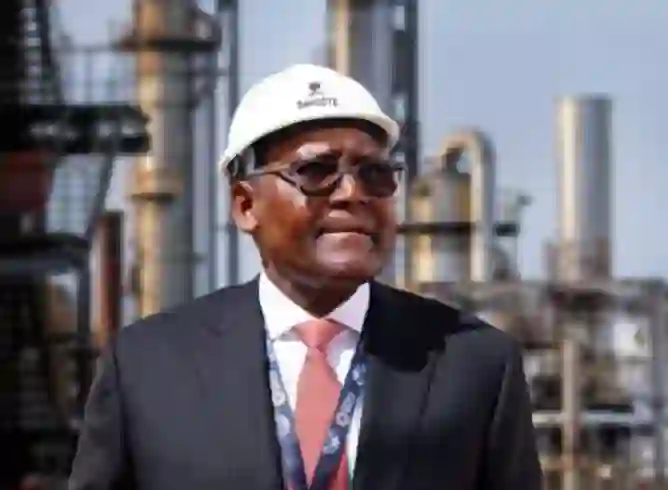
That silence is the context in which the current uproar over Aliko Dangote’s refining ambitions must be read. When the Dangote Refinery came fully on stream in Lagos, it did what half a century of foreign-owned refining never managed: it began weaning Nigeria off imported fuel, cutting the country’s exposure to forex-driven pump price shocks, and creating the first credible African-owned link in a value chain that had always ended offshore. And almost immediately, the World Bank published, and then quietly deleted after public fury, a policy note urging Nigeria to reopen its doors to fuel importers in the name of “competition.” African business leaders were not slow to notice the irony. For decades, competition was never the standard applied to Shell’s dominance of the downstream sector. It only became an urgent concern once an African company built something Africans themselves controlled.
RelatedPosts



Now Dangote is doing it again, this time on the other side of the continent. A $15 to $17 billion, 650,000-to-700,000-barrels-per-day refinery is planned for the Kenyan coast, at Lamu or Mombasa, with groundbreaking targeted for late 2026 and construction expected to run under four years. Financed on a roughly 70-30 split between debt and equity, the East African plant would push Dangote’s combined refining capacity, alongside the Lagos facility, past two million barrels a day, positioning a single African-owned conglomerate as a serious counterweight to the international trading houses that have long profited from moving refined product into the continent rather than helping the continent refine its own.
This is the deeper story behind the headlines: a slow, deliberate assertion of economic sovereignty by a continent that has spent a century exporting raw wealth and importing back the finished, value-added version of that same wealth at a markup. Every barrel refined on African soil, by an African company, employing African engineers and technicians, is a small act of reclamation. It is Nigeria and Kenya deciding, in their own time and on their own terms, that the era of shipping crude out and buying diesel back is not a law of nature but a colonial-era arrangement that has simply outlived its usefulness.
It is entirely fair to ask hard questions about concentration, about what it means for so much refining capacity to sit under one man’s control, about pricing power and about the governance of a private empire this large. Those are legitimate conversations, and a nobler Africa is one confident enough to have them openly rather than defensively. But there is a difference between scrutiny applied evenly and scrutiny that only switches on when the ownership changes color. For decades the continent absorbed the pricing decisions of foreign refiners without a single multilateral institution suggesting the arrangement needed correcting in the name of competition. That the alarm was raised the moment an African company began to displace that arrangement is, at the very least, a coincidence worth sitting with.

The counter-argument deserves to be stated plainly, because it is not without substance. The World Bank and figures within Nigeria’s own downstream sector have argued that any single dominant supplier, domestic or foreign, distorts a market and that reopening fuel imports would restore price competition and protect consumers from being at the mercy of one company’s cost structure. Some Nigerian marketers and economists have echoed that concern independent of where it originated, arguing the debate is about market structure rather than the nationality of the refiner. Whether that argument is offered in good faith or deployed selectively is a matter reasonable people continue to dispute, and it is a debate the continent is well placed to have on its own terms, informed by its own economists rather than settled by a report drafted and then withdrawn under pressure.
What is not in dispute is the symbolism of the moment. A continent that has been told for generations what it cannot build is watching one of its own build it anyway, twice, on two different coastlines, with debt raised on his own credibility and equity raised on his own conviction. Whatever verdict history renders on the concentration question, it will have to reckon first with the plain fact that for the first time in the modern era, Africa’s fuel security is being written by African hands. That, more than any single balance sheet, is the story worth telling.
- Dried placenta may help men regain erections faster after prostate surgery – Study
- The Economist Says Tinubu Could Retain Presidency Despite Public Discontent
- CNG Buses: States Roll Out Transport Relief as Fare Cuts Remain Uneven
- UAE Investigators Say flydubai Co-Pilot Planned “Terrorist Act,” Attacked Captain With Cockpit Axe
- Iran Executes Man Convicted Over Anti-Government Protests

Seunmanuel Faleye is a brand and communications strategist. He is a covert writer and an overt creative head. He publishes Apple’s Bite International Magazine.