










Nigeria’s digital infrastructure resilience has become one of the most urgent economic questions of the decade, even if few people see it that way. A fibre cut in one corner of Lagos can stop a bank transfer in another. Payments, banking, healthcare, commerce, education, government services and ordinary conversation now ride on networks that must stay up, and the more the country leans on them, the less sense it makes to treat their failure as a problem for telecoms engineers alone.
On land, the evidence is already piling up. The Nigerian Communications Commission (NCC) recorded more than 5,000 fibre-cut incidents in the first six months of 2026, with road construction, excavation and other civil works among the leading culprits. The Commission has since joined forces with the Federal Ministry of Works to protect fibre during road projects, a sensible step. Yet the damage to a cable is only the beginning of the story. A single cut in one place sends its effects racing through the economy. Traders cannot process transactions, customers cannot complete digital payments, hospitals lose contact, and government platforms falter while workers and businesses who depend on online services are left stranded.
The sea offers no greater comfort. In March 2024, damage to four major submarine cables, ACE, SAT-3, WACS and MainOne, disrupted connectivity across several West African countries, Nigeria among them. What made the episode so instructive was what the Internet Society found afterwards: the cables converged on the same physical area off Côte d’Ivoire. Systems that looked separate on paper shared a common point of failure on the seabed.
The lesson for Nigeria is uncomfortable but plain. Five cables do not automatically mean five independent routes. A country can pile up infrastructure and expand capacity and still fall short of the resilience it needs when something major breaks.
The NCC appears to grasp this shift. By designating telecommunications networks, fibre-optic cables, data centres, towers and Internet exchange points as Critical National Information Infrastructure, it has acknowledged that these assets now sit alongside the country’s most vital national interests. The right question is no longer how much infrastructure Nigeria owns. It is how much of the system keeps working when a part of it gives way.
Answering that demands diversity in its many forms. Submarine cables need genuinely different landing points and inland paths. Fibre networks should not crowd unnecessarily along the same road corridors. Critical facilities need backup connectivity and backup power, and operators need enough spare capacity to absorb traffic when another route goes down. Geography matters most of all, because several networks can look gloriously redundant and still fall together if they share one corridor, one landing station or one metropolitan hub.
This is why Project BRIDGE deserves close attention. The project is meant to expand the national fibre backbone substantially and improve route diversity, which gives planners a chance to place resilience at the heart of their decisions. Progress should not be judged by kilometres of fibre laid alone. It should be judged by how many truly independent routes reach critical locations, and by how much traffic keeps flowing when one of them is lost. The same yardstick applies to new submarine cables, whose value rests not just on added capacity but on where they land, how traffic travels inland, and whether alternative systems can carry the load in a serious outage.
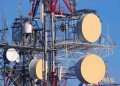


Another dimension of resilience is less visible and more delicate: the power of the state itself. Under Section 148 of the Nigerian Communications Act, the NCC holds emergency powers for situations involving a public emergency or public safety. These include suspending a licence, taking temporary control of network facilities, and withdrawing services or facilities from a licensee, an individual or the public at large. Such powers have a rightful place. Nobody seriously argues that government should be stripped of the means to act in a genuine emergency.
The concern is what follows when an economy runs on uninterrupted connectivity. An intervention touching communications infrastructure can ripple far beyond its intended purpose. The real question, then, is not whether government should hold emergency powers but whether the survival of essential digital services is weighed properly when those powers are used. The law already points the way. Section 149 provides for disaster plans covering the survivability and recovery of telecommunications services and network facilities during disasters, crises and civil emergencies, a principle that grows more relevant with every bank, clinic and government office that moves online.
For essential services, restoration alone is not enough. A bank will eventually get its link back, a hospital will eventually recover its communications, and a government platform will eventually return. But what happens in the hours before that? Can payments continue? Can emergency communications stay available? Can businesses switch quickly to another route? Can other networks absorb the traffic displaced by a failed one? These are the practical tests of resilience, and they show why the growing vulnerability cannot be pinned on fibre vandalism alone.
A submarine cable can fail. A road project can slice through fibre. Equipment can malfunction, power can drop, vandals can strike a route, a cyber incident can cripple critical systems, and an emergency intervention can restrict access to infrastructure. The causes differ, yet the outcome is the same: connectivity lost.
The response must therefore be layered. Physical diversity calls for alternative cables, ducts and corridors. Technical diversity calls for alternative networks, power arrangements, data centres and failover systems. Geographic diversity cuts dependence on any single location. Service continuity shields the functions the economy and the public cannot do without. And regulatory safeguards can ensure that emergency measures count their wider cost to connectivity while leaving government free to act in a real crisis.
The NCC’s major-outage reporting requirements could also do more than record what broke. Read properly, those reports can expose hidden dependencies that tie supposedly separate networks together and show where one failure could drag down several others.
All this matters because Nigeria will never eliminate disruption. Fibre will be cut, road projects will go on, equipment will fail, submarine cables will need repairs, and emergencies will come. The aim is not a system in which nothing breaks. It is a system in which the loss of one route, one facility or one intervention does not automatically become a wider collapse of essential digital services.
Nigeria’s digital infrastructure has outgrown the label of a mere telecoms matter. It is part of what keeps businesses running, money moving, public services working and people in touch with one another. The next chapter of the country’s digital story must ask not only how much more capacity can be built, but how much of the economy can keep moving on the day part of that infrastructure stops.
- Zimbabwean Businessman Wicknell Chivayo, Wife Killed in Helicopter Crash
- Nigeria Digital Infrastructure Resilience Is Weakening Even as the Cables Multiply
- Wike’s Son Jordan Submits American Passport in $2.1m Land Suit
- Governor Okpebholo Mourns Pastor Chris Oyakhilome’s Mother at 88
- Alleged Coup: Court Sets December 7 to Rule on Admissibility of Defendants’ Statements

Seunmanuel Faleye is a brand and communications strategist. He is a covert writer and an overt creative head. He publishes Apple’s Bite International Magazine.