



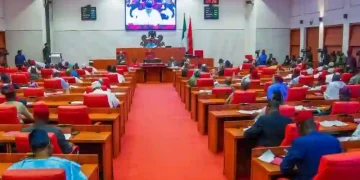







The Chairman of the Association of Licensed Telecommunications Operators of Nigeria (ALTON), Gbenga Adebayo, has said that summoning chief executives of telecommunications companies by the House of Representatives will not resolve the persistent poor quality of network services across the country.
Adebayo argued that improving telecommunications services requires sustained investment, effective regulation and government policies that create a favourable environment for infrastructure development.
He made the remarks against the backdrop of the House of Representatives’ investigation into the poor quality of telecommunications services in Nigeria, insisting that lawmakers should focus on identifying and addressing the challenges affecting network expansion rather than merely inviting company executives to explain service failures.
The ALTON chairman acknowledged that Nigerians have every right to demand better telecommunications services, adding that lawmakers also have a responsibility to address public concerns. However, he maintained that network quality is a complex infrastructure challenge that cannot be resolved simply by summoning telecommunications company CEOs.
According to him, legislative hearings can promote accountability, encourage public engagement and support policy development when properly organised.
He said, “I would not dismiss legislative hearings outright. They can be useful instruments of accountability, public engagement and policy development. Nigerians are entitled to demand better telecommunications services, and lawmakers have a responsibility to represent those concerns.”
However, he warned that such hearings must produce practical solutions rather than generate publicity without addressing the underlying problems.
Adebayo explained that the Nigerian Communications Commission (NCC) already has the statutory responsibility to monitor telecommunications service quality, establish performance standards, investigate violations and impose appropriate sanctions on operators.
He therefore urged the National Assembly to complement the work of the regulatory commission instead of duplicating its responsibilities.
Identifying some of the major challenges affecting telecommunications services, Adebayo listed fibre-optic cable vandalism, inconsistent Right-of-Way charges, multiple taxation, inadequate electricity supply and bureaucratic delays in securing approvals for infrastructure deployment.
He called on lawmakers to organise engagements involving the NCC, telecommunications operators, infrastructure providers, government agencies and other relevant stakeholders to develop practical solutions to the challenges.
According to him, stronger legislation is also required to protect telecommunications infrastructure, including fibre-optic cables, towers and base stations, which he described as critical national assets.
Addressing the controversy surrounding the committee’s summons, Adebayo explained that his appearance was aimed at presenting the collective position of the telecommunications industry and not shielding individual operators from legitimate accountability.
He disclosed that ALTON had formally communicated its concerns to the committee in a letter dated October 20, 2026, questioning the constitutional scope and application of the summons.
Citing Section 88 of the 1999 Constitution, he argued that the investigative powers of the National Assembly must be exercised within constitutionally prescribed limits, particularly when dealing with privately owned companies operating under the statutory supervision of an established industry regulator.
He also referred to ongoing judicial proceedings concerning the interpretation of Sections 88 and 89 of the Constitution, calling for restraint to prevent unnecessary confrontation between government institutions.
Beyond the legal issues, the ALTON chairman noted that telecommunications operators had committed substantial private investments to developing fibre-optic networks, mobile infrastructure and other facilities supporting Nigeria’s digital economy.
He warned that unpredictable government policies, multiple levies, delayed approvals and insecurity continued to increase the cost of doing business in the sector, thereby affecting operators’ ability to expand networks and improve service delivery.
Adebayo stressed that imposing sanctions on telecommunications companies without addressing the challenges confronting infrastructure development would not automatically improve network quality.
“Sanctions alone cannot build fibre networks, provide electricity to base stations, prevent vandalism or facilitate access to infrastructure,” he said.
He added that improving telecommunications services requires cooperation among operators, regulators and government authorities.
“My message to Nigerians is simple: we all want better service, but better service requires investment, and investment requires an enabling environment,” he stated.



Adebayo consequently urged lawmakers to introduce policies that encourage long-term investment, protect critical telecommunications infrastructure and simplify the process of expanding networks across the country.
He maintained that while telecommunications operators must remain accountable for the quality of their services, the NCC should continue to exercise its regulatory responsibilities, with the National Assembly focusing on providing the legislative support needed to address the sector’s structural challenges.
READ ALSO:
- Is the SDP Becoming Nigeria’s Real Alternative? | The Surge With Boma Lilian Braide(Esq)
- Peter Obi to Release 10-Day Record of Anambra Achievements After Tinubu’s Criticism
- Ukraine Hits Russia With Biggest Drone Assault of the War
- Meta Deploys AI Technology To Detect Teenagers Lying About Their Age
- Beyond Medals: AFFAN Elects Esther Aluko President, Unveils New Leadership at Maiden AGM in Lagos