







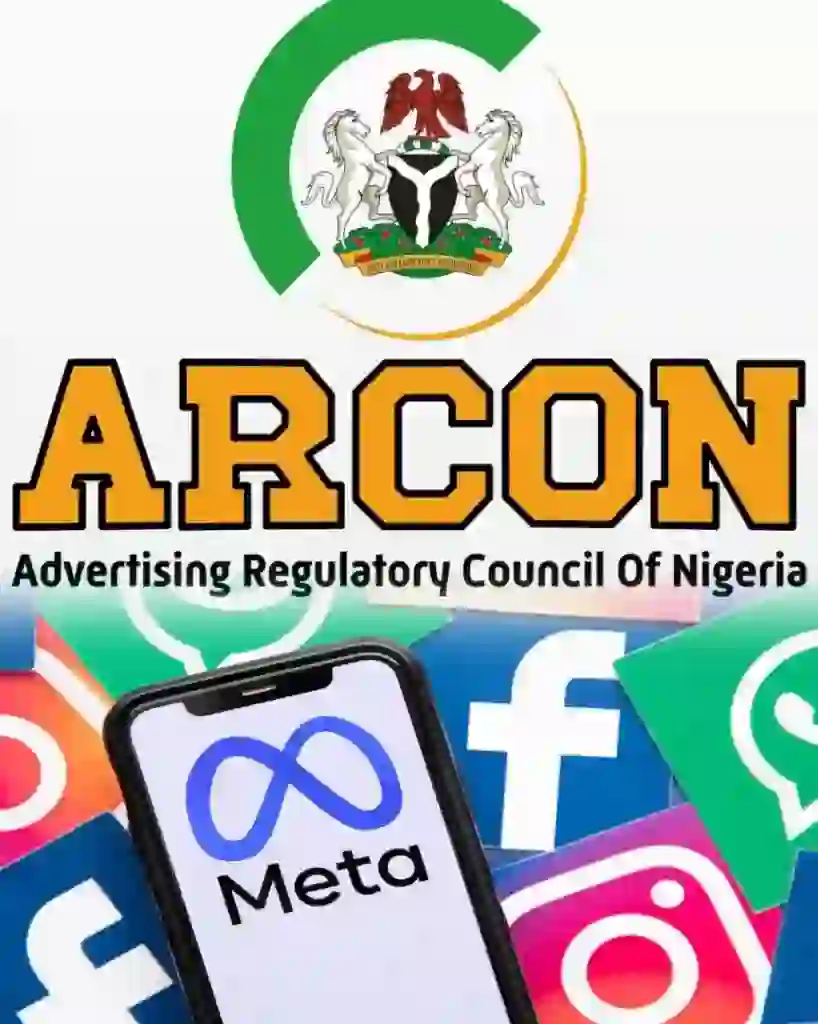
The recent Federal High Court judgment nullifying the ₦60 billion fine imposed by the Advertising Regulatory Council of Nigeria (ARCON) on Facebook Nigeria Operations Limited has sparked debate beyond the issue of the penalty itself. According to legal analyst Winifred Akpan, the more significant implication of the ruling lies in its potential impact on consumer protection and the regulation of multinational technology companies operating in Nigeria.
Justice Yelim Bogoro of the Federal High Court in Lagos set aside the fine, which ARCON had imposed in October 2024. While the size of the penalty attracted widespread public attention, the opinion argues that the legal issues surrounding corporate responsibility and regulatory oversight deserve greater scrutiny.
The article notes that the court’s decision to invalidate the fine was not entirely unexpected. It recalls an earlier ruling by Justice Akintayo Aluko in April 2025, which held that ARCON lacked the authority to impose fines directly, stating that such powers belong to a competent court or the Advertising Offences Tribunal. Following that judgment, ARCON reportedly shifted its enforcement strategy by referring cases to the tribunal rather than imposing administrative fines.
However, the opinion identifies the court’s findings on the relationship between Meta Platforms Inc. and Facebook Nigeria Operations Limited as the most consequential aspect of the judgment. The court ruled that ARCON failed to establish sufficient evidence proving that Facebook Nigeria acted as an agent of Meta or that both companies were legally connected beyond being separate corporate entities. As a result, Facebook Nigeria could not be held liable for activities linked to Meta’s global platforms.
According to the author, this finding raises concerns because Meta’s ownership of Facebook, WhatsApp, and Instagram is publicly known, while Facebook Nigeria’s role in the Nigerian market appears closely tied to the global company. The opinion questions whether enough evidence was presented to the court to establish this relationship.


The article also reviews previous legal actions involving Meta in Nigeria. It references ARCON’s earlier lawsuit against Meta and its Nigerian representative, AT3 Resources Limited, over allegedly unapproved advertisements, as well as other cases where Nigerian courts and regulators treated Meta as accountable without requiring an elaborate demonstration of its corporate structure. These include litigation involving human rights lawyer Femi Falana and the Federal Competition and Consumer Protection Commission’s $220 million fine over alleged data privacy violations.
Drawing comparisons with international jurisdictions, the opinion argues that courts in Kenya, Australia, the European Union and the United States have rejected attempts by Meta to avoid legal responsibility through corporate separation. In those cases, judges reportedly found sufficient links between Meta and its subsidiaries or local operations to allow legal proceedings to continue.
The author further contends that the judgment could create broader regulatory challenges for Nigeria by making it more difficult to hold multinational digital platforms accountable for activities affecting Nigerian users. Concerns highlighted include online fraud, misleading advertisements, counterfeit products and other harmful content that may be promoted through social media platforms.
The opinion concludes by urging the judiciary to undertake a broader review of the issues raised in the case, arguing that the long-term implications for consumer protection, national security and regulatory enforcement may ultimately prove more significant than the cancellation of the ₦60 billion fine itself.
READ ALSO:
- Christiane Amanpour to Leave CNN After 43 Years
- Lagos Lawyer Demands ₦25m Compensation From MTN Over Mast Damage
- Adron Chairman Adetola Emmanuelking Congratulates Anthony Osibodu on Coronation as Bobajiro of Ilishan-Remo
- Adron Homes Inaugurates New Ahpora Executies At Treasure Park & Gardens Phase 2 Extention
- PBAT Smart Nation Initiative & Support Group Appoints Amb. Seunmanuel Faleye As Lagos State Chairman