








The Nigeria Customs Service (NCS) has pledged to intensify its efforts to combat money laundering, terrorism financing and other illegal financial activities across Nigeria’s borders.
The Service said it would strengthen collaboration with relevant government agencies to protect Nigeria’s financial system and sustain the progress made after the country was removed from the Financial Action Task Force (FATF) grey list in October 2025.
The commitment was made as Nigeria prepares for its next international assessment of its Anti-Money Laundering and Countering the Financing of Terrorism (AML/CFT) framework.
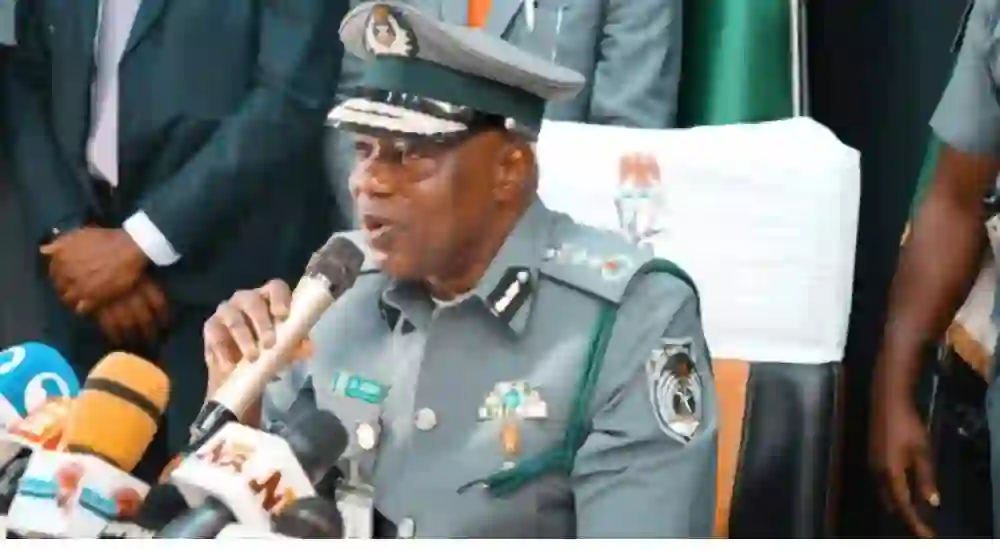
The Comptroller-General of Customs, Adewale Adeniyi, represented by the Deputy Comptroller-General in charge of Finance, Administration and Technical Services, Kikelomo Adeola, gave the assurance on Monday during a stocktaking meeting at the NCS headquarters in Abuja.
The meeting was organised to review Nigeria’s level of preparedness for the forthcoming assessment, identify weaknesses in the country’s existing systems and develop strategies to strengthen the fight against financial crimes.
Adeola described the exercise as an important opportunity for government agencies to evaluate the progress made and address outstanding challenges to prevent Nigeria from losing its gains.
She stressed that maintaining the country’s achievements would require sustained commitment, effective enforcement and continuous improvement in the systems used to detect and prevent financial crimes.
“It is an opportunity to take an honest look at the progress Nigeria has made so far, identify the gaps that presently exist and ensure that Nigeria’s achievements are sustained,” she said.
Adeola warned that failure to maintain the progress could undermine the reforms already introduced to strengthen Nigeria’s financial integrity framework.
She also commended the Nigerian Financial Intelligence Unit (NFIU) for its efforts to improve the country’s anti-money laundering system and coordinate preparations for the next international evaluation.
Expressing confidence in Nigeria’s ability to sustain its progress, she said the country should not return to the FATF grey list.
Adeola further emphasised the importance of cooperation among government agencies, noting that the Customs Service could not successfully tackle money laundering and terrorism financing without support from other institutions.


“A tree does not make a forest,” she said, stressing that a coordinated approach was necessary to achieve lasting results.
Speaking at the meeting, the Chief Executive Officer of the NFIU, Hafsat Abubakar, represented by the Chief Operations Officer for Law Enforcement Support and Coordination, Emmanuel Sotande, said the exercise was designed to measure the country’s progress, identify remaining gaps and improve institutional readiness for the assessment.
Sotande explained that Nigeria’s removal from the FATF grey list in October 2025 was the result of collective efforts by government agencies working to strengthen the country’s system for preventing and detecting financial crimes.
He said the next priority was to demonstrate that the reforms introduced by the government had produced lasting improvements in enforcement and compliance.
According to him, the Nigeria Customs Service plays a strategic role in the country’s efforts to combat money laundering, terrorism financing and the proliferation of prohibited weapons and other materials.
He noted that the Service’s responsibilities extend beyond revenue collection, trade facilitation and border control, as its officers also have access to important trade and financial information that can help uncover criminal activities.
Sotande explained that Customs officers routinely handle import and export documents, cargo records, commercial transactions and border intelligence, which can provide useful leads for identifying suspicious financial activities and tracking criminal networks operating across international borders.
“Customs plays a vital role in detecting suspicious transactions and activities across borders,” he said.
He added that improved information sharing between the NCS and the NFIU would help authorities identify suspicious networks, trace proceeds of illegal activities and coordinate investigations and enforcement operations more effectively.
The agencies reaffirmed the need for sustained cooperation to ensure that Nigeria’s anti-money laundering and counter-terrorism financing measures remain effective ahead of the next international assessment.
READ ALSO:
- FG Trains 87,701 Nigerians, Enrols 150,000 More In TVET Programme
- Lagos Builds 200 More Public Toilets Amid Rising Open Defecation Concerns
- Kano Begins 20-Year Water Supply Plan To End Persistent Shortages
- 2027: Obi Pledges 10,000MW Electricity, 10,000 Health Centres, 40,000 School Blocks
- NSCDC Redeploys Nine State Commandants, Appoints New FCT Commander