







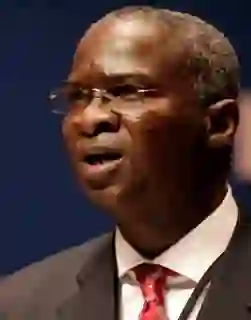
Former Lagos State Governor, Babatunde Fashola, has defended the economic policies of President Bola Tinubu, saying Nigeria’s rising cost of living is partly linked to global economic challenges beyond the country’s control.
Fashola attributed some of the economic difficulties confronting Nigerians to international developments, including the COVID-19 pandemic, the Russia-Ukraine war and ongoing conflicts in the Middle East.
The former Minister of Works made the remarks while speaking on Channels Television’s Politics Today, where he explained that Nigeria could not remain insulated from disruptions affecting global production, supply chains, energy supplies and food markets.
According to him, the global economy is still dealing with the consequences of the COVID-19 pandemic, which disrupted production and economic activities across several countries.
He noted that the shortages created by the pandemic contributed to rising prices of essential commodities, while the Russia-Ukraine war further worsened the situation by affecting the supply of important products such as diesel and wheat.
Fashola also identified tensions and conflicts in the Middle East as additional factors putting pressure on global energy markets and increasing shipping costs.
He said it was important to consider these international developments when assessing the factors responsible for Nigeria’s cost-of-living crisis.
“It’s also important to contextualise the factors and the circumstances that have exacerbated the cost-of-living challenges,” he said.
He further illustrated how international developments affect local prices, noting that even ordinary traders in Nigeria consider global market conditions when determining the prices of their goods.
“Even the tomato seller knows the Strait of Hormuz and prices his or her goods according to replacement costs now,” Fashola stated.
The former Lagos governor also expressed support for President Tinubu’s re-election ambition, highlighting several government policies and interventions which he said were introduced to ease the financial pressure on Nigerian households.
Among the measures he mentioned were the minimum wage review, the Nigerian Education Loan Fund (NELFUND), tax reforms and the introduction of Compressed Natural Gas (CNG) as an alternative energy source.
Fashola described the minimum wage review as one of the early interventions aimed at improving workers’ earnings and helping them cope with the increasing cost of living.
However, he cautioned that increasing workers’ salaries alone would not address the country’s economic difficulties.



He warned that continuously injecting more money into the economy without addressing underlying challenges could fuel what he described as “hyper-demand inflation”.
According to him, the government must also address major household expenses, particularly accommodation, transportation, healthcare and education, which consume a significant portion of Nigerians’ disposable income.
Fashola explained that the introduction of NELFUND was part of efforts to reduce the financial burden of education on families, especially those struggling to meet the cost of their children’s schooling.
He said the initiative was designed to provide support to families in need and ensure that financial difficulties would not prevent students from accessing higher education.
The former governor maintained that tackling the cost-of-living crisis requires a broader understanding of both domestic economic challenges and the impact of developments in the international economy.
READ ALSO:
- 2027: Gbenga Daniel Launches Campaign Buses to Mobilise Support for Tinubu’s Re-Election
- FG Trains 87,701 Nigerians, Enrols 150,000 More In TVET Programme
- Lagos Builds 200 More Public Toilets Amid Rising Open Defecation Concerns
- Kano Begins 20-Year Water Supply Plan To End Persistent Shortages
- 2027: Obi Pledges 10,000MW Electricity, 10,000 Health Centres, 40,000 School Blocks