

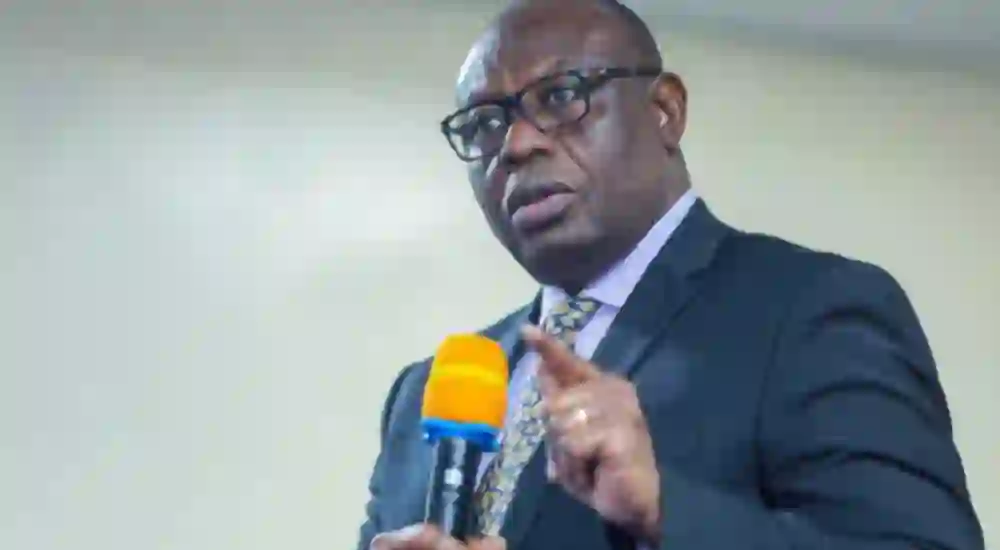
Former Independent National Electoral Commission (INEC) National Commissioner, Festus Okoye, has urged journalists to stop amplifying hate speech, inflammatory comments and inciting statements made by politicians, warning that irresponsible media coverage could lead to electoral violence and threaten Nigeria’s democracy.
Okoye gave the warning on Friday during a one-day election reporting training workshop organised by The Whistler newspaper in Abuja.
He urged journalists to be careful when reporting provocative statements by political candidates, stressing that the media must not become a channel for spreading comments capable of encouraging violence or provoking citizens to attack political opponents.
According to him, journalists should not simply reproduce inflammatory remarks made by politicians without questioning their implications. Instead, they should hold political leaders accountable for their statements and continue to demand explanations where necessary.
The former INEC commissioner cited examples of politicians allegedly threatening supporters of opposing parties with violence and making controversial remarks suggesting that women could face problems in their marriages if their husbands refused to vote for a particular political party.
He warned that such comments should not be dismissed as ordinary campaign statements, adding that politicians must not be allowed to escape responsibility by later claiming they were misquoted or that their statements were generated using artificial intelligence.
Okoye also criticised what he described as the media’s failure to sustain public attention on controversial statements made by influential individuals.
He observed that journalists often raise concerns about provocative comments when they are first made but quickly abandon the issues without ensuring that those responsible are held accountable.
He further reminded journalists of Section 96 of the Electoral Act, which prohibits the use of abusive, intemperate, slanderous and inflammatory language capable of provoking violence during political campaigns.
He also highlighted the restrictions against using religious sentiments to promote hostility and the prohibition of political campaigns in certain public institutions and locations, including places of worship, police stations and government offices.
On electoral violence, Okoye warned political parties and candidates against recruiting thugs to intimidate opponents or disrupt the electoral process.
He stressed that individuals involved in electoral violence, including those who assist or encourage the commission of electoral offences, could face legal consequences.
The former commissioner also cautioned against the misuse of government institutions and public resources to advance the interests of political parties, insisting that state institutions must remain neutral during elections.


Speaking on the responsibilities of journalists ahead of the 2027 general elections, Okoye urged media professionals to familiarise themselves with the Electoral Act, INEC regulations and other legal provisions guiding the conduct of elections.
He explained that journalists must understand the laws governing the electoral process to enable them to report accurately and avoid misleading the public.
According to him, reporters should also seek clarification whenever they are uncertain about electoral rules or procedures.
Okoye further emphasised that journalists must remain professional and impartial, regardless of their personal political opinions, ideological beliefs or party affiliations.
He maintained that the responsibility of the media is to provide accurate and balanced information that would allow Nigerians to make informed decisions rather than promote the interests of particular political groups.
However, he warned that impartiality should not be interpreted as permission to give unrestricted publicity to hate speech or statements encouraging violence.
He insisted that journalists who deliberately amplify comments capable of inciting violence risk contributing to violations of the law.
Okoye also warned media organisations about the legal implications of publishing defamatory allegations, explaining that journalists cannot automatically escape liability simply by claiming they were quoting another person.
He advised reporters to independently verify allegations before publishing them, particularly when they involve politically sensitive issues or accusations against individuals.
He urged journalists to follow the principle: “If you are in doubt, leave it out.”
The workshop was organised to strengthen journalists’ capacity to report political activities and electoral processes professionally ahead of the 2027 general elections.
The training covers several areas, including the legal framework governing elections, INEC guidelines, electoral offences, and the use of the Bimodal Voter Accreditation System (BVAS) and INEC Result Viewing Portal (IReV).
Participants are also receiving training on the movement of election results from polling units to collation centres, reporting political campaigns, interpreting voter registration figures and Permanent Voter Card (PVC) statistics, as well as interviewing political candidates and electoral officials.
Other areas of focus include identifying misinformation, detecting deepfakes, recognising artificial intelligence-generated false information and using digital verification tools.
The programme also addresses mobile journalism, journalists’ safety during elections and the establishment of effective election results desks.
The organisers said the training is aimed at equipping media professionals with the legal knowledge, technical skills and ethical standards needed to deliver credible election coverage and prevent the spread of misinformation ahead of the 2027 polls.
READ ALSO:
- Ekiti Police Deny Sowore’s Kidnap, Say AAC Presidential Candidate Was Rescued After Restaurant Clash
- Armed Men Reportedly Kidnap Sowore In Ekiti, Vandalise Restaurant
- Femi Branch Receives Second Honorary Doctorate Degree From Benin Republic University
- Samson Adamu Makes History As First Nigerian To Become CAF General Secretary
- Nigeria Did Not Sell $700bn Mineral Assets To US, Dele Alake Clarifies