






Leaders of six opposition political parties have intensified efforts to form a stronger alliance ahead of the 2027 general election, with a proposal for a single four-year transition government emerging as a key part of the plan.
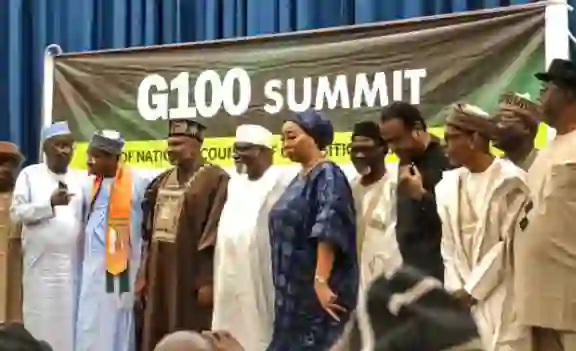
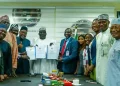
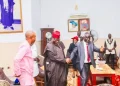
The proposal was presented at a political summit organised by the G-100 in Abuja, where representatives of the African Democratic Congress (ADC), Allied Peoples Movement (APM), Nigeria Democratic Congress (NDC), a faction of the Peoples Democratic Party (PDP), Peoples Redemption Party (PRP) and Social Democratic Party (SDP) discussed ways to unite against the ruling All Progressives Congress (APC).
Prominent opposition figures, including Atiku Abubakar, Peter Obi and Oyo State Governor Seyi Makinde, were absent from the summit. However, several presidential and vice-presidential candidates and senior party officials attended the meeting.
Mallam Salihu Lukman, who delivered the opening remarks on behalf of the G-100, proposed the establishment of a Government of National Competence based on a single four-year transition term.
According to him, the arrangement should be backed by an enforceable political agreement to ensure that participating parties remain committed to the coalition.
Lukman said the proposed government would be founded on competence, integrity, national inclusion and fair representation among the parties involved.
He stressed that the agreement must go beyond political promises, insisting that it should be formally documented and carry consequences for any party or individual that violates it.
Opposition seeks to avoid 2023 experience
Lukman referred to the 2023 presidential election as a major lesson for opposition parties, arguing that votes were divided among several opposition candidates, allowing the eventual winner to emerge despite receiving fewer combined votes than the leading opposition candidates.
He urged opposition leaders to avoid repeating the same mistake in 2027 by putting personal ambitions aside and working towards a common platform.
He also cited previous examples from other countries where opposition parties successfully defeated long-standing ruling parties after forming effective alliances.
As part of the proposed coalition structure, three committees were recommended: a Central Leadership Committee made up of key party leaders and presidential candidates; a Publicity and Communication Committee; and a Legal Committee.
Five additional working groups are expected to develop proposals covering democratic renewal, a single-term transition charter, national reforms, opposition unity and a roadmap for selecting a common presidential candidate.
The groups are expected to submit their reports within four weeks ahead of another summit.
Lukman clarified that the meeting was not intended to force any party to dissolve or merge with another, nor was it asking any presidential candidate to immediately withdraw from the race.
Duke willing to drop presidential ambition
Former Cross River State Governor and PRP presidential candidate Donald Duke said he was prepared to sacrifice his personal ambition if opposition parties agreed on another candidate to represent the coalition.
Duke argued that personal egos had repeatedly prevented opposition parties from achieving electoral success.
He maintained that the opposition would struggle to defeat the ruling party if its leaders insisted on pursuing separate political ambitions.

Opposition leaders call for unity
The Minority Leader of the House of Representatives, Fred Agbedi, urged opposition parties to learn from the APC’s successful coalition strategy ahead of the 2015 election.
Agbedi said the House Minority Caucus had decided to work with the G-100 to help opposition parties coordinate their ambitions and pursue a collective victory in 2027.
Representing the ADC, Usani Uguru Usani also backed the coalition effort but warned opposition parties against attacking one another instead of focusing on their common political objective.
The National Chairman of the APM, Yusuf Mamman Dantalle, described the summit as an important moment for Nigeria’s political development and urged participants to prioritise national interests over individual ambitions.
The PDP faction represented at the meeting also expressed support for the initiative, while the PRP leadership urged opposition candidates to recognise the expectations surrounding the coalition process.
Six parties adopt joint communiqué
At the end of the summit, the six participating parties adopted a joint communiqué committing themselves to negotiations on a framework for opposition cooperation ahead of the 2027 election.
They formally established the three proposed committees and agreed to constitute the five working groups tasked with preparing the various policy and coalition documents.
A second summit is expected to be held after the working groups complete their assignments, with the date and venue to be determined by the Central Leadership Committee.
Meanwhile, Atiku Abubakar’s aide, Phrank Shaibu, said the former vice president’s absence should not be interpreted as a boycott.
Shaibu explained that Atiku’s absence was unavoidable and insisted that he remained committed to building a united opposition capable of challenging the APC in 2027.
The coalition effort comes amid growing calls among opposition parties for a united strategy, with participants arguing that avoiding another division of opposition votes will be crucial to their chances in the next presidential election.
READ ALSO:
- Dapo Abiodun Stood Surety For Igboho’s Return to Bury his Mother – Lawyer, Pelumi Olajengbesi
- Zamfara and XEJET signs agreement to commence Abuja-Gusau Flight
- Nigerian Baptist Convention President Lauds Daniel’s Support For Christians During Sagamu Visit
- Exclusive! What is Senator Adeola Yayi Hiding About His Company, Sootem?
- NANYD Cautions Political Parties Against Exploiting Niger State Miners’ Death for Political Gains