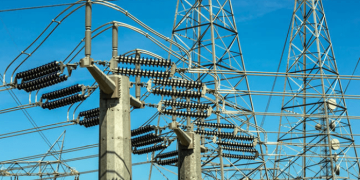











Despite an investment of €2.3 billion (₦3.7 trillion) in the Presidential Power Initiative (PPI), Nigeria’s flagship electricity project has failed to deliver its intended results.
Vanguard reports that the five-year program, aimed at boosting national power output to 25,000 megawatts (MW) between 2020 and 2025, has formally concluded, with actual output falling below 7,000 MW.
The PPI, implemented by Siemens of Germany under the supervision of FGN Power, set a phased goal: 7,000 MW by 2021, 11,000 MW by 2023, and 25,000 MW by 2025. Yet, recent data from the Nigerian Independent System Operator (NISO) shows the country currently generates only around 5,000 MW, transmits just over 4,000 MW, and distributes roughly 3,000 MW to a population exceeding 200 million.
Experts attribute the failure to a combination of weak infrastructure, high technical and commercial losses, poor metering, and liquidity challenges. Even where generation capacity exists on paper—above 12,000 MW—actual available power is limited by gas shortages, grid instability, and inadequate distribution networks.
FGN Plans New Projects
FGN Power acknowledged delays but defended the project, citing rigorous financing and governance processes. Phase 1 Batch 1 projects include five substations—New Abeokuta, Ayede, Onitsha (2026), and Sokoto and Offa (2027)—which will add 984 MW of transmission capacity. Batch 2 will see 12 more substations completed by 2028.
Persistent Transmission and Distribution Challenges
Professor Yemi Oke of the University of Lagos highlighted that distribution remains the weakest link, facing issues such as metering gaps, energy theft, and tariff collection challenges. Transmission also suffers from grid collapses, vandalism, and obsolete infrastructure, limiting Nigeria’s grid to around 5,000 MW. He advocates for decentralized systems, including mini-grids and regional networks, to reduce dependence on the national grid.
Economic Costs of Missed Targets
Dr. Chinyere Almona, Director General of the Lagos Chamber of Commerce & Industry, warned that the failure to meet power targets has substantial economic consequences. Businesses rely heavily on self-generated power, raising production costs, weakening competitiveness, and discouraging foreign investment.
Similarly, the Centre for the Promotion of Private Enterprise (CPPE) noted that unreliable electricity constrains industrialisation, job creation, and economic growth. High-cost alternative power sources limit competitiveness and affordability, raising concerns over Nigeria’s ability to benefit from the African Continental Free Trade Area (AfCFTA).


GAMCO Initiative Launched
In response, President Bola Tinubu approved the creation of the Grid Assets Management Company (GAMCO) to optimise stranded power, enhance grid management, and unlock capacity from key NIPP plants. Chief of Staff Femi Gbajabiamila explained that GAMCO will pilot a high-capacity transmission corridor along the Benin–Lagos axis and review regulatory frameworks to improve performance.
Concerns Over Overlap
Adetayo Adegbemle of PowerUp Nigeria raised concerns about potential overlaps between PPI, FGN Power, and GAMCO, stressing the need to clarify roles and responsibilities to avoid inefficiencies.
As Nigeria moves into a new phase of electricity projects, experts agree that systemic reforms, infrastructure investment, and decentralized energy solutions are critical to stabilising the sector and supporting economic growth.
READ ALSO:
- Power Crisis Persists as ₦3.7tn Project Fails
- Omotola Jalade Ekeinde – Why I Turned Down Deals Worth Billions
- NDLEA Busts Former Lagos Councillor, Discovers Drugs in Diapers and IED Parts Nationwide
- Senate: We Will Question Tinubu If Needed Over ₦210tn NNPCL Discrepancy
- Petrol Price Jumps to ₦1,150 Per Litre as NNPCL, Marketers Adjust Pump Rates