


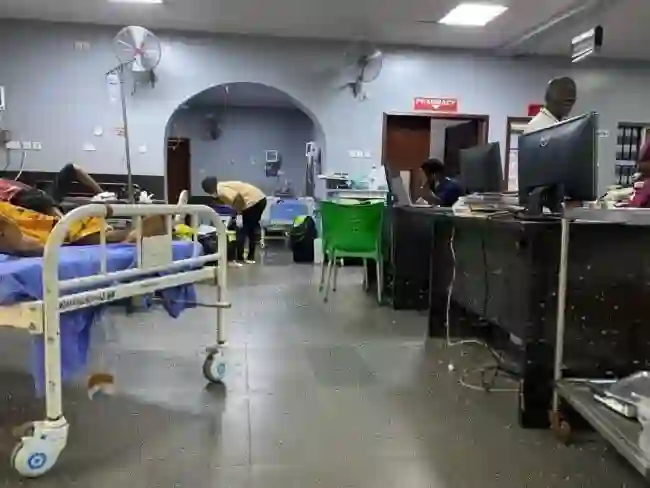
When 39-year-old teacher Joshua Afolayan shared his ordeal on social media, he wasn’t seeking attention—he was fighting for his life. What started as treatment for injuries from a road accident in August 2025 has spiraled into a medical crisis that has left him dependent on dialysis and desperate for answers. AYOOLA OLASUPO reports on a case that has shaken public confidence in Nigeria’s healthcare system.
Joshua Afolayan should have been teaching students in Ekiti State. Instead, the educator finds himself trapped in a relentless cycle of dialysis sessions, sleepless nights, and unbearable pain—a reality he never imagined possible.
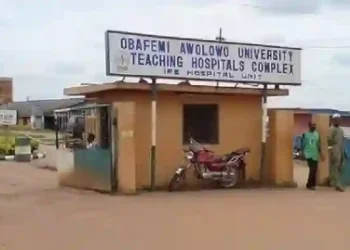
His ordeal began in August 2025 when a road accident while returning from work set off a chain of medical events that would fundamentally alter his life. Rushed to Ekiti State University Teaching Hospital (EKSUTH) in Ado-Ekiti, Afolayan underwent multiple scans and assessments. Medical reports revealed his right kidney was non-functional. An August 6, 2025 radiology report signed by Dr Akanbi indicated he had sustained a hepatic injury with haemoperitoneum—a severe condition where a damaged liver bleeds into the abdominal cavity.
After family consultations, Afolayan underwent a nephrectomy on October 9, 2025. The surgery cost over N6 million, depleting his savings and forcing his family to scramble for additional funds.
Rather than recovery, Afolayan’s condition deteriorated. He struggled to urinate, had difficulty eating, experienced frequent vomiting, and couldn’t sleep. When he sought answers at another medical facility, scans reportedly revealed a devastating finding: both kidneys appeared to be missing.
Speaking to Sunday PUNCH in a weak, emotional voice, Afolayan recounted his confusion and distress. “Four scans showed my right kidney wasn’t functioning and needed removal. We agreed because tests confirmed my left kidney was working fully. The surgery was meant only for the right kidney,” he explained.



A September 10, 2025 scan from Rainbow Specialist Radio-Diagnostic Centre described severe right multi-cystic kidney disease, with the right kidney markedly enlarged and replaced by multiple large cysts. However, the report noted the left kidney was enlarged but functioning, with adequate clearance and drainage. A nuclear medicine report from University College Hospital, Ibadan, dated September 23, 2025, confirmed the right kidney was non-functioning while the left kidney showed 100 percent function with no obstruction.
Following the October surgery, Afolayan’s symptoms worsened dramatically. He developed dry skin, abdominal swelling, difficulty swallowing, and persistent pain, yet received little explanation from the hospital. “We didn’t suspect anything initially, only that the pain was unbearable. Later, another scan revealed no kidneys remained in my body. How could this happen? Where is the kidney they said was functioning fully?” he asked.
An abdominopelvic ultrasound conducted at Optimal Radiodiagnostic Centre on November 11, 2025—weeks after his nephrectomy—revealed bilaterally non-visualized kidneys with massive ascites (fluid accumulation in the abdomen). The report, signed by Consultant Radiologist Dr O.A. Abayomi, described floating intra-abdominal organs and a completely collapsed bladder, suggesting severe kidney impairment or absence.
When Afolayan and his family requested his medical report from EKSUTH, they encountered resistance. The eventual report contained what they described as altered information. “They changed it to say I had a horseshoe kidney, meaning the kidneys were joined together, which wasn’t true. Pre-surgery scans showed both kidneys were separate. Only the right one was supposed to be removed,” Afolayan stated.
A November 20, 2025 letter from EKSUTH Consultant Urologist Dr Imade C.W. indicated that surgery had revealed a “diseased polycystic horseshoe kidney” and that Afolayan subsequently developed anuria (inability to produce urine), necessitating dialysis and eventual kidney transplant.
Professor Jacob Awobusuyi, Consultant Nephrologist and President of the Transplant Association of Nigeria, described the situation as highly unusual, noting that survival beyond two months without kidneys is extremely rare, though not impossible. He explained that horseshoe kidneys—where the two organs are joined—may allow one part to temporarily compensate if the other is damaged.
Without functioning kidneys, patients cannot produce urine, leading to rapid fluid accumulation, leg and abdominal swelling, lung fluid causing breathlessness, and toxic waste buildup. Symptoms include vomiting, hiccups, confusion, and eventual loss of consciousness. “Kidneys regulate blood pressure, produce blood cells, and activate vitamin D. Their failure results in hypertension, anaemia, and fragile bones. Dialysis is essential, and transplantation should follow as soon as possible,” Awobusuyi explained.
Another senior nephrologist, speaking anonymously, stressed that removing both kidneys without immediate dialysis would almost certainly be fatal. Native kidneys, even if partially non-functional, contribute to overall health, and their removal without preparation places patients at immediate severe risk. He noted that horseshoe kidneys may function adequately for years without symptoms and are usually monitored rather than removed. Kidney removal is reserved for severe trauma, tumors, or extensive damage.
Afolayan’s wife, Chika, described the family’s financial struggle since her husband stopped working. With no stable income, they’ve depended largely on family support. She resigned from her own job following illness and has struggled to care for their three children, though she recently secured new teaching employment. “Justice would be life-changing, restoring dignity, livelihood, and everything lost,” she said.
Afolayan’s elder brother, Augustine Ajayi, submitted a formal petition on December 1, 2025, to EKSUTH’s Chief Medical Director, demanding clarification and thorough investigation. The petition requested full explanation of the medical rationale for the nephrectomy, complete pre-operative and post-operative investigations, clarification on both kidneys’ status, identification of all medical personnel involved, and details of steps to address the outcome and prevent recurrence.
Ajayi recounted that Afolayan fainted at the hospital on December 17, 2025, requiring 30 minutes of resuscitation due to multiple complications. He continues undergoing repeated dialysis, cannot eat or sleep properly, and lives in constant pain.
Dr Oyebanji Filani, Commissioner for Health and Human Services, confirmed receipt of the investigative panel’s report and announced the dismissal of the surgeon involved. All surgical team members present during the operation will be suspended for one month pending further administrative review. The Ekiti State Government pledged to cover the full cost of a kidney transplant for Afolayan, including post-transplant care and medication for two years.
“Following a thorough review of pre-, intra-, and post-operative actions, it was confirmed that this was a surgical complication, not organ harvesting as alleged. A comprehensive reorganization of relevant departments within EKSUTH will be undertaken to strengthen clinical governance, accountability, and patient safety,” the government statement read.
A senior EKSUTH official, speaking anonymously, said the hospital awaits the panel’s outcome and remains focused on keeping Afolayan alive and stable. The official noted that kidney transplantation requires time and a suitable donor. “The report has been submitted to the state government. The focus of the hospital, the government, and the committee is on his survival. He will need a donor for a transplant, and the process cannot be done in a day,” the official stated.
As investigations continue, Afolayan endures pain, dialysis, and uncertainty, holding onto hope for a restored life while his case raises broader questions about medical accountability and patient safety in Nigeria’s healthcare system.
READ MORE:
- Kano to Get ₦1 Trillion Metro Rail System as FG Approves Major Transport Project
- Angola Oil & Gas Launches in Luanda as $70B Investment Momentum Accelerates
- Nigeria Launches Locally-Made Armoured Combat Vehicle, Pledges Continued Support for Domestic Defence Manufacturing
- NIWA Intensifies Campaign to Eliminate Boat Accidents Across Nigeria
- Activists Soweto and Frank Get N200,000 Bail Over Lagos Anti-Demolition Protest