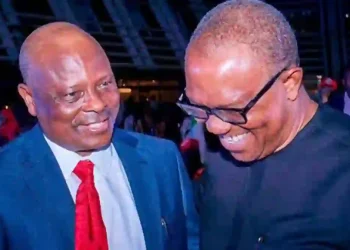
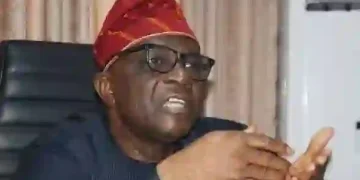

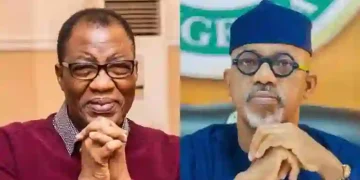





With barely months to Nigeria’s next general election cycle, the race for Aso Rock is increasingly being defined less by individual candidates and more by the powerful political structures, alliances, and networks backing them.
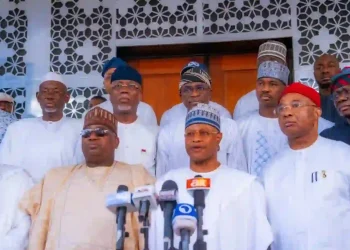
Across Abuja and the states, governors are deepening consultations, former ministers are rebuilding old coalitions, political financiers are reactivating dormant networks, while youth movements and civil society groups are reorganising ahead of what is shaping up to be a highly strategic contest.
The emerging 2027 race is gradually evolving into a contest between structure and sentiment, incumbency and coalition politics, and entrenched political machinery versus rising public frustration.
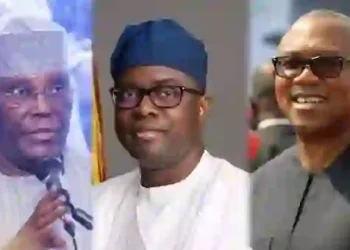
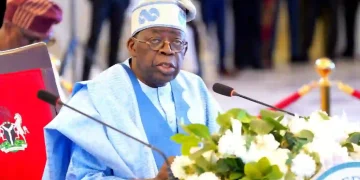
At the centre of it all is President Bola Ahmed Tinubu, who enters the political cycle backed by one of the strongest governing structures in recent Nigerian history. On the opposing side are fragmented but energetic blocs built around prominent figures such as Atiku Abubakar, Peter Obi, Seyi Makinde, Rotimi Amaechi, and others, each carrying different strengths, weaknesses, and regional influences.
Tinubu: Incumbency and Political Machinery
President Bola Tinubu remains the anchor of the ruling structure, supported by the dominance of the All Progressives Congress.
His advantage lies in a wide-reaching political network that includes a significant number of governors, federal appointees, lawmakers, and long-standing party loyalists. This structure provides strong nationwide coordination capacity, particularly at state and local levels where elections are often decided.
Governors remain central to this advantage, controlling grassroots mobilisation, party machinery, and electoral logistics within their states. Combined with incumbency power at the federal level, Tinubu’s camp benefits from institutional reach and political continuity.
Although critics often point to perceived systemic advantages of incumbency, there is no public evidence of institutional compromise. However, political perception continues to play a major role in opposition narratives.
Tinubu also benefits from lingering regional calculations, especially in parts of the South, where zoning considerations continue to influence political alignment.
Atiku: The Northern Establishment Network
Former Vice President Atiku Abubakar remains one of the most influential opposition figures due to his deep-rooted relationships across Nigeria’s political elite, particularly in the North.
He is associated with long-standing political networks within the former PDP establishment, business circles, and coalition negotiators. His support base includes experienced political actors and former office holders such as David Mark, Aminu Tambuwal, Dino Melaye, Rauf Aregbesola, Emeka Ihedioha, Liyel Imoke, and others who have, at different times, been linked to opposition restructuring efforts.
His strength lies in elite negotiation capacity and cross-regional political familiarity. However, his reliance on establishment networks also raises concerns among younger voters seeking generational change.
In addition, zoning dynamics in the South continue to complicate his broader appeal, particularly in a political environment increasingly shaped by regional sentiment.
Obi: Emotional Politics and Youth Mobilisation
Former Anambra State governor Peter Obi remains the face of emotionally driven opposition politics, powered largely by the grassroots-backed “Obidient” movement.
This movement consists mainly of young voters, urban professionals, and diaspora supporters who are deeply engaged through digital platforms and motivated by dissatisfaction with traditional politics.

Obi’s appeal is strongest in urban centres and parts of the South-East and South-South, where his candidacy is also viewed through the lens of regional representation.
However, his biggest challenge remains organisational structure. Unlike Tinubu, he lacks a deep network of governors, entrenched party machinery, and nationwide electoral logistics systems required for large-scale mobilisation.
Analysts often note that while Obi commands strong emotional support, converting that energy into electoral structure remains uncertain.
His strategic calculations increasingly involve potential alliances, including possible alignment with Northern political figures such as Rabiu Kwankwaso.
Kwankwaso: Northern Grassroots Mobiliser
Former Kano State governor Rabiu Kwankwaso remains one of the most influential grassroots political mobilisers in Northern Nigeria.
He leads the Kwankwasiyya movement, which maintains strong influence across Kano and parts of the Northwest. His strength lies not just in vote potential, but in mobilisation structure, voter turnout capacity, and grassroots coordination.
This makes him a key figure in any opposition coalition strategy, as no serious challenge to the ruling party can ignore Northern electoral arithmetic.
However, balancing alliances between ideological reform movements and traditional political structures remains a challenge for his political positioning.
Makinde: Emerging Southwest Calculations
Oyo State governor Seyi Makinde represents a quieter but growing political presence within opposition discussions.
His appeal is based more on governance performance, technocratic image, and moderate political positioning rather than mass movement politics.
Within sections of the Southwest elite, there is growing discussion about alternative Southern leadership options outside the dominant ruling structure.
However, Makinde lacks the national political machinery, established grassroots networks, and multi-regional alliances enjoyed by leading contenders, limiting his reach beyond regional influence.
Amaechi: Experienced but Crowded Space
Former Rivers State governor Rotimi Amaechi remains an experienced political actor with deep roots in both opposition and ruling party structures.
He continues to draw support from technocratic circles and segments of the South-South political class.
However, his political space is increasingly constrained by overlapping dominance: Tinubu’s control of the Southwest, Obi’s emotional Southern support base, and Atiku’s Northern establishment reach.
Despite this, Amaechi’s experience and national exposure keep him relevant in coalition discussions.
Adebayo: Ideological Outsider
Adewole Adebayo of the Social Democratic Party represents an ideological and outsider-driven alternative.
His appeal is strongest among politically conscious urban voters who are dissatisfied with both ruling and mainstream opposition parties.
However, he lacks the structural backing of governors, major financiers, and national party machinery needed for a competitive presidential campaign.
Opposition Coalitions: Unity vs Ambition
Coalition attempts involving platforms such as the African Democratic Congress and other emerging alliances have repeatedly faced internal struggles.
The core challenge remains leadership rivalry, zoning disagreements, and competing ambitions among potential candidates.
While there is broad agreement on dissatisfaction with the ruling party, translating that sentiment into a unified electoral structure remains difficult.
PDP: Declining but Not Gone
The Peoples Democratic Party, once Nigeria’s dominant political force, continues to face internal divisions, factional disputes, and weakening national cohesion.
Though still active in certain regions and blocs, it increasingly functions as fragmented groups rather than a unified national machine.
Conclusion: Structure vs Frustration
The emerging 2027 political contest is increasingly defined by one central question: whether opposition frustration can overcome entrenched political structure.
While the ruling party maintains strong institutional and organisational control, the opposition commands significant public dissatisfaction and emotional momentum.
The outcome may ultimately depend not on individual popularity, but on which side succeeds in converting political energy into a coordinated nationwide electoral machine.
READ ALSO;
- 2027: The Power Blocs Shaping Tinubu, Atiku, Obi, Makinde and Other Key Contenders
- Nigerian Army Details How Joint Operation With US Led to Killing of Senior ISIS Commander
- Presidency Clarifies Report on ISWAP Commander’s Death, Cites Earlier Mistaken Identity
- NSCDC Busts Syndicate Vandalizing Railway Tracks, NNPC Pipelines; 12 Suspects Arrested
- Understanding Cancer: Simple Ways to Prevent It and Why Early Detection Matters