









Stakeholders across the political divide have reacted to indications that the All Progressives Congress (APC) will retain its Muslim-Muslim presidential ticket for the 2027 election, with opinions split between those who insist competence matters more than religion and others who want a more inclusive approach to governance.
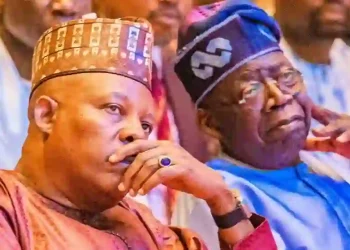
The reactions follow growing speculation that President Bola Tinubu and Vice President Kashim Shettima will once again lead the APC’s ticket into the next election.
Afenifere: Nigerians want governance, not religious politics
Afenifere’s National Organising Secretary, Abagun Kole Omololu, said the group had noted fresh attempts by some political interests to reignite the Muslim-Muslim ticket debate, adding that the pan-Yoruba group’s position remains unchanged.
He said Afenifere is not a religious body but a socio-political movement focused on justice, equity and good governance for the Yoruba people, regardless of faith.
Omololu argued that Nigerians care more about security, jobs, cost of living, education, healthcare and accountable leadership than the religion of those in power. He cited past leaders such as Lateef Jakande and his deputy Rafiu Jafojo, both Muslims who governed a largely Christian Lagos effectively, as well as Obafemi Awolowo’s choice of a Christian running mate in 1979 despite the North’s Muslim majority.
He noted that Tinubu and Shettima have not shown religious bias in office, describing continued focus on the ticket’s religious make-up as misplaced. According to him, insecurity, corruption, weak institutions and over-centralised power remain Nigeria’s real problems, and leadership should be judged on results, not religion.
Bakita Bello: Judge leaders by competence, not faith
A former Speaker of the Ondo State House of Assembly, Bakita Bello, said he would ordinarily not be bothered by the Muslim-Muslim ticket as a humanist, but lamented that Nigeria’s leadership choices have often been driven by narrow interests rather than competence and compassion.
He argued that neither the Buhari-Osinbajo Muslim-Christian ticket nor the current Muslim-Muslim arrangement has stopped banditry, terrorism, corruption or the hardship facing ordinary Nigerians. He urged the APC to be more sincere and committed to the welfare of citizens regardless of religious differences.
Arabambi: Northern political realities shaped Tinubu’s decision
The Labour Party’s South-West Vice Chairman, Abayomi Arabambi, defended the ticket, saying competence should outweigh religious considerations. He argued that picking a northern Christian running mate could backfire given the North’s Muslim-majority demographics, and that replacing Shettima with a southern Muslim would be equally problematic.
Arabambi dismissed claims that the ticket has fuelled insecurity or targeted Christians, noting that bandits attack victims without regard for religion. He pointed to the unified foreign exchange rate and reduced fuel scarcity as achievements of the administration, insisting Nigerians should judge Tinubu by performance rather than faith.
Yoruba Progressive Forum: Ticket reflects strategy, not division
The forum’s coordinator, Lateef Olalekan, said the Muslim-Muslim ticket should be seen as a political strategy for continuity rather than an attempt to divide the country, though he flagged rising tension in Benue, Plateau and other North-Central states as a concern needing urgent attention.
Ebiseni: Tinubu has not governed along religious lines
Afenifere’s Secretary-General, Olusola Ebiseni, said Nigeria’s political culture since 1999 has rested on power rotation between North and South, not religion. He said Tinubu has not shown any sign of governing based on faith, and that maintaining the same ticket avoids the kind of instability that hurt the Obasanjo-Atiku relationship in the past. He also warned of the risks of dropping a loyal Kanuri vice president so close to an election.
Ogunsuyi: Ticket criticism driven by internal APC politics
A former Ekiti Commissioner for Information, Lanre Ogunsuyi, said much of the renewed opposition to the ticket is coming from within the APC itself, driven by politicians eyeing the vice-presidential slot rather than genuine religious concerns. He said Nigerians are more interested in performance on insecurity, inflation and unemployment than in which mosque or church a leader attends.
Yoruba Council Worldwide: Nigeria needs inclusive politics
The council’s president, Oladotun Hassan, said parties have a right to pick their candidates, but urged leaders to prioritise competence, equity and unity over religious or ethnic considerations, calling for responsible political discourse ahead of 2027.
Adebayo: History shows religion isn’t the deciding factor
SDP presidential candidate Adewole Adebayo said the 1993 Abiola-Kingibe Muslim-Muslim ticket proved religion doesn’t determine how Nigerians judge leaders, since both men were assessed on broader qualities beyond faith. A Christian himself, he said Nigerians engage with him based on his record, not his religion.
Adebayo argued that insecurity and poverty affect Nigerians of all faiths alike, making religion a poor basis for political choices. He also referenced the ordeal of former Kaduna Governor Nasir El-Rufai — once a strong backer of the Muslim-Muslim ticket — as proof that religious alignment offers no guarantee of justice. He insisted Nigerians want honest, accountable leadership above all else.



READ ALSO:
- Akpabio: Senate Won’t Create Conflict With Tinubu to Prove Independence
- Nigeria Loses 3,100 GWh of Power Potential to Gas Flaring in May
- Kogi: Gunmen Abduct School Principal, Four Students, NECO Official During Exam
- Nigeria, Ghana, Côte d’Ivoire, Cameroon Unite to Boost Cocoa Processing
- Nigeria, Benin Customs Deepen Border Security Partnership with Geospatial Technology