








The United Arab Emirates has suspended all trade and financial dealings with Iran, accusing Tehran of firing missiles at its vessels in the latest escalation between the two Gulf neighbours.
UAE foreign ministry communications director, Afra Al Hameli, announced the suspension, saying regional tensions had forced Abu Dhabi’s hand.
“In light of regional escalations… all trade, commercial exchanges, and financial transactions with Iran have been halted until further notice,” Al Hameli said.
The move ends a relatively calm stretch for the UAE, which had gone without an Iranian missile threat since May, after being hit hard in the early days of the Middle East conflict.
Abu Dhabi says Iran has been targeting its tankers at sea in recent weeks, a claim Tehran denies.
Long Trade History Now In Jeopardy



The UAE is home to a large Iranian population and has long served as one of Tehran’s key trading partners, particularly given Iran’s exposure to United States sanctions before the war broke out.
The two countries share deep cultural and historical bonds as Gulf neighbours, with centuries-old ties running through coastal communities, trade routes and family networks.
This is not the first strain on relations. At the start of the conflict, the UAE withdrew its ambassadors from Iran and shut down Iranian-linked institutions on its soil, including a hospital, schools and a community centre in Dubai in March 2026.
A UAE official told AFP at the time that “specific institutions directly connected to the Iranian regime and IRGC will be shut down under targeted measures” over violations of UAE law.
Tuesday’s Missile Claim
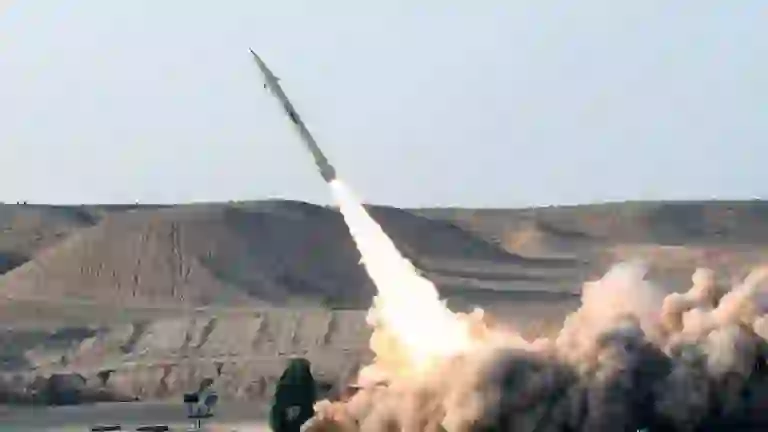
Abu Dhabi says Iran launched two ballistic missiles towards the UAE on Tuesday — the first such incident since May — triggering the latest response.
Authorities later said the missiles appeared to target shipping lanes rather than land, though Tehran has firmly denied firing at the UAE at all.
“UAE air defences detected two ballistic missiles launched from Iran towards the country, with the first falling outside the country’s territorial waters, while the second fell within the territorial waters,” the UAE foreign ministry said in a statement.
A follow-up statement said the missiles “were targeting maritime navigation and fell into the sea.”
Iranian foreign ministry spokesman, Esmaeil Baqaei, rejected the accusation outright, calling it damaging to regional trust and security.
Residents Alerted
A phone alert reportedly went out warning UAE residents of a “potential missile threat” — the first such alert since a false alarm in June and a July warning for an attack that never crossed into UAE territory. Before that, the last missile alert came in early May.
Despite the relative calm, tankers belonging to the UAE’s state oil firm, ADNOC, have reportedly come under repeated attack in recent weeks.
When the wider Middle East conflict erupted on February 28, the UAE bore the brunt of Iran’s assaults, absorbing nearly 3,000 missiles and drones — more than any other country in the region.
After a US-Iran memorandum of understanding collapsed in June, the UAE had avoided further attacks, unlike some of its Gulf counterparts — until now.
READ ALSO:
- Angelique Kidjo Set To Make History With Hollywood Walk Of Fame Star
- Super Falcons To Get New Coach Before October – NSC
- Poco Lee Reportedly Arrested in UK Over Rape Allegation
- Fayose Reveals Makinde’s Alleged Promise Not to Work Against Tinubu
- Osun Election: Nigeria Would Have Been Destroyed If Atiku Picked Wike As VP – Isaac Fayose