




More than 130 Ogun residents have had their vision restored under the Gateway Front Foundation@25 Free Medical Outreach, a quarter-century tribute that the Otunba Senator Gbenga Daniel Gateway Front Foundation chose to write in surgery rather than speeches.
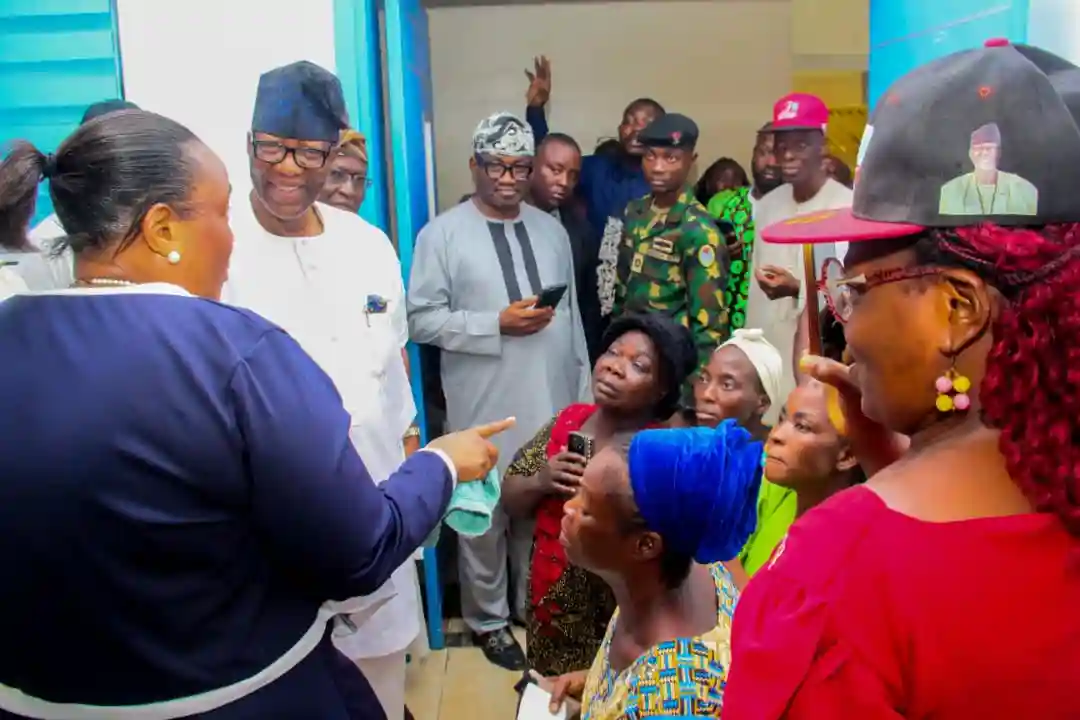
The day begins long before the first incision. At Redeemer’s Health Village in Mowe, patients arrive in the half-light, many of them guided by a grandchild, a spouse or a neighbour who has given up a day’s work to bring them. They hold on to elbows, to wrappers, to the shoulder of the person ahead. They are the people this outreach was designed for, and for many of them the morning’s journey is the last one they will make in darkness.
By midday, some are seated again, a clean shield over one eye, waiting for the moment a nurse lifts it away. Those who have been through it describe the same sequence: a sudden brightness, then the outline of a hand, then a face. More than 130 Ogun residents have now crossed that threshold under the GFF@25 Free Medical Outreach, an initiative organised to mark the 25th anniversary of the Gateway Front Foundation and sponsored by Otunba Senator Gbenga Daniel.
To understand why the number matters, you have to understand what blindness costs a Nigerian family. It is not only the loss of sight. It is the loss of income when a breadwinner can no longer work, the loss of schooling when a child is pulled out of class to lead an elderly parent, the loss of standing when a respected elder becomes a dependant. In households already stretched by the price of food and fuel, one blind relative can quietly tip a family from managing to struggling. Much of that blindness is treatable. The cure is often a short operation. What stands between the patient and the theatre is, more often than not, money.
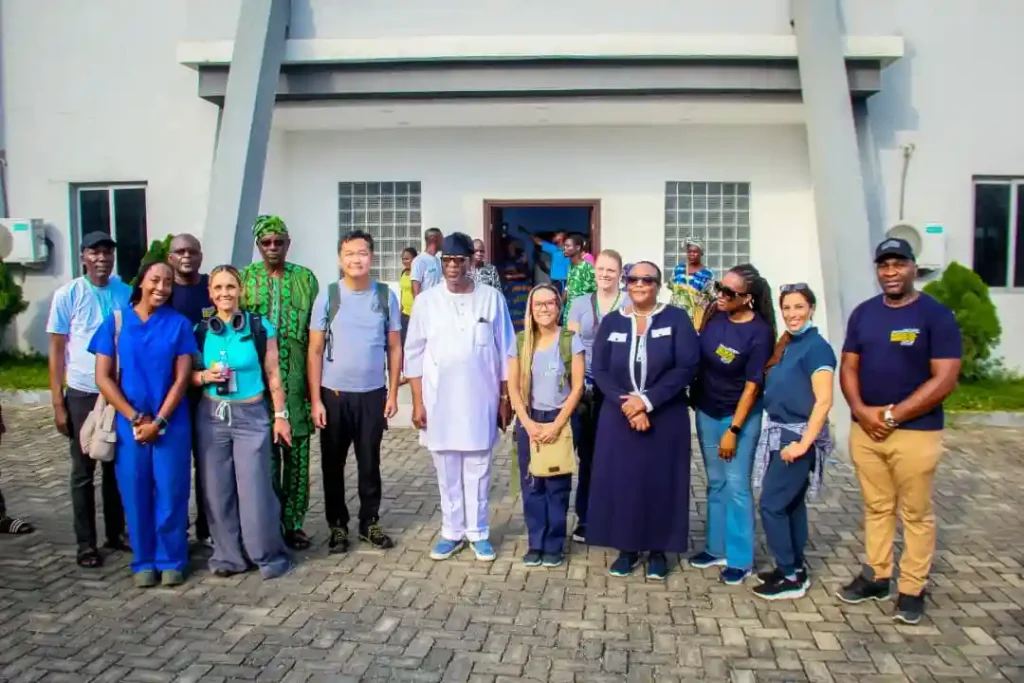
That is the gap the outreach has stepped into, and the way it was filled is the heart of the story. Otunba Senator Daniel did not wait for a government budget line or a donor cycle. He brought a team of surgeons from the United States to Ogun State, working with Sharing Hope Medical Mission (USA), Sharing Hope and Care Foundation and Redeemer’s Health Village, and put substantial personal resources behind the programme. Consultation, medication and surgery cost the patient nothing. For a farmer in an Ogun East village, a petty trader in a market town or a retired civil servant whose pension rarely arrives on time, that single fact rewrites the arithmetic of a lifetime. The question stops being whether they can afford to see again and becomes only whether they can reach the facility.
The visiting team’s work extends well beyond the eye theatre. Surgeons are also performing gynaecological procedures, orthopaedic interventions and a range of major and minor operations. A woman who has endured years of untreated pain is being attended to in the same compound where a retired driver is learning to read the faces of his grandchildren. A young man with a long-neglected bone injury is on the orthopaedic list. Together they make a portrait of the unmet need that sits quietly in every community, waiting for someone to arrive with the skill, the equipment and the means to meet it.
In a political season, a gift of this size invites a question, and it should be answered plainly. The organisers say the outreach has no electoral purpose, and the facts support them. Otunba Senator Daniel is not a candidate in next year’s elections. The programme is not a constituency project, it is not funded from public money, and no appropriation sits behind it. It is paid for from his personal funds. No one is being asked for a vote, because there is no ballot on which his name will appear. What the beneficiaries are being asked for is nothing at all.
The foundation’s history gives that claim some weight. Gateway Front Foundation is the vehicle through which Daniel has institutionalised his philanthropy, and its work has cut across healthcare, education, youth empowerment and agriculture. When he announced his withdrawal from partisan politics in March 2019, he named the revival of the foundation among his first priorities, promising that it would keep bringing relief to the needy and help with their health challenges. This year the foundation has moved to strengthen its machinery, with the appointment of Dr Babatunde Onadeko, a former bank executive, as Executive Secretary, and Dr Bankole Adegboyega Osisanya, a physician of more than 40 years’ experience, as Chief Medical Consultant. In other words, the medical mission is not a one-off gesture. It sits inside a long-running institution that has outlasted political seasons.
Families who have benefited speak of Daniel in the plain language of relief, with prayers, blessings and a sentence that begins “May God reward him.” For the family of a patient, the gratitude is concrete: a mother who can see her own kitchen again, a grandfather who can walk to the end of the compound unaided, a household that no longer needs one adult to serve as a permanent guide.
What makes the programme unusual is that it does not ask the sick to come to a single point. The organisers have taken routine care into the communities, setting up designated centres in participating local government areas where residents can be consulted, treated for common ailments and given medication close to home. Those who need surgery are referred to the main facility. The design solves two problems at once. It prevents the main site from being overwhelmed, a familiar fate of free medical exercises across the country, and it reaches the people least able to travel, the elderly, the frail and the very poor.

The partnership behind it deserves its own attention. Medical missions succeed or fail on logistics: whether there is a host facility ready to receive them, a local organiser who can mobilise patients, a sponsor who will carry the cost and a clinical team willing to work long days in unfamiliar conditions. At Mowe, all of those pieces have come together. In a health system strained by cost, shortages and the steady departure of its own professionals, the arrangement shows how local resources and international goodwill can be joined to serve people who are usually left waiting.
The timing carries meaning as well. Twenty-five years is a milestone that tempts institutions towards ceremony, towards cake-cutting, citations and plaques. The foundation has chosen another register. By anchoring its silver jubilee to a medical mission, it has made the anniversary something that can be measured in patients treated and eyes opened. The celebration is a gift handed outward rather than a tribute gathered inward.
Inevitably, the story has acquired a vocabulary of its own. Among beneficiaries and well-wishers, the restoration of sight has been described in the language of scripture, and the comparison between the miracles of Jesus and the work of Otunba Senator Daniel has been made more than once. The surgeons, who know precisely how many hours of training and how much equipment lie behind each successful operation, would likely prefer that credit be shared across the whole team. Yet the sentiment is understandable. To a family that had accepted permanent darkness as fate, the return of sight does not feel like an ordinary event. It feels like grace, and people reach for the largest words they have.
The mission is not over. Surgeons are still operating, the community centres are still receiving patients, and the final tally will climb past 130. When the visiting teams eventually pack their instruments and fly home, the people of Ogun will be left with something that cannot be packed away: children who no longer have to lead their parents, traders who can count their own change, elders who can sit in the doorway and watch the street.
The organisers have been clear about how they want the programme judged. Not by the size of the banners or the length of the guest list, but by the lives improved, the suffering relieved and the hope restored. In Mowe, those who once could not see are standing in the light, and they are the measure.
- Gunmen Kill NSCDC Officer, Abduct Businessman in Plateau
- DSS Arraigns Five Suspects Over Abduction of 20 NYSC Members
- EndSARS: Atiku Demands Answers Over Lekki Shooting Six Years After
- The Gift of Sight Came to Ogun East, and Otunba Senator Gbenga Daniel Paid for It
- Anambra Confirms Lassa Fever Case, Activates Emergency Response
Seunmanuel Faleye is a brand and communications strategist. He is a covert writer and an overt creative head. He publishes Apple’s Bite International Magazine.