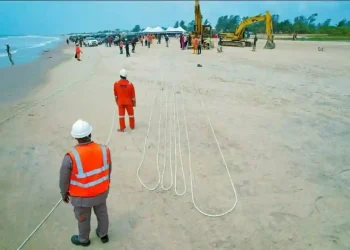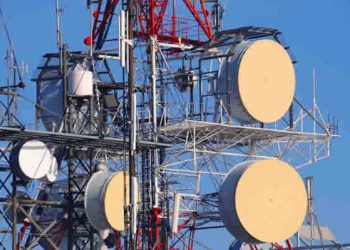












You can have full network bars on your phone one minute and struggle to make a call, send a message or complete a transaction the next. The reason is often not the phone itself, but the complex physical infrastructure behind the signal.
Nigeria’s growing dependence on digital connectivity means that an interruption to telecommunications can quickly become an interruption to business, banking, transportation, healthcare and everyday life.
The Nigerian Communications Commission (NCC) recorded 195.11 million active telecommunications subscriptions in July 2026, while broadband subscriptions reached 124.42 million.
At the same time, the country recorded 5,934 fibre-optic cable cuts in the first six months of 2026, an average of about 65 incidents every day, according to the Office of the National Security Adviser (ONSA).
Five factors explain why apparently strong connectivity can disappear so quickly.

1. A fibre cable can be cut somewhere far from you
Mobile phones communicate wirelessly with nearby base stations, but those sites depend heavily on fibre-optic and other transmission infrastructure to carry traffic into the wider network.
RelatedPosts



The NCC explains that a fibre cut can result in complete service outages, slower speeds and degraded mobile voice and data services because mobile towers rely extensively on fibre backhaul. The scale of the damage can range from a neighbourhood to a much wider area, depending on where the cut occurs.
Road construction, excavation and other civil works are major causes. In May alone, fibre cuts accounted for 183 of 245 major network outages recorded by the NCC uptime portal, according to BusinessDay analysis of the regulator’s data.
This means a subscriber can have a perfectly functioning handset and still lose service because an underground cable several kilometres away has been damaged.
2. Vandalism and attacks can knock out the network
Not every outage is accidental.
Telecom infrastructure faces vandalism, theft and deliberate attacks on fibre, power equipment and other network facilities. The NCC classifies telecommunications networks, base stations, fibre-optic cables, towers and related infrastructure as Critical National Information Infrastructure because disruption can seriously affect everyday life, the economy and national security.
The ONSA has similarly warned that fibre damage is no longer simply a telecommunications problem. It can disrupt governance, economic productivity, public services and the daily activities of Nigerians.
For users, the consequence may appear simple: the bars disappear, calls fail or data stops working. But underneath that experience could be damage to infrastructure supporting banking, POS terminals, hospitals, logistics, businesses and other essential services.
3. The network may be working, but a critical site may have lost power
Telecom networks require continuous power to operate base stations, transmission equipment and other facilities. When power systems fail, a site can become unavailable even when the surrounding network remains intact.
This is one reason network resilience depends on more than simply installing additional towers or expanding spectrum. Operators must maintain power systems, transmission links and backup arrangements across thousands of sites.
The scale of the investment involved illustrates the challenge. MTN Nigeria said it invested about N1 trillion in 2025 to expand and modernise its network, including hardware, fibre, power systems and installation services.
Yet investment in new capacity can be undermined when existing infrastructure is repeatedly damaged or becomes inaccessible.
4. One damaged route can create congestion elsewhere
Networks are designed with alternative routes and capacity, but when a major fibre route is cut, traffic may have to be rerouted through other paths.
That can leave some customers with slower data speeds, degraded call quality or intermittent service even though their phones continue to display network bars.
The problem becomes more significant as data consumption rises. NCC figures show broadband subscriptions reached 124.42 million in July 2026, while data consumption rose to about 1.66 million terabytes that month.
Telecommunications analyst and legal practitioner Barnabas Hunjo said the country’s dependence now extends far beyond calls and browsing.
“When we talk about telecommunications infrastructure, we have to understand that modern economies depend heavily on connectivity,” Hunjo said, identifying POS terminals, ATMs, banking, internet services, ports and aviation among activities relying on telecom infrastructure.
The implication is straightforward: as more activity moves online, network disruption becomes increasingly costly.
5. What looks like a ‘network problem’ may actually be an infrastructure problem
Consumers often experience an outage as poor service from their network provider. But the underlying cause can be outside the operator’s direct control.
Technology entrepreneur and public analyst Israel Ihaza said the physical infrastructure carrying digital services is often invisible to the public, making its importance easy to underestimate.
“These cables power economies,” Ihaza said, warning that when fibre networks go down, the disruption can extend to the financial ecosystem and banking.
He has called for better coordination between telecom operators, government agencies and construction companies, as well as clearer identification of underground fibre routes before excavation.
The financial consequences are already substantial. Industry operators spent N2.2 billion on direct repairs arising from fibre cuts in the first half of 2026, according to the Association of Licensed Telecommunications Operators of Nigeria (ALTON), excluding lost revenue and capital diverted from expansion to emergency repairs.
For MTN, one of Nigeria’s largest network operators, the problem illustrates the tension between expanding capacity and protecting what has already been built. The company had 100.86 million subscriptions in July, according to NCC data, giving an indication of the scale of users potentially affected when infrastructure serving its network is disrupted.
The wider economic stakes are even clearer in electronic payments. Nigeria recorded N18.78 trillion in POS transactions in the first quarter of 2026, up from N10.49 trillion a year earlier, according to NIBSS.
This is why the ONSA’s recent warning matters. A damaged fibre cable is no longer merely a technical inconvenience. It can mean a trader unable to receive payment, a business unable to process an order, a remote worker unable to connect to an employer, a hospital struggling with communication or a customer unable to complete a banking transaction.
The challenge for Nigeria, therefore, is no longer only to build more telecom infrastructure. It is to protect the infrastructure already carrying an increasingly digital economy.
As Hunjo put it, the country’s dependence on connectivity means protecting telecom infrastructure is essential to keeping businesses operating and safeguarding lives and property.
- 5 Reasons Your Phone Has Full Bars Now, No Service The Next Minute
- Tinubu Bets on Gas and Power to Lift Manufacturing to 25 Per Cent of GDP by 2030
- NESREA to Honour Lagos Community Leader Who Saved a Giant Endangered Sea Turtle
- Hunye Alleges Plot to Strip His Security Detail, Vows to Stay in Race
- Ayo Sogbuyi Takes the Helm as President of Wamufat Youth Community Development Foundation

Seunmanuel Faleye is a brand and communications strategist. He is a covert writer and an overt creative head. He publishes Apple’s Bite International Magazine.