










The Petroleum Technology Association of Nigeria (PETAN) has adovated for stronger public–private supplier collaboration across Africa’s oil and gas industry. The group recently revealed that public–private supplier partnership is the right way to go for the continent’s oil sector.
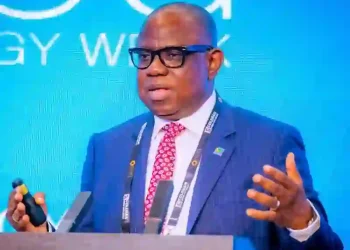
Speaking during his paper presentation at the 4th Conference and Exhibition on Local Content in the African Oil and Gas Industry (CECLA), organised by the African Petroleum Producers Organisation (APPO) in Kintélé, Brazzaville, Congo, PETAN Chairman, Engineer Wole Ogunsanya, was represented by PETAN Executive Secretary, Engr. Kevin Nwanze said that Nigeria’s NOGICD Act, recently implemented by the NCDMB, has delivered brilliant results thus far by boosting in-country value retention and local manufacturing from 5% in 2010 to 56% in 2024.
According to him, the importance of partnerships to drive long-term growth and competitiveness across the continent cannot be overemphasized.
He stated that the current obstacles crippling modern oil and gas projects have made collaboration a must.



“Collaboration is no longer a ‘nice-to-have’ but a ‘must-have’ for sustainable local content in Africa’s oil and gas industry.
The NOGICD Act remains the primary engine driving fairness, transparency, and measurable local content growth in Nigeria’s oil and gas sector,” he said.
Kevin further noted that Nigeria’s in-country value retention has grown from 5% in 2010 to 56% in 2024, a feat that proves what can be achieved under a structured partnership.
He concluded by warning that without collaboration, African nations will keep risking project delays, cost inflation and reduced benefits to host communities.
“Nigeria’s in-country value retention has grown from 5% in 2010 to 56% in 2024—clear evidence that structured collaboration works.
Today’s oil and gas projects are too complex for any single party; without collaboration, delays, cost overruns and poor host-country benefits are inevitable.
Weak policies, financing gaps, trust deficits, and capacity limitations remain the biggest obstacles to effective collaboration across Africa.
African governments must move beyond setting targets and focus on creating enabling environments that simplify procurement and expand access to finance.
Open procurement, contract publication, and independent oversight are non-negotiable if we want sustainable and trust-driven collaboration.
Technology transfer can only succeed when private companies make a firm commitment to support local suppliers and the change-management process.
Nigeria’s major project collaborations, from Egina FPSO engineering to the EnServ–Schlumberger alliance, were only possible because the NOGICD Act provided the regulatory backbone.
True sustainability comes from building lasting capabilities, not just transferring jobs; Africa must invest in skills, innovation, and sector diversification.
Collaboration will be critical as Africa moves into renewable integration, carbon capture, and decommissioning—skills in these areas will define the next decade.
What has worked in Nigeria can work elsewhere. The NOGICD model is ripe for adaptation by other African jurisdictions seeking real local content growth,” he added.