Before 2022, they had repeatedly denied nurturing plans to attack Ukraine; however, contrary to their initial claim, on February 24, 2022, Russia launched a multi-front invasion of Ukraine. The main attacks occurred on three fronts; a northern front from Belarus aimed at Kyiv, a southern front from Crimea targeting Kherson and Mykolaiv, and an eastern front toward Donetsk and Luhansk. The initial assault consisted of heavy airstrikes and ground forces, with significant advances near Kyiv and Kharkiv, writes Seunmanuel Faleye.
For Vladimir Putin, he had set wheels in motion for what his generals had speculated would be Russia’s quickest victory in seventy-two hours. However, contrary to their projections, the war has now lasted for one thousand, four hundred and sixty-one days. As of today, the Russia-Ukraine War is not over, yet, its devastating effect extends far beyond the borders of Ukraine.
As the Russia-Ukraine War marks its fourth anniversary, a continent still reeling from the conflict’s far-reaching economic devastation is confronting a darker truth. African men are dying on Ukrainian frontlines, and African women are assembling Russian drones under false pretences. The cynical exploitation of African lives by Russia’s war machine is no longer a rumour; it is documented, quantified, and growing.
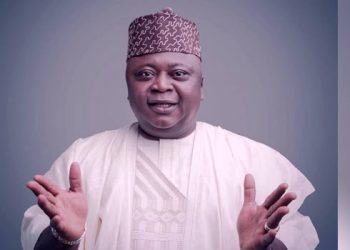
We spoke with Dr Godspower Oshodin, a journalist and ECOWAS Youth Ambassador, whose analysis cuts through the fog of propaganda to illuminate what this war truly means for Europe, for Africa, and for the future of the global order.
WHY RUSSIA INVADED UKRAINE
To understand why Russia did what it did in 2022, you have to travel back, not just to 2014, when Russia first seized Crimea, or even to 2008, when NATO declared Ukraine would one day be a member, but to the singular psychological rupture that defines Vladimir Putin’s worldview; the end of the Soviet Union.
Putin once called the collapse of the USSR ‘the greatest geopolitical catastrophe of the 20th century.’ For him and the hardened national security apparatus that surrounds him, the siloviki, Ukraine was never truly a foreign country. It was a wayward province, a cultural twin, and above all, a critical buffer zone separating Russia from an encroaching Western military alliance.
“For Putin, an independent, pro-Western Ukraine is not merely a geopolitical inconvenience; it is an existential threat to Russia’s imperial narrative.”
Dr. Godspower Oshodin, International Relations Expert
The structural trigger, according to analysts, was the relentless eastern expansion of the North Atlantic Treaty Organisation. Between 1999 and 2004, NATO admitted twelve new members from the former Eastern Bloc – Poland, the Czech Republic, Hungary, and the Baltic States among them, each accession pushing the alliance’s eastern frontier closer to Russian soil. The 1997 NATO-Russia Founding Act, and the disputed promises made in the dying days of the Soviet Union that NATO would not expand ‘one inch eastward,’ formed the bedrock of Moscow’s grievance narrative.
The 2008 Bucharest Summit proved the most electrifying provocation. NATO’s declaration that Ukraine and Georgia ‘will become members’ sent the Russian government into a cold fury. Within weeks, Russian tanks were rolling into Georgia. The West barely blinked. Putin filed the lesson away.
Then came Kyiv’s Maidan Square in 2013 and 2014. When mass protests swept away pro-Russian President Viktor Yanukovych – who had abruptly abandoned an EU Association Agreement under Kremlin pressure – Russia responded by seizing Crimea and fomenting a separatist war in the Donbas. The 2014 and 2015 Minsk Agreements were supposed to contain the conflict. Instead, they gave both sides time to prepare for a larger reckoning.
By 2021, Putin had concluded that the window was closing. Ukraine was integrating ever more deeply with Western institutions, its military rebuilt, and its public increasingly hostile to Russian influence. In December 2021, Russia issued a set of ultimatums to NATO and Washington, demanding a halt to enlargement and the withdrawal of forces from Eastern Europe. The West declined. And so the tanks rolled.
But as Dr Oshodin is careful to note, Russia’s security concerns, however analytically valid, cannot constitute moral justification for what followed. ‘The inviolability of sovereign borders is a cornerstone of international law and the UN Charter,’ he notes. ‘Russia’s actions constitute a flagrant violation of those principles, regardless of the strategic rationale offered by the Russian government.’
There is also, Oshodin argues, a deeply ideological dimension that goes beyond strategy. In his July 2021 essay ‘On the Historical Unity of Russians and Ukrainians,’ Putin denied that Ukraine was a distinct nation at all, arguing that Russians and Ukrainians are fundamentally ‘one people.’ It was not a historical argument. It was a prelude to erasure, and it would prove to be one of the costliest miscalculations in modern military history.
HOW UKRAINE HAS HELD THE LINE
If Russia’s initial campaign was a lesson in how not to fight a war, Ukraine’s defence has been a masterclass in asymmetric resilience, matching an adversary’s overwhelming conventional superiority with intelligence, terrain knowledge, popular mobilisation, and carefully chosen weapons.
In the earliest weeks, the American Javelin anti-tank missile and the British NLAW shoulder-launched system proved devastatingly effective, turning Russia’s armoured spearheads into burning columns of wrecked metal on Ukrainian roads and fields. Hundreds of tanks were destroyed. The Territorial Defence Forces, hundreds of thousands of volunteers who were teachers, engineers, farmers, and shopkeepers, swelled the fighting force with people who needed no ideological motivation, only the sight of foreign soldiers on their streets.
As the war settled into attrition, the Western arms pipeline became decisive. The United States alone has committed over one hundred billion dollars in military, financial, and humanitarian aid. High Mobility Artillery Rocket Systems (HIMARS) allowed Ukraine to strike deep Russian logistics nodes with precision. Patriot air defence systems intercepted Russian cruise missiles and drones. Bradley Infantry Fighting Vehicles, M1 Abrams tanks, and eventually F-16 fighter jets have qualitatively transformed the battlefield equation.
Ukraine has also waged the information war with remarkable sophistication. From the documentation of the Bucha massacre, which deepened Western commitment and triggered new sanctions packages, to the continuous output of its communications team, Ukraine has consistently outperformed Russia in the global battle for narrative. The IT Army of Ukraine, a volunteer cyber militia, has mounted sustained campaigns against Russian government and financial systems, operating a form of decentralised digital warfare that Russia’s more rigid cybersecurity apparatus has struggled to counter.
Matthew Bankole, A Nigerian Mechanic, Deceived by Job Offer who Finds Himself in Russian Army Camp
‘Russia holds the initiative,’ observed one Western defence analyst, ‘but it cannot convert that initiative into victory. Every metre it gains costs it more than it gains.’
AFRICA’S SONS AND DAUGHTERS
Among the most disturbing stories to emerge from four years of war is one that has received far too little attention in mainstream international coverage: the systematic exploitation of African nationals by Russia’s war machine.
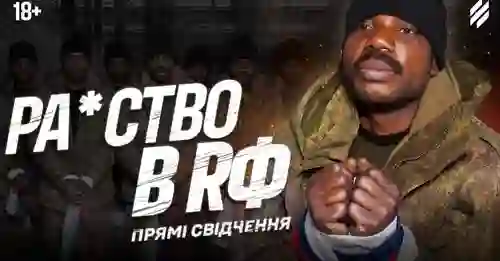
It comes in two forms. The first is the recruitment, often through deception and coercion, of African men to fight and die on the frontlines of Ukraine. The second is a targeted scheme to lure young African women into drone assembly factories in the Russian interior, where they manufacture the weapons used to bomb Ukrainian cities.
In February 2026, the investigative research project ‘All Eyes on Wagner’ released a report based on a database it had obtained containing the records of 1,417 African recruits in Russia’s military. Of these, 316 had been killed in action. The organisation believes the actual number is significantly higher.
“Africa’s men and women are not resources to be deployed in other people’s wars. African governments have a fundamental duty to protect their citizens from exploitation.”
–Dr. Godspower Oshodin, International Relations Expert
The recruitment pattern follows a template that investigators have come to know well. African men, many of them students on government scholarships or economic migrants in Russia, are approached with offers of lucrative security contracts, Russian passports, financial compensation, and residency rights. Some are told explicitly they are signing up for combat. Many are not. They are promised logistics work, security duties, non-combat support roles. They arrive at the front.
Students at Russian universities have been particularly vulnerable. Several documented cases involve individuals pressured into military service through implicit or explicit threats to their visa or scholarship status, a grotesque subversion of the educational relationship between Russia and numerous African partner nations.
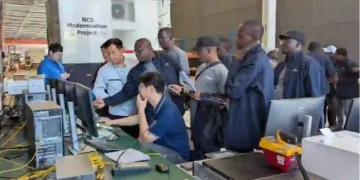
The second recruitment scheme is, if anything, more calculated in its exploitation. Since 2023, the Alabuga Special Economic Zone in Tatarstan, a facility that the Wall Street Journal estimated in 2024 had recruited over one thousand African women, has been targeting young women aged 18 to 22 from across Africa through social media and local intermediaries. The pitch: high salaries and work-study opportunities in hospitality or catering.
What they find upon arrival is something else entirely. They are tasked with assembling Iranian-designed Shahed suicide drones, the same drones that Russia fires into Ukrainian cities and power stations. The Associated Press has reported on the conditions: long working hours, constant surveillance, restricted communications, and exposure to damaging chemicals. Allegations of racism and harassment against African workers by Russian staff and students have also emerged from the facility.
There is a further, chilling dimension. Alabuga SEZ is a key component of Russia’s military-industrial infrastructure, which makes it a target for Ukrainian strikes. Ukrainian drones and missiles have already attacked the facility. African workers have been injured. Their accommodation has been damaged. Young women from Lagos, Accra, and Nairobi, who came to Russia believing they were pursuing educational opportunities, find themselves living in an active war zone.
Emeka Nwosu, a spokesperson for the ECOWAS Youth Council, is furious. ‘This is modern-day exploitation dressed up as opportunity,’ he told The Global Observer. ‘Our young women are being recruited under false pretences to manufacture weapons of war. They are living under military surveillance, in facilities that are being bombed. Our governments must act. The African Union must act. This silence is not neutrality, it is complicity.’
The ECOWAS Youth Council has called on West African governments to launch formal investigations into the Alabuga recruitment pipeline, to warn students and job-seekers about Russia’s deceptive recruitment tactics, and to demand the repatriation of any nationals currently trapped in military facilities or conscripted into combat roles.
“Russia’s consistent messaging, framing itself as an anti-colonial power opposed to Western imperialism, resonates with historical grievances that remain politically potent across much of Africa. This framing is profoundly cynical.”
Dr. Godspower Oshodin, International Relations Expert
Dr. Oshodin places the exploitation of African labour within Russia’s broader influence campaign on the continent. Moscow has cultivated African governments through military partnerships, energy deals, and the language of anti-colonialism, presenting itself as a champion of African sovereignty against Western imperialism. It is a message that has resonated, partly because of genuine grievances about Western double standards, and partly because it has been backed by significant resources.
‘The irony is tragic,’ Oshodin noted. ‘A country that is waging an expansionist war against a smaller neighbour, seeking to erase its national identity and sovereignty, is presenting itself as the champion of anti-colonialism to African audiences. Africa’s own painful history of colonialism is being instrumentalised to justify behaviour that mirrors the colonial playbook: territorial expansion, denial of the colonised people’s identity, and the brutal suppression of resistance.’
The diplomatic payoff has been visible at the United Nations General Assembly, where a significant bloc of African states has either voted against resolutions condemning Russia’s invasion or abstained. Analysts are divided on how much of this reflects genuine Russian influence and how much reflects Africa’s complex positioning between major powers. What is undisputed is that Russia has cultivated these relationships with deliberate intent and extracted value from them.
THE PRICE AFRICA IS PAYING
Beyond the recruitment of soldiers and drone workers, the Russia-Ukraine war has imposed a massive, largely invisible economic toll on the African continent. The mechanisms are varied; food prices, energy shocks, fertiliser shortages, debt spirals, and disrupted development financing, but they converge on the same painful reality: a war fought thousands of miles from Africa’s borders has pushed millions of Africans deeper into poverty.
The most immediate and devastating impact has been on food security. Russia and Ukraine together account for roughly 30 percent of global wheat exports, 20 percent of corn exports, and close to 80 percent of global sunflower oil exports. When the war disrupted Black Sea shipping routes, global commodity markets lurched. Wheat prices surged. For a continent where many nations import between 30 and 90 percent of their wheat requirements, the consequences were catastrophic.
Egypt, the world’s largest wheat importer, faced a crisis with political as well as humanitarian dimensions. The price of bread has carried existential significance in Egypt since the Bread Riots of 1977. Sudan is already in conflict. Nigeria is battling inflation. Kenya is already under fiscal pressure. Each faced a food price shock that landed hardest on the households that could least absorb it, families for whom food represents 60 to 70 percent of total expenditure.
According to the United Nations World Food Programme, the number of acutely food-insecure people in Africa increased by tens of millions in the two years following the invasion. In the Sahel, the Horn of Africa, and parts of Southern Africa, already grinding through their own cycles of drought and conflict, the external shock tipped millions over the edge from food stress into food crisis.
Then came the fertiliser emergency. Russia and Belarus together supply approximately 40 percent of global potash exports. Russia is a dominant exporter of nitrogen-based fertilisers. Western sanctions and Russian export restrictions combined to drive fertiliser prices to historic highs. For Africa’s smallholder farmers, who produce the majority of the continent’s food, the choice became stark: buy fertiliser at prices they could not afford, or plant less and harvest less. Millions chose the latter. The long-term yield consequences of reduced fertiliser application will outlast the immediate price spike by years.
In the energy markets, African oil importers, Kenya, Ethiopia, Rwanda, Ghana, were punished by fuel price surges that cascaded through their economies, raising transport costs, inflating consumer prices, and eroding living standards. Several governments were forced to cut politically sensitive fuel subsidies, triggering social unrest. Nigeria’s fuel subsidy removal in 2023, while driven by multiple factors, was accelerated by a fiscal environment the war had severely worsened.
The global interest rate response to war-driven inflation compounded the economic damage. As the US Federal Reserve and other major central banks raised rates aggressively, capital fled emerging markets. African governments that had borrowed heavily during the low-interest years of the 2010s suddenly faced rising debt service costs and depreciating currencies simultaneously. Ghana, Zambia, and Ethiopia descended into formal debt distress, requiring IMF interventions and painful restructuring negotiations. Public sector salaries froze. Health and education budgets were cut. Infrastructure investment stalled.
‘The war has shown that Africa’s economic vulnerability to geopolitical shocks elsewhere remains a structural problem that no amount of continental rhetoric can paper over,’ Dr. Oshodin noted. ‘Food import dependency, insufficient domestic energy production, and fragile fiscal positions leave African nations dangerously exposed to disruptions in global commodity and financial markets that originate thousands of miles from the continent.’
There are opportunities buried within the crisis. Europe’s desperate search for alternatives to Russian energy has created genuine demand for African liquefied natural gas, with new investment flowing to Mozambique, Tanzania, Senegal, and Nigeria. The reconfiguration of global food supply chains has created openings for African agricultural exporters. But these structural opportunities require investment, infrastructure, and institutional capacity at a scale and speed that current conditions make difficult to achieve.
THE DIPLOMACY THAT HAS NOT WORKED
Four years of international diplomatic effort have produced one prisoner swap agreement and a great deal of failed talks. Russia has consistently shifted its negotiating position, dismissed international attempts to settle the conflict, and continued to strike Ukrainian energy infrastructure even during active peace discussions.
The election of Donald Trump to the US presidency in late 2024 shifted the diplomatic landscape significantly. The Trump administration declared its intention to end the war quickly, and a new diplomatic trajectory was established at the August 2025 Alaska Summit, where Trump and Putin met in the most high-profile face-to-face engagement since the invasion began. No deal emerged.
The United States subsequently drafted a 28-point peace plan that proposed a permanent constitutional ban on Ukraine joining NATO, a cap on Ukrainian Armed Forces at 600,000 personnel, and sweeping territorial concessions to Russia. European allies, alarmed by the concessions on offer, issued a counter-proposal in November 2025 that rejected Russian territorial claims outright.
The February talks were further undermined by the reality on the ground. Open-source intelligence monitors documented record-scale Russian strikes on Ukrainian energy infrastructure even as the negotiators met in Abu Dhabi. The fundamental obstacles remain: Russia refuses to concede illegally held territory, leaving all diplomatic efforts in failure.
Analysts have begun describing Russia’s posture as ‘Phase Zero’, a shift from pure battlefield aggression toward escalation outside the conventional front: cyber-attacks, disinformation campaigns, political interference in European democracies. The military grind continues. The diplomatic stalemate continues. And the casualties mount.
RUSSIA’S BLEEDING
Perhaps the most consequential and underappreciated dimension of this war is the scale of Russia’s human losses. At 31,700 casualties in January 2026 alone – killed, wounded, and missing – Russia is losing personnel at a pace that strains credibility and defies the Kremlin’s public messaging of a controlled ‘special military operation.’
CSIS estimates that Russian casualties since February 2022 stand at approximately 1.2 million, against Ukrainian losses estimated at between 500,000 and 600,000. Combined, the conflict is projected to reach two million casualties by spring 2026, making it, by some measures, the deadliest conventional war since the Korean conflict.
Russia has attempted to compensate for its staggering manpower losses through multiple mechanisms: repeated waves of mobilisation, the recruitment of convicts offered pardons in exchange for front-line service, the deployment of North Korean troops in significant numbers (confirmed by multiple intelligence agencies), and, as documented above, the deceptive recruitment of African nationals.
The reliance on African fighters is not merely a footnote. It is a symptom. It tells you that Russia’s own population is being bled dry. That the Kremlin is scraping the edges of every available manpower pool, domestic, Korean, and now African, to sustain a war that was supposed to last three days. Four years later, the front has barely moved. But the graveyards keep growing.
Chisom Adaeze, reporting from the Ukrainian side of the front, describes the arithmetic of attrition in stark terms. ‘You walk through some of these villages that were held by Russia for months and then recaptured,’ she says. ‘You understand what 31,000 casualties in a month actually looks like on the ground. It is not a statistic. It is a landscape.’
AFRICA CANNOT AFFORD TO BE A SPECTATOR IN THIS WAR
As the fourth anniversary passes, the Russia-Ukraine war enters its fifth year with no end in sight and consequences that reach into every corner of the globe. The frontlines are relatively static. The casualties are not. The diplomacy has stalled. The hunger and debt crises across Africa have not.
For Africa, the war presents a moment of moral and strategic reckoning that its leaders have, by and large, not yet risen to meet. Young African men are dying in Ukrainian trenches, recruited through lies. Young African women are assembling drones in facilities that are being bombed, having been lured with false promises. And African governments, with a handful of exceptions, have responded with silence or studied ambiguity.
“The sovereignty of Ukraine is not a Western value; it is a universal value. An Africa that defends the sovereignty of its own nations but equivocates on the sovereignty of others exposes itself to profound moral inconsistency.”
Dr. Godspower Oshodin, International Relations Expert
Oshodin puts it with the bluntness of his generation: ‘We keep hearing that Africa must be neutral. But neutrality in the face of exploitation is not a position; it is an abdication. Our youth are being used as cannon fodder and drone workers. That is not an abstract geopolitical question. That is a crisis.’
Dr. Oshodin offers the broadest framing. ‘History does not wait,’ he submitted. ‘And Africa cannot afford to be perpetually on the receiving end of other people’s wars.’ The continent that holds 60 percent of the world’s uncultivated arable land, enormous untapped energy reserves, and the fastest-growing youth population on earth has the structural endowments to chart its own course. What it has lacked, in this war as in so many others, is the political will to translate those endowments into genuine strategic autonomy.
Four years. Two million casualties projected. Millions of Africans hungry. Hundreds of African fighters have died in a foreign war they may not have chosen. Young African women manufacturing weapons of destruction in a facility that is itself a weapon target. A peace process in ruins.
The question for Africa’s leaders, as this grim anniversary passes, is not whether this war matters to Africa. It clearly does, in every granary, every fertiliser depot, every scholarship programme, every household squeezed by inflation and every young person lured by a fraudulent Russian job offer. The question is whether Africa will finally decide that its people matter enough to say so, loudly and without equivocation.
Seunmanuel Faleye is a brand and communications strategist. He is a covert writer and an overt creative head. He publishes Apple’s Bite International Magazine.







![[Explainer] Russia-Ukraine War: Four Years of a Conflict Planned for Three Days and the African Lives It Is Quietly Consuming](https://applesbite.com/wp-content/uploads/2026/02/1-1.webp "[Explainer] Russia-Ukraine War: Four Years of a Conflict Planned for Three Days and the African Lives It Is Quietly Consuming 10")