










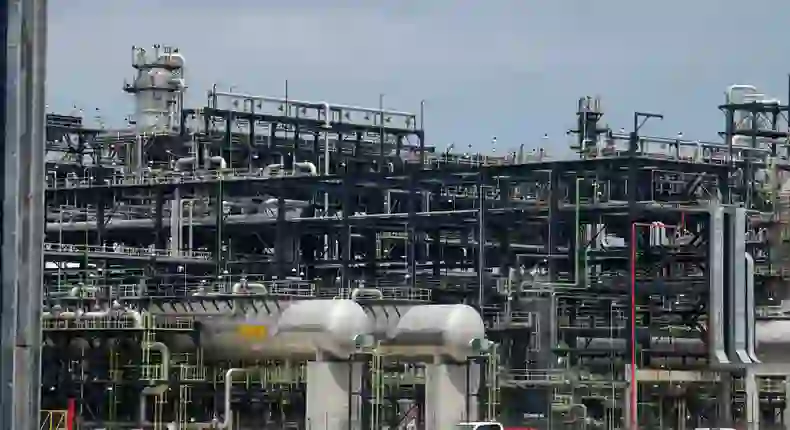
Nigeria has recorded a major milestone in its oil sector, emerging as a net exporter of petrol for the first time in decades. The shift marks a significant break from the country’s long-standing reliance on imported fuel despite being Africa’s top crude oil producer.
The change occurred in March 2026, driven largely by increased production from the Dangote Petroleum Refinery, which has been ramping up operations since its launch in late 2023.
According to data from energy intelligence firm Kpler, Nigeria exported about 44,000 barrels per day (bpd) of petrol during the month, slightly surpassing imports and leaving a net surplus of roughly 3,000 bpd.



For years, Nigeria depended heavily on fuel imports due to underperforming state-owned refineries, a situation that strained foreign exchange reserves and exposed the economy to global supply disruptions. That trend is now reversing as local refining capacity improves.
Crude supply to the Dangote refinery rose to around 565,000 bpd in March—one of its highest levels so far—while petrol imports dropped sharply to about 41,000 bpd, the lowest figure on record. This highlights a fast transition from import dependence to domestic production.
Nigeria is also beginning to expand its presence in regional fuel markets. In March, the refinery exported a 317,000-barrel cargo of petrol to Mozambique, marking its first shipment to East Africa, with another delivery expected in April.
This development signals a shift in African fuel trade patterns, as countries in the region—traditionally reliant on Middle Eastern suppliers—seek alternative sources amid ongoing global supply challenges.
For Nigeria, the benefits could be substantial. Increased petrol exports may boost foreign exchange earnings and reduce demand for dollars previously used for imports, easing pressure on the naira. It also strengthens the country’s energy security by relying more on domestic production.
On a broader scale, Nigeria’s entry into the export market could heighten competition, particularly in Europe where petrol supply is already abundant.
The progress reflects a deeper structural shift in the country’s oil sector—from exporting crude oil and importing refined products to processing more of its resources locally. At the centre of this transformation is the Dangote refinery, owned by Aliko Dangote.
Dangote is also exploring plans to list the refinery across multiple African stock exchanges in what could become the continent’s first pan-African initial public offering. If successful, the move could attract cross-border investment and deepen regional capital markets.
For now, Nigeria’s emergence as a net petrol exporter signals a new chapter for its downstream oil industry—one increasingly defined by local capacity, reduced imports, and growing regional influence.
READ ALSO:
- Governor Dauda Lawal, Others to Represent Nigeria at the Canada-Africa Summit in Toronto
- Captain Idahosa Wells Living Museum Unveiled as Children Cement Legacy of Late Icon on Fifth Anniversary
- Tinubu Meets 76 Osun APC Leaders Ahead of Governorship Election
- Gov. Lawal Celebrates APC National Chairman, Yilwatda At 58
- President Tinubu Celebrates Industralist, Prince Albert Awofisayo, At 80