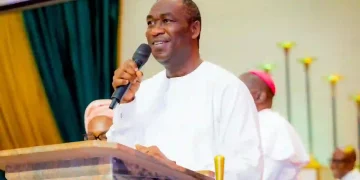








Vice President Kashim Shettima is representing Nigeria at the 56th World Economic Forum Annual Meeting in Davos, Switzerland, where he will outline the country’s economic prospects for 2026.
According to Stanley Nkwocha, Senior Special Assistant on Media and Communications to the Vice President, Shettima arrived in Davos on Sunday to head Nigeria’s delegation at the prestigious gathering of global leaders and business executives.
Upon his arrival, the Vice President was welcomed by Foreign Affairs Minister Ambassador Yusuf Tuggar, Minister of Trade and Investment Dr. Jumoke Oduwole, and officials from Nigeria’s diplomatic mission.
During the forum, Shettima will engage in discussions covering emerging technologies including artificial intelligence deployment, quantum computing applications, and biotechnology advancements. He is scheduled to hold bilateral discussions with world leaders, corporate executives, and international development finance institutions throughout the week to strengthen partnerships supporting President Bola Tinubu’s Renewed Hope Agenda.
This year’s forum represents a significant moment for Nigeria’s economic diplomacy with the launch of “Nigeria House Davos”—the country’s first sovereign pavilion along the Davos Promenade. The facility, created through public-private collaboration, will host ministerial meetings, investor roundtables, and cultural events during the forum.


Minister Oduwole emphasized that Nigeria House will spotlight investment opportunities across four key sectors: solid minerals, climate-smart agriculture, creative industries, and digital economy—reflecting President Tinubu’s economic transformation strategy.
READ ALSO:
- Gunmen Kill 13, Injure Others in Fresh Attacks Across Plateau
- Hamzat visits Lagos churches, promises unity and progress Ahead of 2027
- Lagos Bus Drivers Begin Strike Over Alleged Extortion, Leave Commuters Stranded
- Reno Omokri Explains Tinubu’s Missing Primary, Secondary School Certificates
- Dangote Refinery Opens Africa’s Biggest IPO, Targets N2.15 Trillion From Investors