








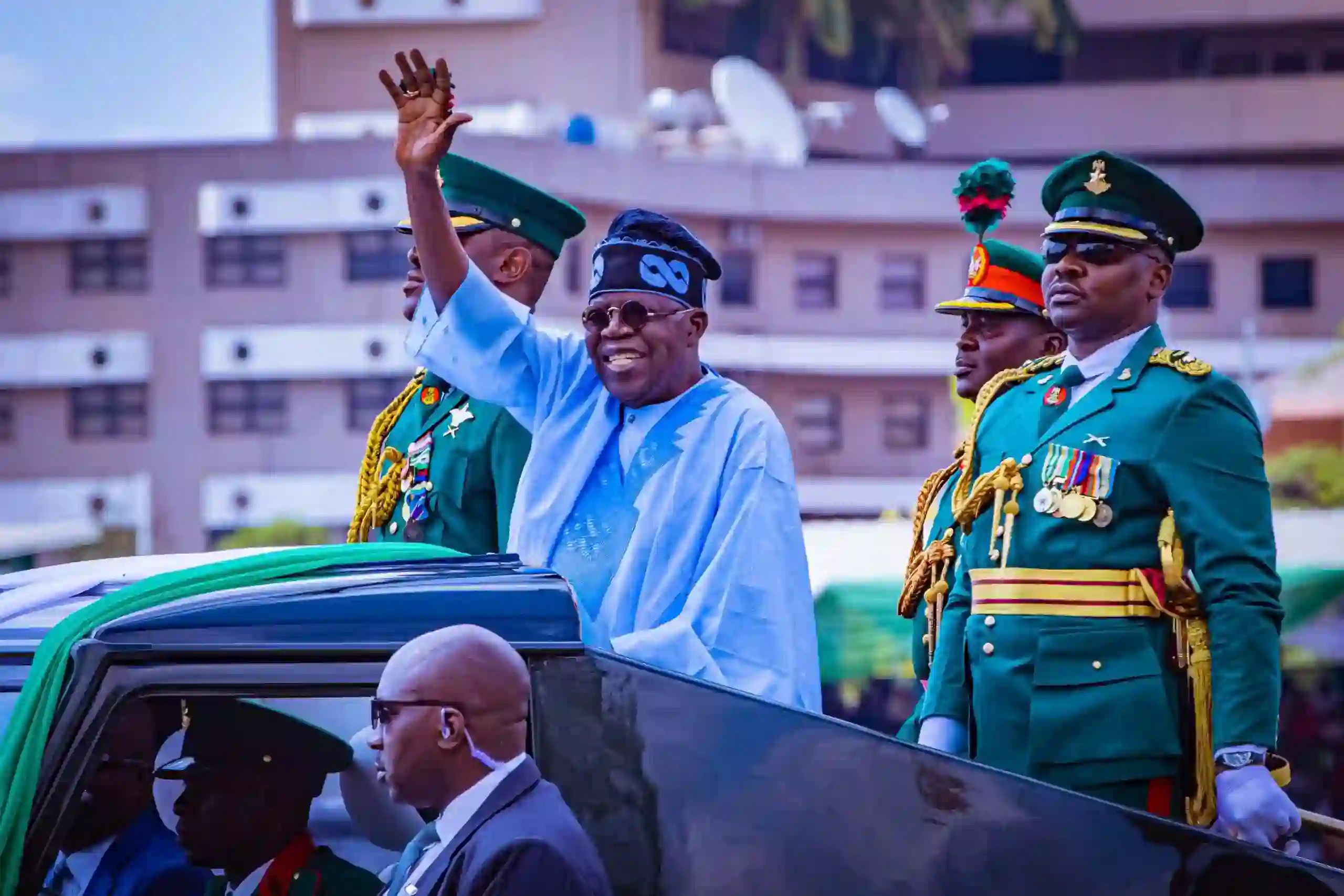
Human rights lawyer Marshal Abubakar has labelled President Bola Tinubu‘s authorisation of military intervention in the Benin Republic as a constitutional violation warranting impeachment, arguing that the deployment violated Nigeria’s legal framework requiring legislative approval for overseas combat operations.
The controversy stems from events following the December 7, 2025, military coup in the Benin Republic, where Lieutenant Colonel Pascal Tigri and soldiers from the Beninese Armed Forces announced the overthrow of President Patrice Talon after attacking his residence in Cotonou.
Nigeria’s Chief of Defence Staff subsequently confirmed that Nigerian air and land military assets were deployed across Benin Republic’s airspace on President Tinubu’s orders alone, without obtaining the constitutionally mandated approval from the National Assembly. Tinubu, who chairs the Economic Community of West African States (ECOWAS), defended the intervention as consistent with the regional body’s Protocol on Democracy and Good Governance.
However, Abubakar firmly contests this justification. He cited Section 5(4)(b) of Nigeria’s 1999 Constitution, which explicitly states that “no member of the armed forces of the Federation shall be deployed on combat duty outside Nigeria” without prior Senate approval.
While acknowledging that Section 5(5) permits the President to deploy troops for limited combat after consulting the National Defence Council, Abubakar emphasised this provision applies strictly to threats against Nigeria’s national security—not those of foreign nations.
“The Constitution permits the President, in consultation with the National Defence Council, to deploy armed forces on limited combat, but it must be Nigeria’s national security that is under imminent threat or danger, not Benin’s,” Abubakar stated.



The lawyer warned that ECOWAS protocols cannot supersede Nigeria’s constitutional provisions governing military deployment, stressing that international agreements do not override domestic law.
Abubakar also expressed concern about the surge of military coups across West Africa—including Mali, Guinea, Burkina Faso, Niger, and now Benin—noting that public celebrations following these takeovers reveal deep-seated governance failures throughout the continent.
He attributed the democratic collapse to systemic corruption, weak institutions, insecurity, electoral manipulation, and leadership failures that have left citizens disillusioned and desperate for alternatives to failed democratic processes.
“While I maintain that the worst democracy is better than the best military rule, when sovereignty belongs to the people and a self-serving government prioritizes personal gain over public welfare, it becomes an obstacle to democracy itself,” Abubakar remarked.
He called on political leaders to pursue national integration, eliminate corrupt practices, and manage national economies to secure maximum welfare, freedom, and happiness for all citizens—actions he believes are necessary to stem the tide of military coups threatening African democracy.