








Nigeria may still be months away from the official campaign season, but political activities are already shifting from speculation to strategic positioning. Alliances are emerging, interests are consolidating, and early indicators suggest that the 2027 presidential election could rank among the most competitive since 2015.
At the center of evolving realignments is the African Democratic Congress (ADC), which is increasingly being viewed as a potential coalition platform for major political actors. However, the broader political environment remains fluid, with the incumbent administration and opposition figures actively positioning for advantage.
In Nigeria’s electoral system, outcomes are rarely determined by popularity alone. Instead, results are shaped by regional voting strength, elite coordination, voter turnout, institutional credibility, and the neutrality of electoral and security agencies. This makes coalition-building and geography more decisive than individual ambition.
Understanding Nigeria’s Electoral Structure
Presidential elections in Nigeria are not driven by uniform national voting patterns. Instead, they are determined across six geopolitical zones, each with distinct political behaviour:
- The North-West remains the largest voting bloc and often decisive in national outcomes.
- The South-West is widely regarded as the incumbent’s strategic stronghold.
- The North-East and North-Central regions are highly competitive and often swing based on alliances.
- The South-East and South-South tend to show more consistent voting preferences, though turnout varies significantly.
Winning the presidency typically requires a broad coalition that performs strongly across multiple regions, rather than dominance in only one or two zones.
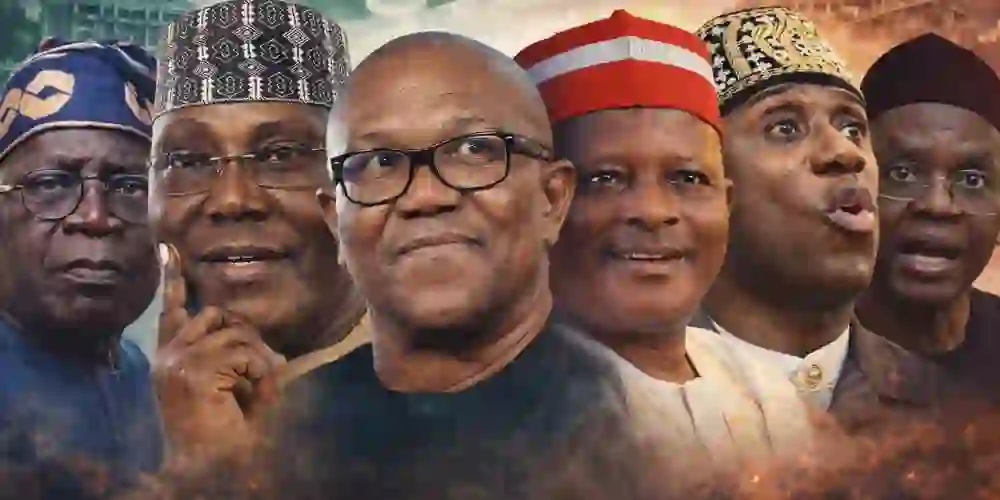
Key Political Actors and Their Positions
Bola Ahmed Tinubu
As the incumbent, Tinubu enters the 2027 cycle with clear structural advantages, including strong party networks and nationwide political influence through the ruling All Progressives Congress (APC). His long-standing political machinery remains particularly strong in the South-West.
However, incumbency also brings scrutiny. Economic challenges, inflation, and security concerns may shape public sentiment, potentially tightening the race if opposition coalitions become more organized.
Atiku Abubakar
Atiku remains one of Nigeria’s most experienced political figures, with deep networks across the North and strong connections in business and political circles. His strength lies in coalition-building and mobilisation capacity.
Still, repeated presidential attempts may present challenges in appealing to younger voters, making broad-based appeal critical for his 2027 prospects.
Peter Obi
Peter Obi’s 2023 presidential run significantly reshaped Nigeria’s political landscape. His campaign generated over 6.1 million votes and strong performances in several key states, including Lagos, Rivers, and the Federal Capital Territory.
His “Obidient” movement also translated into legislative gains across national and state levels, signalling a strong youth-driven political base. However, questions around nationwide reach—particularly in parts of the North—remain a key challenge.
Rabiu Kwankwaso
Kwankwaso maintains strong influence in Kano and the broader North-West. Recent political realignments in Kano have further strengthened his grassroots structure, making him a significant force in determining northern voting outcomes.
His ability to shape the Kano–Kaduna–Katsina political corridor remains strategically important in any national contest.
Rotimi Amaechi
Amaechi brings extensive governance and federal experience, particularly from his time in key national roles. His base remains rooted in the South-South, but his current national electoral appeal appears more limited compared to other leading figures.


He is often viewed as a potential supporting figure within broader alliances rather than a standalone frontrunner.
Nasir El-Rufai
El-Rufai is widely regarded as a strong strategist with significant influence in northern elite political circles. His organisational skills and policy experience remain key strengths.
However, controversies from his tenure as governor may limit his appeal as a presidential candidate, positioning him more as a behind-the-scenes strategist or campaign coordinator.
Possible Coalition Scenarios
Several possible political combinations could shape the 2027 race:
- A Peter Obi–Rabiu Kwankwaso alliance could merge strong urban youth support with deep northern grassroots structures.
- An Atiku-led coalition with a southern running mate would reflect a more traditional north–south power balance.
- Alternative alignments involving figures like Amaechi or El-Rufai could serve strategic roles, depending on how coalitions evolve.
In all cases, success will depend on the ability to merge regional strengths into a unified national structure.
Key Structural Factors Beyond Candidates
Beyond individual politicians, several broader issues will shape the election:
Coalition stability: Opposition unity has historically been fragile, often breaking down due to competing ambitions.
Regional performance: Strong results in the North-West and North-Central remain critical to winning nationally.
Voter turnout: Public engagement will be decisive, with mobilisation efforts on both sides likely to determine participation levels.
Electoral administration: Confidence in the electoral process, from polling to result collation, remains central to credibility and acceptance.
The Incumbency Advantage
Despite growing opposition activity, the ruling party retains institutional advantages, including established political networks and control of key administrative structures. However, economic pressures and public sentiment could influence competitiveness more than in previous cycles.
Conclusion
The 2027 presidential election is gradually taking shape as a contest defined by coalition strength, regional balance, and voter mobilisation rather than individual popularity alone.
While the opposition may have an opportunity to build a broader alliance than in previous cycles, its success will depend on coordination and compromise. The incumbent, meanwhile, remains structurally strong but not immune to shifting political and economic realities.
At this stage, the race remains open, with its outcome likely to be determined by how effectively political actors manage alliances and voter engagement in the months ahead.
READ ALSO:
- KieKie Named Chief Wahala Officer as inDrive Tackles Lagos Mobility Crisis
- A Cry from the Creeks: A Daughter’s Plea for the Niger Delta | The surge by Boma Lilian Braide(Esq.)
- NELFUND Moves Against Institutions Withholding Student Refunds, Hiking Fees
- Police Rescue Kidnap Victim During Forest Raid in Imo
- US, Iran to Resume Talks as Both Sides Agree to Pause Fresh Attacks