






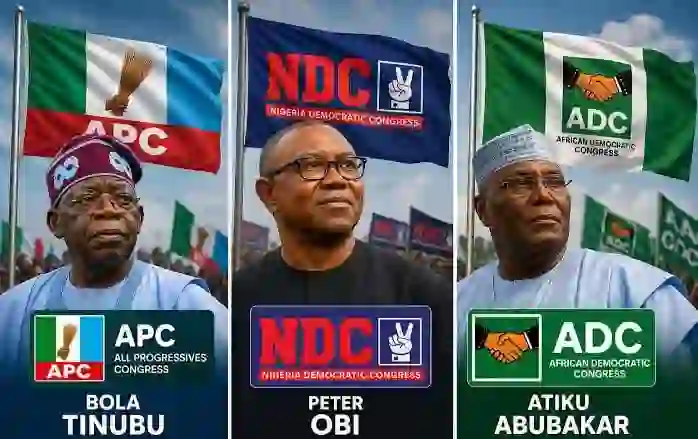
The recently concluded APC primary elections and the still-ongoing ADC primaries leading into the 2027 general elections have produced a wave of statistical interpretation so exaggerated that it now drifts into the realm of political fantasy. At the centre of this spectacle is a curious claim that electoral outcomes are no longer simply counted but geometrically constructed, as though democracy has quietly handed its ballot box to mathematics and asked it to improvise.
To understand the scale of this rhetorical theatre, one must first return to Euclid, the ancient Greek mathematician who lived around 300 BCE and is widely regarded as the father of geometry. His foundational work, Elements, a thirteen-book series that systematised geometry into logical structure, was designed to bring order to shapes, lines, and measurable space. Today, his intellectual legacy is ironically invoked to describe electoral claims that appear to have abandoned order entirely.
In an even more surreal extension, ancient Egypt and Mesopotamia, often referred to as the cradles of civilisation, located along the Nile Valley and between the Tigris and Euphrates rivers in present-day Egypt, Iraq, and parts of modern Turkey and Iran, are imagined as historical witnesses to this modern political arithmetic. Civilisations that once developed writing, law, and early governance are now rhetorically positioned as if they would be “humbled” by contemporary electoral interpretation. The satire writes itself when the past is recruited to validate present confusion.
Thomas Malthus, the English cleric and scholar who published his An Essay on the Principle of Population in 1798, is also dragged into this narrative. His original theory focused on population growth and resource limits, often described through early forms of proportional reasoning and what later thinkers loosely interpreted as geometric progression. In today’s political reinterpretation, even Malthus is said to be “disturbed” by electoral calculations that stretch probability into performance art rather than analysis.
From this inflated intellectual stage, attention shifts back to Nigeria’s political geography, where the 2027 elections are increasingly discussed through rigid regional assumptions rather than democratic fluidity.



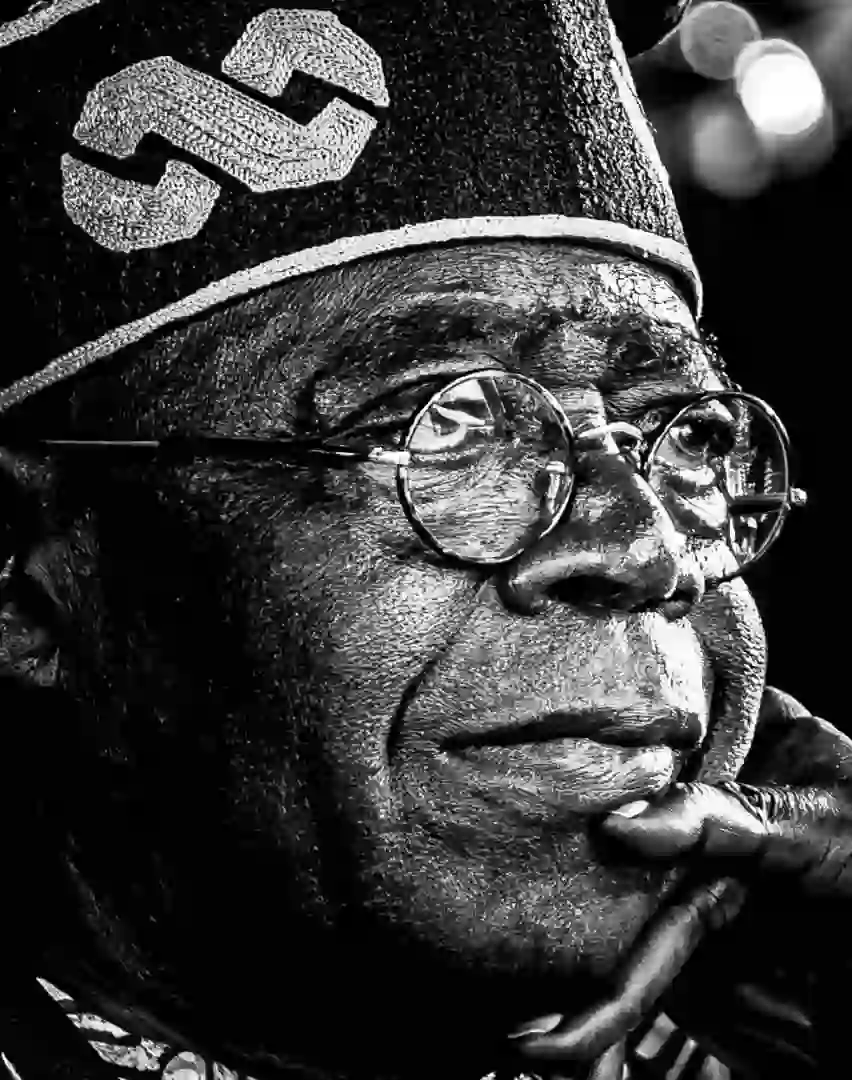
The South West is framed as the core political base of President Bola Tinubu, yet simultaneously treated as a region where support is assumed, tested, and constantly recalculated depending on political alignment and internal competition.
The South East, often associated with Peter Obi’s strong electoral influence, is frequently described in absolute terms that ignore internal diversity, as though millions of voters across states like Anambra, Imo, Abia, Enugu, and Ebonyi share a single political mind.
The South South, including Rivers, Delta, Bayelsa, Edo, Cross River, and Akwa Ibom, is similarly reduced in commentary to a predictable voting bloc, despite its known political variability and shifting alliances.
The North West, covering Kano, Kaduna, Katsina, Kebbi, Sokoto, Jigawa, and Zamfara, is portrayed as a divided field of competing influences between Atiku Abubakar, Bola Tinubu, and Peter Obi, as though voter behaviour can be neatly partitioned into three equal mathematical shares.
The North East, including Borno, Yobe, Adamawa, Gombe, Bauchi, and Taraba, is often described through historical loyalty patterns, as though present-day political decisions are permanently anchored in past affiliations.
The North Central, comprising Benue, Kogi, Kwara, Nasarawa, Niger, and Plateau, is cast in the role of balance keeper, expected to distribute its electoral weight evenly between leading contenders, as if political judgement operates like a calibrated scale rather than human choice.
Within this framework, the absence of former President Muhammadu Buhari from active political influence is noted as a significant shift, particularly in relation to earlier electoral cycles where his presence contributed to strong northern mobilisation. The previously influential political alignment described as the Muslim Muslim ticket is also now treated as less certain in its ability to determine voter behaviour in the 2027 cycle.
Beyond regional interpretation, critics argue that President Tinubu’s economic policies and governance record between 2023 and 2026 have created widespread public dissatisfaction that could significantly affect electoral outcomes. In this reading, performance, rather than political arithmetic, becomes the central determinant.
Yet the most striking feature of this entire discourse is not disagreement, but confidence. Supporters of competing political narratives each claim numerical certainty while relying on incompatible assumptions. Governors, senators, and members of the House of Representatives are still expected to provide electoral structure, even as many of them face their own uncertain reelection prospects.
And so Nigeria moves toward 2027 with a strange contradiction at its centre. On one hand, elections are spoken about as though they are already solved equations written in the language of regions and percentages. On the other hand, the voters themselves in the South West, South East, South South, North West, North East, and North Central continue to exist as unpredictable citizens rather than mathematical symbols.
The satire is complete when geometry, a discipline built on certainty, is used to describe a political environment defined by uncertainty. Euclid would not recognise it. Malthus would not approve it. Egypt and Mesopotamia would not decode it. And yet, here it is, presented as analysis.
In the end, the greatest irony remains untouched. The more politics tries to become mathematics, the less it resembles truth.
READ ALSO:
- 2027 Elections: Geometrical Vote Counting in Primaries and Shifting Regional Politics May Shape Outcome | by Perekeme Odon
- Atiku To Tinubu: Step Down Over Rising Insecurity, School Abductions
- Tension At Kuje Prison As Ex-Skye Bank Chairman Ayeni Allegedly Loses ₦120m Wristwatch During Raid
- Dangote Refinery Cuts Diesel Depot Price By ₦200
- Tinubu’s Daughter Kicks Against Lagos APC Primary Results, Threatens Protest